
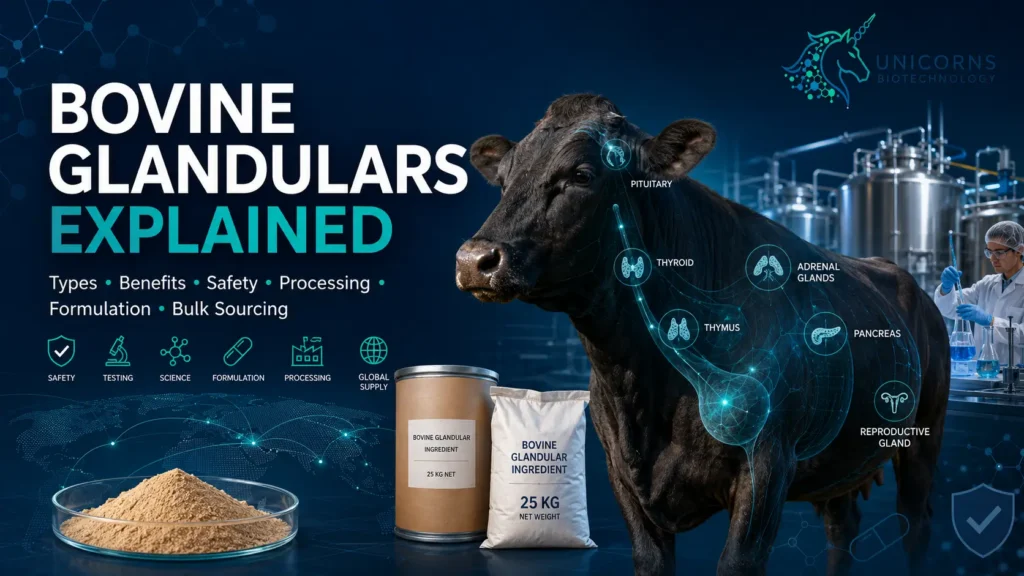
Bovine glandulars are ingredients derived from selected cattle glands or specialized organ tissues, processed into powders, extracts, enzyme preparations, or peptide materials for use in dietary supplements, nutraceuticals, and related formulations. When you see “bovine glandulars explained” in a sourcing context, it covers a surprisingly broad range of animal-derived ingredients, each with distinct compositions, safety profiles, and regulatory considerations. The term is not a single standardized ingredient category; it spans everything from freeze-dried thyroid powder with measurable hormone content to hydrolyzed pancreas peptides standardized for enzyme activity.
“Bovine” simply means cattle-derived, typically identified as Bos taurus in technical documentation. Depending on the product, the raw tissue may be cleaned, freeze-dried, dehydrated, defatted, extracted, hydrolyzed, milled, or standardized before reaching you as a bulk ingredient. Whole-gland powders, standardized extracts, enzyme preparations, and peptide powders are not interchangeable, and treating them as equivalent creates formulation, safety, and regulatory problems.
True endocrine glands like thyroid and adrenal require careful active-compound assessment and market-specific regulatory review. Ordinary organ tissues like liver and heart carry different quality priorities centered on nutrient content and contaminant control. Biological functions in the source animal do not automatically establish benefits in humans, and product-positioning language should never be confused with clinical proof.
This article covers glandular types, potential uses, the current state of evidence, manufacturing processes, formulation decisions, safety and testing requirements, and bulk sourcing criteria. If you are a brand owner, formulator, contract manufacturer, or ingredient buyer evaluating bovine glandular powders for your next project, you can reach out to Unicorns Biotechnology to request specifications, samples, COA documentation, and custom quotations.
Key Takeaways:
- Bovine glandulars are not one standardized ingredient category.
- True endocrine glands should be distinguished from ordinary organ tissues.
- Biological functions in the source animal do not automatically establish benefits in humans.
- Endocrine tissues require careful active-compound and regulatory assessment.
- Species, organ identity, processing, testing, and traceability determine ingredient quality.
- Buyers should select specifications based on the final formulation and destination market.
What The Term Covers
The term “bovine glandular” identifies cattle-derived materials from specific glands or specialized tissues, but the supplement industry applies it broadly to include organs that are not true endocrine glands. Distinguishing between bovine glandular supplements and beef organ supplements matters for formulation accuracy, regulatory compliance, and honest consumer communication.
Definition Of Bovine And Technical Identification
“Bovine” refers to cattle, most commonly the domesticated species Bos taurus. In ingredient documentation, you will see this Latin binomial on certificates of analysis, technical data sheets, and species-authentication reports. PCR species testing can confirm that your material genuinely originates from Bos taurus rather than another ruminant.
The term “beef” appears more often in consumer-facing products, while “bovine” is standard in B2B ingredient specifications, regulatory filings, and veterinary documentation. When you source cattle glandular ingredients internationally, your documentation should clearly state the species, country of origin, and anatomical tissue to avoid ambiguity.
Definition Of A Glandular Ingredient
A glandular ingredient is a material obtained from a particular animal gland or related specialized tissue, then processed into a powder, extract, or peptide preparation. The processing may involve freeze-drying, dehydration, defatting, solvent or aqueous extraction, enzymatic hydrolysis, milling, or standardization.
Glandular therapy, sometimes called organotherapy, rests on the historical concept that consuming a specific animal gland may support the corresponding tissue in the human body. This “like supports like” theory has deep roots in traditional nutrition practices, but it remains a historical rationale rather than an established clinical principle. In modern commerce, glandular supplements are positioned as organ-specific nutrition products, and the term “glandular” has become a commercial category label as much as an anatomical one.
True Glands Versus Organs And Specialized Tissues
Not everything marketed under the glandular umbrella is a true endocrine gland. The distinction matters because endocrine tissues may contain measurable hormones or hormone precursors that carry different safety and regulatory implications.
True endocrine glands:
- Thyroid
- Adrenal
- Pituitary
- Ovary
- Testes
Mixed-function gland:
- Pancreas (both endocrine and exocrine)
Lymphoid organ with hormone-like signaling:
- Thymus
Organs commonly sold as “glandulars” but not true endocrine glands:
- Liver, heart, kidney, spleen, lung, brain, uterus, and trachea
The supplement industry routinely groups all of these under the “glandular” label, which means you need to verify the exact tissue source and its regulatory classification in your destination market. A bovine thyroid powder and a bovine liver powder require very different quality controls, even though both may appear in a product labeled as a “glandular complex.”
Bovine Glandulars Vs Beef Organ Supplements
These two categories overlap but serve different market segments and carry different quality priorities.
| Factor | Bovine glandulars | Beef organ supplements |
|---|---|---|
| Source | Specific glands or specialized tissues | Liver, heart, kidney, spleen and other organs |
| Positioning | Targeted gland or system-focused formulas | Broad nutritional or multi-organ formulas |
| Key controls | Identity, hormones, enzymes or peptides | Nutrients, protein, fat and contaminants |
| Common formats | Single gland, extract or glandular complex | Single organ or multi-organ blend |
| Regulatory sensitivity | Often higher | Depends on organ and claims |
The word “targeted” describes product positioning, not proven delivery to the equivalent human gland. When you evaluate bovine glandulars vs beef organ supplements for your product line, the real differences lie in analytical requirements, claim substantiation, and market-specific regulatory expectations, not in marketing language alone.
Major Ingredient Categories And Product Formats
Bovine glandular ingredients span at least nine distinct tissue categories, each with unique composition, critical quality parameters, and formulation requirements. Thyroid materials require T3/T4 assay and strict regulatory review; pancreatic materials demand verified enzyme activity; thymus products need evidence-aware claims language; and reproductive tissues carry hormone-related analysis obligations.
| Ingredient | Tissue category | Common product form | Typical product positioning | Critical quality issue |
|---|---|---|---|---|
| Bovine thyroid | Endocrine gland | Whole powder or extract | Thyroid-focused formulas | T3/T4 assay and regulatory status |
| Bovine adrenal | Endocrine gland | Whole adrenal or cortex powder | Stress and vitality formulas | Steroid-related compounds |
| Bovine pituitary | Endocrine gland | Powder or extract | Specialized glandular blends | Tissue identity and traceability |
| Bovine pancreas | Mixed gland | Whole powder or enzyme extract | Digestive formulations | Verified enzyme activity |
| Bovine thymus | Lymphoid organ | Powder, extract or peptide | Immune-positioned formulas | Evidence and claims control |
| Bovine ovary | Reproductive gland | Whole-tissue powder | Women’s formulations | Hormone-related analysis |
| Bovine orchic | Reproductive gland | Testicular powder or extract | Men’s formulations | Identity, hormones and claims |
| Bovine prostate | Reproductive tissue | Powder or extract | Men’s health products | Claims and source verification |
| Bovine liver | Metabolic organ | Whole-organ powder | Nutrient-dense formulas | Vitamin A, iron and copper |
Bovine Thyroid Materials
Bovine thyroid powder is derived from the thyroid gland of cattle and may contain thyroglobulin, triiodothyronine (T3 hormone), and thyroxine (T4 hormone) in varying amounts. The distinction between whole bovine thyroid powder, desiccated bovine thyroid, and bovine thyroid extract is not merely semantic; each format carries different potency profiles and regulatory implications.
Desiccated thyroid powder is a term that historically referred to pharmaceutical-grade preparations with standardized hormone content. In the dietary supplement market, bovine thyroid glandular products may or may not retain measurable T3 and T4 levels depending on the processing method. Some manufacturers remove or reduce hormone content to avoid classification as a pharmaceutical product.
Batch-to-batch potency variation is a core concern. Without a verified T3/T4 assay for each lot, you cannot guarantee consistent hormone exposure in the finished product. Thyroid hormone testing is mandatory for any thyroid-support formulation.
Bovine thyroid powder must not be presented as equivalent to prescription thyroid medication. In the U.S. and many other markets, thyroid glandular supplements and thyroid medications occupy entirely different regulatory categories. Before importing or formulating a beef thyroid powder, you should complete a market-specific regulatory review to confirm whether the material is permitted as a dietary supplement ingredient.
Bovine Adrenal Materials
Bovine adrenal glandular products come in two primary forms: whole adrenal powder (containing both cortex and medulla) and bovine adrenal cortex powder (with the medulla removed). The cortex and medulla have distinct biological roles in the source animal. The cortex produces steroid-related compounds, while the adrenal medulla produces catecholamines like adrenaline.
Whole adrenal powder naturally contains proteins, lipids, peptides, and steroid-related compounds. Adrenal cortex extract is sometimes used when formulators want to exclude catecholamine content from the medulla. The resulting beef adrenal supplement may be positioned for stress-support or vitality applications.
Marketers should not promise treatment of “adrenal fatigue,” a term that lacks recognition as a formal medical diagnosis. Adrenal glandular supplement products require identity, composition, and safety testing appropriate to the specific fraction used. Nausea, headaches, or rapid heartbeat have been reported with adrenal glandulars taken on an empty stomach, likely related to naturally occurring adrenaline.
Bovine Pancreas And Enzyme Materials
The pancreas serves both endocrine functions (insulin and glucagon secretion) and exocrine functions (digestive enzyme production) in the source animal. This dual nature creates distinct product categories.
Whole bovine pancreas powder retains the broad tissue matrix, including proteins, lipids, and residual enzymes. Pancreatic glandular extract concentrates selected soluble fractions. Enzyme-standardized pancreatin is processed to deliver verified protease activity, lipase activity, and amylase activity at defined unit levels. Hydrolyzed pancreas peptide powder uses enzymatic hydrolysis to produce smaller peptides.
Activity units versus simple weight is a critical distinction. A 500 mg serving of whole bovine pancreas powder and a 500 mg serving of enzyme-standardized pancreatic extract deliver very different functional profiles. Heat, moisture, pH, and storage conditions all affect pancreatic enzyme activity, so your digestive supplement formulation must account for these variables.
Whole pancreas powder should not automatically carry an enzyme-activity claim unless verified by assay. Blood-sugar or insulin-related claims require strong regulatory scrutiny and are generally inappropriate for dietary supplement glandular products.
Bovine Thymus Materials
The thymus is primarily a lymphoid organ responsible for T-cell development in the source animal. It is not a true endocrine gland, though it produces thymic peptides with hormone-like signaling functions. Bovine thymus powder, bovine thymus extract, and bovine thymus peptides represent progressively refined formats.
Age-related thymic involution is a biological fact: the thymus gland shrinks with age in both cattle and humans. This biological observation has driven the immune-support formulation category, with products positioned around immune function and T-cell support.
Some double-blind studies have evaluated bovine thymus extracts in viral hepatitis, showing moderate effectiveness at best. The difference between biological rationale and demonstrated oral efficacy remains substantial. Immune-positioned products should not make disease-treatment claims or promise specific immune outcomes without adequate substantiation.
Bovine Pituitary And Hypothalamus Materials
Bovine pituitary powder and bovine hypothalamus powder occupy a specialized niche within glandular complexes and multi-glandular supplement formulations. The pituitary is often called the “master gland” due to its regulatory role over other endocrine glands in the source animal.
Mainstream demand for standalone bovine pituitary extract or hypothalamus glandular products remains limited. These materials carry elevated regulatory and safety sensitivity due to their proximity to central nervous system tissue.
Anatomical verification is essential. Cold-chain and tissue-separation requirements are strict. Validated cleaning and cross-contamination controls must be demonstrated, particularly given BSE/TSE concerns related to nervous system tissues. If you formulate with these ingredients, ensure your supplier provides complete traceability from collection through processing.
Bovine Ovary, Orchic, And Prostate Materials
These reproductive tissue ingredients serve gender-specific formulation markets. Bovine ovary powder and bovine ovarian glandular products are used in women’s glandular formulas. Bovine orchic powder (bovine testicular powder) and bovine orchic extract appear in men’s glandular formulas. Bovine prostate powder and bovine prostate extract target the men’s health supplement segment.
All three categories may contain hormone-related compounds that require careful analytical characterization. Species and tissue identity testing is important because these tissues can be difficult to distinguish visually from other tissues during collection.
Fertility, testosterone, menopause, and hormone-balance claims carry significant regulatory risk. Structure/function claims must be carefully worded and substantiated. Appropriate testing should include organ identity verification, hormone-related analysis, and standard purity and safety panels.
Related Organ Powders Commonly Sold Alongside Glandulars
Several bovine organ powders are routinely marketed alongside true glandulars, even though they are not endocrine glands:
- Bovine liver powder and desiccated beef liver: nutrient-dense, rich in vitamin A, heme iron, vitamin B12, and copper
- Bovine heart powder: valued for CoQ10 content and protein
- Bovine kidney powder and bovine kidney extract: positioned for detoxification support
- Bovine spleen powder and bovine spleen extract: a lymphoid organ rich in iron
- Bovine lung powder: less common, used in multi-organ blends
- Bovine brain powder: carries elevated BSE/TSE risk; restricted or prohibited in many markets
- Bovine uterus powder: niche ingredient with limited evidence
- Bovine placenta powder: used in some specialty formulations
- Bovine tracheal cartilage powder and bovine bone marrow powder: connective tissue and marrow materials
These products appear in ancestral nutrition supplements, whole-food supplements, and multi-organ formulas. They are sold under the “glandular” umbrella for commercial convenience, but their quality priorities center on nutrient composition and contaminant testing rather than hormone or enzyme assay.
Glandular ingredients are typically positioned around a specific source gland, organ-specific proteins, enzymes, or peptides, and single-system formulation concepts. Organ powders are typically positioned around naturally occurring vitamins, minerals, protein, iron, vitamin B12, and broad ancestral or nose-to-tail nutrition. Compositional differences between these categories can be measured analytically, but positioning language should not be mistaken for clinical proof.
Composition, Evidence, And Common Positioning
Bovine glandular extracts and whole-gland powders vary widely in composition depending on the source organ, the animal’s age and diet, and the processing method used. Historical organotherapy provides context for market interest, but measured composition remains the most defensible basis for product claims, and clinical evidence for most individual glandular ingredients remains limited.
What These Ingredients Typically Contain
Composition varies by organ and processing method, but bovine glandular powders generally contain:
- Proteins and amino acids: the primary component by weight in most defatted and whole-organ powders
- Tissue-specific peptides: unique to each organ, potentially including signaling molecules
- Enzymes: particularly relevant in pancreatic and some digestive-tract tissues
- Lipids and phospholipids: retained in non-defatted powders, reduced in defatted formats
- Vitamins and minerals: liver is notably rich in vitamin A, B12, iron, and copper; other organs vary
- Nucleotides and cellular constituents: present in whole-tissue preparations
- Hormones and hormone-related compounds: measurable in endocrine tissues like thyroid and adrenal
- Moisture, ash, and residual fat: standard analytical parameters for any powder specification
Meaningful compositional claims require batch-specific analytical data. A generic statement that a bovine glandular powder “contains naturally occurring peptides” tells you very little without supporting COA documentation.
Historical Organotherapy And Modern Market Language
The “like supports like” theory, the idea that consuming a specific animal organ may benefit the corresponding human tissue, dates back centuries across multiple cultures. This concept underpins organotherapy and glandular therapy traditions.
In modern commerce, this historical rationale fuels interest in nose-to-tail nutrition, whole-food supplements, and animal-based supplements. Consumers drawn to ancestral nutrition supplements may seek glandular products as alternatives to eating fresh organs.
You should treat this historical context as background rather than proof. Not all ancestral populations regularly consumed individual endocrine glands, and traditional use patterns varied significantly across cultures. The most defensible starting point for product positioning is measured composition: proteins, lipids, minerals, enzymes, or other analytically verified constituents.
From Measured Composition To Clinical Evidence
The evidence landscape for glandular supplements can be organized into distinct tiers:
- Established composition: analytically verified protein, fat, mineral, enzyme, or hormone content
- Mechanistic rationale: biological roles of the tissue in the source animal
- Historical use: traditional organotherapy practices
- Animal or laboratory research: in vitro or animal model data
- Preliminary human evidence: small or uncontrolled human studies (thymus extracts in hepatitis represent one example)
- Established clinical evidence: large, well-controlled human trials (largely absent for most bovine glandular supplements)
Research on glandular extracts is limited partly because the wide variability in animal source, diet, life conditions, and processing makes standardized study design difficult. Each manufacturer’s product is essentially unique, which complicates reproducibility. Evidence for one bovine glandular extract cannot be transferred to another glandular powder with a different composition or processing history.
Common market positioning includes thyroid materials for metabolism-focused products, adrenal for stress and vitality, pancreas for digestive formulas, thymus for immune-positioned products, ovary for women’s glandular blends, orchic and prostate for men’s health, and liver for nutrient-dense organ supplements. These positioning statements describe market categories, not demonstrated outcomes.
Why Biological Role In Cattle Does Not Prove Human Benefit
A bovine thyroid gland produces thyroid hormones in the living animal. A bovine thymus supports T-cell development in the calf. These are biological facts about the source animal.
Transferring these functions to a dried powder consumed orally by a human requires several assumptions: that relevant bioactive compounds survive processing, that they survive digestion, that they reach the target tissue in a meaningful form, and that they produce a measurable physiological response. Each of these steps requires its own evidence.
The gap between “this tissue performs function X in cattle” and “consuming this powder delivers benefit Y to humans” is precisely where most glandular ingredient claims lack substantiation. Responsible formulation acknowledges this gap honestly while presenting whatever compositional and safety data is available.
Processing Methods And Manufacturing Controls
Manufacturing bovine glandular powder begins with verified animal sourcing and ends with nitrogen-flushed packaging and controlled storage. Between those endpoints, the choices you make regarding drying method, defatting, extraction, particle size, and standardization determine the composition, stability, and regulatory classification of your finished ingredient.
From Animal Sourcing To Tissue Identification
Your supply chain starts at the slaughterhouse. Cattle species should be confirmed as Bos taurus. The country of origin, veterinary status, slaughterhouse approval, and food-chain eligibility must be documented.
Government-certified slaughterhouses operating under permanent veterinary authority oversight provide the strongest traceability foundation. Veterinary inspection certificates, health stamps, and food-chain eligibility records should be available for each lot. PCR species testing can confirm species identity at the ingredient level.
Organ collection requires trained personnel who can perform anatomical tissue identification and prevent tissue substitution. Mixing thyroid tissue with parathyroid tissue, or contaminating adrenal material with kidney fat, undermines the entire source-to-powder traceability chain.
Cold Chain, Cleaning, And Preparation
Collection time and temperature control are critical. Fresh glands should be chilled or frozen immediately after harvest and transported in sealed, food-grade containers. Breaking the cold chain accelerates microbial growth and enzymatic degradation.
Cleaning and trimming remove blood, connective tissue, excess fat, and any unintended tissue. This step directly affects the purity of your final product. Inadequate trimming introduces unwanted protein, fat, or tissue fragments that compromise your specification.
Controlled cutting or homogenization prepares the tissue for drying or extraction. The particle size at this stage affects drying efficiency, heat distribution, and final product uniformity.
Drying, Extraction, Hydrolysis, And Standardization
This is where the greatest differentiation occurs among bovine glandular powder formats:
| Form | Processing | General composition | Solubility | Typical use |
|---|---|---|---|---|
| Freeze-dried whole gland | Lyophilization at low temperature | Broad tissue matrix | Usually low | Premium capsules |
| Desiccated glandular powder | Moderate heat dehydration | Broad, heat-dependent matrix | Low | Tablets and capsules |
| Defatted powder | Fat-removal step | Higher relative protein content | Variable | High-protein formulations |
| Standardized extract | Extraction and concentration | Selected soluble fractions | Variable | Targeted products |
| Hydrolyzed peptide powder | Enzymatic hydrolysis | Smaller peptides and amino acids | Usually higher | Sachets, drinks and blends |
| Enzyme-standardized extract | Controlled processing | Verified enzyme activity | Application-dependent | Digestive formulas |
Freeze-dried bovine glandulars (lyophilized glandular powder) are frozen and then subjected to vacuum sublimation, removing moisture while theoretically preserving heat-sensitive compounds. Freeze-drying may reduce thermal degradation, but preservation of enzymes or bioactive compounds must be demonstrated analytically, not assumed.
Low-temperature dried glandulars and vacuum-dried glandular powder use moderate conditions to balance cost and quality. Spray-dried glandular extract involves dissolving or suspending the material before atomization and rapid drying. Conventional thermal drying is the least expensive but subjects material to the greatest heat exposure.
Enzymatic hydrolysis breaks proteins into smaller peptides and amino acids, producing bovine organ peptide powder with improved solubility. Enzyme-standardized extract controls processing to deliver verified enzyme activity, particularly relevant for pancreatic materials.
Powder Finishing, Packaging, And Storage
After drying, the material undergoes milling and sieving to achieve target particle size. Mesh-size customization affects bulk density, flowability, capsule fill weight, and dissolution. Milling generates heat, so temperature monitoring during this step prevents degradation.
Batch blending and standardization ensure consistency across lots. Parameters may include moisture, protein, fat, active compounds, enzyme activity, and particle size.
Packaging typically involves a food-grade inner PE liner inside a fiber drum or sealed carton. Nitrogen-flushed packaging may be justified for oxidation-sensitive, non-defatted powders. Each package should carry lot codes, manufacturing dates, and expiry dates. Retained samples from each batch support traceability and complaint investigation.
Storage requires protection from heat, moisture, oxygen, light, and cross-contamination. Glandular powder shelf life depends on the format: defatted powders generally have longer stability than non-defatted materials with retained lipids.
Defatted Vs Non-Defatted Composition Choices
| Parameter | Non-defatted | Defatted |
|---|---|---|
| Natural lipid retention | Yes | Reduced or removed |
| Relative protein concentration | Lower | Higher |
| Fat-soluble components | Retained | Partially or fully removed |
| Oxidative stability | Lower | Higher |
| Odor and taste | Stronger animal odor | Milder |
| Flowability | May be poorer | Generally better |
| Capsule fill weight | Lower density possible | Higher protein per capsule |
| Shelf life | Shorter without controls | Longer |
| Rancidity risk | Requires peroxide value testing | Lower risk |
| Suitability | Products valuing whole-tissue matrix | High-protein or stability-sensitive formulations |
Neither form is universally superior. Your choice depends on formulation goals, analytical specification, stability requirements, and label positioning.
Bovine Vs Porcine Vs Ovine Sourcing Considerations
| Factor | Bovine | Porcine | Ovine |
|---|---|---|---|
| Gland availability | Broad | Broad | More limited |
| Supply volume | High | High | Lower |
| BSE/TSE considerations | Requires documentation | Lower TSE concern | Scrapie-related considerations |
| Cultural acceptance | Varies | Restricted (Halal, Kosher) | Generally accepted |
| Halal/Kosher feasibility | Possible with certification | Porcine excluded | Possible with certification |
| Cost | Moderate | Often lower | Often higher |
| Lead time | Standard | Standard | May be longer |
| Regulatory acceptance | Market-dependent | Market-dependent | Market-dependent |
Avoid presenting one animal source as universally superior. The correct choice depends on your destination market, regulatory requirements, customer labeling needs, and long-term supply continuity.
Safety, Testing, And Regulatory Review
Safety assessment for bovine glandulars must account for naturally occurring hormones in endocrine tissues, residual enzyme activity in pancreatic materials, BSE/TSE prion risk, and the full range of microbiological, chemical, and contaminant testing required by destination-market regulations.
Hormones, Enzymes, And Organ-Specific Risk Factors
Endocrine glandular tissues carry risks that ordinary organ powders do not. Bovine thyroid powder may contain T3 and T4, and uncontrolled exposure can cause thyrotoxicosis-like effects. Bovine adrenal preparations contain catecholamines and steroid-related compounds. Reproductive tissues may deliver hormone-related molecules.
Pancreatic materials present enzyme-related considerations. Protease activity, lipase activity, and amylase activity must be verified and controlled, particularly in enzyme-standardized pancreatic extract products. Uncontrolled enzyme levels can cause gastrointestinal discomfort.
Additional safety factors include:
- Excess vitamin A, iron, or copper from liver-containing blends, particularly at high daily servings
- Beef allergy in sensitive individuals
- Pregnancy and breastfeeding: hormone-containing glandulars warrant particular caution
- Children: not typically appropriate for endocrine glandular ingredients
- Endocrine conditions: thyroid, adrenal, or reproductive glandulars may interact with existing conditions
- Thyroid or hormone medications: bovine thyroid glandular supplements can interfere with prescribed therapy
- Lipid oxidation: non-defatted powders may develop rancidity without proper storage
Consumers with medical conditions or medication use should consult a qualified healthcare professional before using glandular supplements.
BSE And TSE Control Measures
Bovine spongiform encephalopathy (BSE) is caused by misfolded prion proteins that accumulate in neural tissue. All known prion diseases affect neural tissue, and transmission is believed to occur primarily through ingestion.
BSE/TSE risk control for bovine glandulars requires:
- Approved cattle sources from countries with recognized BSE status
- Healthy slaughtered animals under veterinary inspection
- Veterinary health certificates for each lot
- Tissue traceability from collection to finished powder
- Exclusion of specified risk materials (SRMs): brain, spinal cord, eyes, and other designated tissues
- BSE/TSE declarations supported by current official documentation
- Country risk documentation based on OIE (WOAH) classification
- Dedicated collection and segregation procedures to prevent cross-contamination
Bovine brain powder carries the highest BSE-related risk and is restricted or prohibited in many markets. General claims such as “BSE-free” should only appear when supported by recognized veterinary documentation, not by marketing preference alone.
Identity, Purity, Microbiological, And Contaminant Testing
Comprehensive testing is non-negotiable for bulk bovine glandulars. Your specifications should cover:
Identity and traceability:
- Scientific species (Bos taurus)
- Exact gland or organ
- Country of origin and collection location
- Lot records and PCR species authentication where appropriate
Physical properties:
- Appearance, color, odor
- Particle size and bulk density
- Solubility and foreign matter
Basic composition:
- Protein, fat, moisture, ash
- Amino acid profile
- Active-compound or enzyme assay where relevant
Microbiological testing:
- Total plate count
- Yeast and mold
- Coliforms or Enterobacteriaceae
- E. coli, Salmonella, Staphylococcus aureus
Chemical safety testing:
- Lead, arsenic, cadmium, mercury
- Veterinary drug residues
- Pesticide residues
- Melamine
- Dioxins and PCBs where required
Organ-specific tests:
- T3 and T4 assay for thyroid material
- Enzyme activity units for pancreatic extracts
- Steroid-related analysis for endocrine tissues
- Vitamin A, B12, iron, and copper for liver powder
- Peroxide value for non-defatted powders
- Peptide molecular-weight distribution for hydrolyzed powders
Labeling, Claims, And Destination-Market Classification
Regulatory classification of bovine glandulars varies significantly by market. In the United States, most glandular powders are sold as dietary supplement ingredients, but thyroid glandulars occupy a gray area where hormone content may trigger pharmaceutical classification.
Key regulatory and labeling considerations:
- Ingredient classification: food, supplement, pharmaceutical, or biological product, depending on the market
- Species and organ disclosure: label must identify the animal source and specific tissue
- Allergen and dietary statements: beef allergen declaration may be required
- Import and veterinary documents: health certificates, BSE/TSE statements, and origin documentation
- Novel-food considerations: some markets require premarket authorization for glandular ingredients
- Prohibited disease-treatment claims: glandular supplements cannot claim to treat, cure, or prevent disease
- Structure/function claims: must be truthful, non-misleading, and adequately substantiated
- Distinction between glandular supplements and medications: bovine thyroid glandular is not a substitute for prescription thyroid medication
“API grade” terminology should not be used for dietary supplement glandular ingredients without the necessary pharmaceutical controls and authorization.
Formulation And Bulk Purchasing Decisions
Product architecture, capsule economics, and supplier qualification collectively determine whether your bovine glandular product succeeds commercially. A single-gland thyroid supplement, a multi-glandular complex, and an ancestral nutrition multi-organ blend each demand different specifications, serving sizes, and documentation packages.
Choosing Single-Gland, Multi-Gland, Or Multi-Organ Concepts
Your formulation objective shapes every downstream decision. Define whether you are building:
- A single-gland supplement (e.g., standalone bovine thymus powder)
- A glandular complex combining multiple endocrine tissues
- A multi-organ formula blending liver, heart, kidney, and spleen
- An ancestral nutrition product emphasizing whole-food organ nutrition
- A digestive enzyme formula centered on enzyme-standardized pancreatic extract
- A men’s or women’s supplement using reproductive glandulars
- A professional-practitioner formulation with precise ingredient ratios
Single-gland products offer positioning clarity, simpler label declarations, and easier dose control. Multi-gland products broaden appeal but complicate quality control, claim substantiation, and cost management. Multi-organ formulas positioned around nutrient density (liver, heart, kidney) face different regulatory and marketing requirements than endocrine-focused glandular complexes.
Complementary ingredients may include iodine, selenium, zinc, or L-tyrosine in thyroid-support formulas; verified digestive enzymes or bile salts in digestive products; and additional organ powders in ancestral nutrition blends. Do not state that these combinations are synergistic or more effective unless supported by finished-product evidence.
Matching Format To Finished Product Goals
Your choice among whole-gland powder, standardized extract, defatted powder, hydrolyzed peptide powder, or enzyme-standardized extract must align with your finished product’s delivery format, stability requirements, and target consumer.
Freeze-dried whole-gland powders suit premium capsule products where “minimal processing” is part of the brand story. Defatted powders work better in formulations where higher protein density per capsule, improved stability, and reduced animal odor matter. Hydrolyzed bovine organ peptide powders dissolve more readily and fit sachet, drink mix, and powder blend formats. Enzyme-standardized extracts are required when your product must deliver verified digestive enzyme activity.
Organoleptic considerations are real: natural animal odor, taste, color, hygroscopicity, and fat oxidation all affect consumer acceptance and production efficiency. Non-defatted powders may cause clumping and require anti-caking agents. Fat oxidation in non-defatted materials requires stability testing and potentially modified packaging.
Serving Size, Bulk Density, And Capsule Economics
Capsule economics often determine commercial viability. Key variables include:
- Intended daily quantity: varies by ingredient and formulation goal
- Capsule size: size 00 holds roughly 500-750 mg depending on bulk density
- Capsules per serving: 2-6 capsules is common for glandular products delivering 500 mg to 3 g daily
- Bulk density: directly affects capsule fill weight; defatted powders typically pack more densely
- Tablet compression: feasible for some glandular powders with appropriate excipients
- Cost per serving: influenced by raw material cost, capsule count, and packaging
- Bottle count: 30, 60, 90, or 120 capsule configurations affect retail price and margin
- Consumer compliance: more than 4 capsules per serving reduces adherence
Do not recommend a universal glandular dosage. Dosage must depend on the ingredient, composition, regulatory status, safety assessment, and finished-product design. Powder flowability, excipient requirements, and compatibility with other ingredients in multi-ingredient blends should be tested during formulation development.
Supplier Qualification, Documentation, And Custom Bulk Supply
Qualifying a bovine glandular supplier requires verification across raw-material control, manufacturing capability, quality systems, and commercial terms.
Raw-material control: Verify species, organ, origin, slaughterhouse approval, veterinary status, collection method, and cold chain.
Manufacturing capability: Evaluate freeze-drying capacity, dehydration methods, extraction, enzymatic hydrolysis, defatted and non-defatted production, milling, mesh customization, batch standardization, validated cleaning, and cross-contamination control.
Quality system: Review GMP compliance, HACCP protocols, ISO-based systems, supplier qualification, deviation management, complaint handling, retained samples, and recall procedures.
Required documentation: Request COA, TDS, MSDS, manufacturing flowchart, allergen statement, country-of-origin statement, BSE/TSE statement, veterinary or health certificate, stability or shelf-life data, third-party reports, and Halal or Kosher certificates where required.
Commercial capability: Compare MOQ, sample availability, annual capacity, lead time, packaging options, custom specifications, multi-organ blending, capsule and tablet manufacturing, private labeling, custom packaging, export documentation, and supply agreements.
Building a transparent glandular product line means selecting a clearly defined consumer need, providing an understandable source story, publishing meaningful testing information, clearly stating animal species and organ, explaining the processing method, and avoiding exaggerated health claims. Transparency and documentation, not unsupported benefit claims, represent the strongest competitive advantage in this market.
About Unicorns Biotechnology
Unicorns Biotechnology is a GMP-compliant bulk manufacturer of animal-derived ingredients based in Henan, China. The company produces bovine, porcine, and ovine glandular powders, organ powders, glandular extracts, and peptide materials for international B2B buyers. Capabilities include freeze-dried and desiccated formats, defatted and non-defatted options, custom particle sizes, multi-organ blending, and private-label services. Documentation support covers COA, TDS, MSDS, BSE/TSE statements, allergen statements, and third-party testing. Raw glandulars are sourced from government-certified slaughterhouses under permanent veterinary authority control, with stated BSE-free, pesticide-free, antibiotic-free, and GMO-free sourcing. Over 5,000 tons of animal powders have been exported. Brands, contract manufacturers, importers, and distributors can request specifications, samples, and bulk quotations directly.
Frequently Asked Questions
What are bovine glandulars?
Bovine glandulars are ingredients derived from specific cattle glands or specialized organ tissues, processed into powders, extracts, enzyme preparations, or peptide materials. They are used as raw materials in dietary supplements, nutraceuticals, and related formulations.
What are bovine glandular supplements made from?
They are made from dried, powdered, or extracted tissue of cattle glands such as thyroid, adrenal, thymus, pancreas, pituitary, ovary, testes, and prostate. Processing may involve freeze-drying, dehydration, defatting, extraction, or enzymatic hydrolysis.
Are bovine glandulars the same as beef organ supplements?
No. Bovine glandulars typically focus on specific endocrine or specialized tissues with targeted positioning, while beef organ supplements emphasize nutrient-dense organs like liver, heart, and kidney in broader nutritional formulas. Regulatory sensitivity and quality control priorities differ between the two categories.
Which bovine glands are used in supplements?
The most common include thyroid, adrenal, pancreas, thymus, pituitary, hypothalamus, ovary, testes (orchic), and prostate. Each has distinct compositional characteristics and quality requirements.
Are liver and kidney powders considered glandulars?
Liver and kidney are organs, not true endocrine glands. The supplement industry groups them under the “glandular” umbrella for commercial convenience, but their quality priorities center on nutrient content and contaminant testing rather than hormone or enzyme assay.
What is the difference between glandular powder and glandular extract?
Glandular powder retains the broad tissue matrix after drying and milling. A glandular extract concentrates selected soluble fractions through an extraction process, resulting in a different compositional profile and potentially higher potency of targeted compounds.
What is a glandular complex?
A glandular complex combines multiple glandular tissues, such as thyroid, adrenal, thymus, and pituitary, into a single formulation. These multi-glandular supplements are positioned for broad glandular system support.
Do bovine glandular supplements contain hormones?
Endocrine gland tissues like thyroid, adrenal, and reproductive glands may contain measurable hormones or hormone precursors. The amount depends on the source tissue and processing method. Hormone content should be verified by batch-specific assay.
Does bovine thyroid powder contain T3 or T4?
It may contain thyroglobulin, triiodothyronine (T3), and thyroxine (T4) in varying amounts depending on processing. Some manufacturers reduce hormone content to avoid pharmaceutical classification. T3/T4 assay is mandatory for responsible formulation.
Is bovine pancreas powder the same as pancreatin?
No. Whole bovine pancreas powder retains the broad tissue matrix with variable enzyme levels. Pancreatin is an enzyme-standardized preparation with verified protease, lipase, and amylase activity at defined unit levels.
What is the difference between thymus powder and thymus extract?
Thymus powder is the whole dried and milled tissue. Thymus extract concentrates selected soluble fractions, and bovine thymus peptides represent a further refined format with smaller molecular-weight compounds. Each has a different compositional profile.
Are freeze-dried glandulars better than heat-dried powders?
Freeze-drying (lyophilization) may reduce heat exposure, but “better” depends on which compounds you need to preserve. Preservation of enzymes or bioactive compounds must be demonstrated analytically, not assumed based on the drying method alone.
What does non-defatted glandular powder mean?
Non-defatted glandular powder retains the natural lipid content of the tissue. This preserves fat-soluble components but may reduce oxidative stability, increase animal odor, and affect powder flowability and shelf life compared to defatted alternatives.
Are bovine glandulars safe?
Safety depends on the specific tissue, processing, and usage context. Endocrine glandular tissues carry hormone-related risks. Proper sourcing, BSE/TSE controls, contaminant testing, and appropriate serving sizes are essential. Individuals with medical conditions or on medications should consult a healthcare professional.
How is BSE/TSE risk controlled?
Control measures include sourcing from countries with recognized BSE status, using healthy slaughtered animals under veterinary inspection, excluding specified risk materials, maintaining tissue traceability, and providing BSE/TSE declarations supported by official documentation.
Are grass-fed bovine glandulars better?
“Grass-fed” or “pasture-raised” describes feeding practices, not ingredient purity. These claims do not replace contaminant testing, heavy metal analysis, or veterinary drug residue screening. Clear sourcing information can strengthen consumer trust, but analytical verification remains essential.
Are bovine glandulars Halal or Kosher?
Bovine glandulars can potentially be Halal or Kosher certified if the cattle are slaughtered according to the respective religious requirements. Porcine glandulars are excluded from both certifications. Certification must be obtained from recognized authorities.
Can bovine glandular powder be tested using PCR?
Yes. PCR species testing can confirm that the material originates from Bos taurus and detect potential cross-contamination with other animal species. This is an important identity verification tool for bulk buyers.
What is the typical shelf life?
Shelf life depends on the format, moisture content, fat content, and packaging. Defatted, properly packaged powders may last 24-36 months. Non-defatted powders with retained lipids may have shorter shelf life and require peroxide value monitoring.
How should bulk glandular powders be stored?
Store in a cool, dry environment protected from heat, moisture, oxygen, light, and cross-contamination. Sealed food-grade packaging with proper lot coding is essential. Nitrogen-flushed packaging may be justified for oxidation-sensitive materials.
What documents should buyers request?
Request COA, TDS, MSDS, manufacturing flowchart, allergen statement, country-of-origin statement, BSE/TSE statement, veterinary or health certificate, stability data, and third-party test reports at minimum.
Can a manufacturer produce custom multi-gland blends?
Yes. Experienced manufacturers can produce custom multi-gland or multi-organ blends to your specifications, including specific ratios, particle sizes, and packaging configurations. Validated cleaning between batches is essential to prevent cross-contamination.
Are bovine glandular powders suitable for capsules and tablets?
Most glandular powders can be encapsulated. Tablet compression is feasible with appropriate excipients. Bulk density, flowability, hygroscopicity, and fat content affect capsule fill weight and production efficiency.
How do bovine and porcine glandulars differ?
Differences include natural compositional variation between species, cultural and religious acceptance (porcine is excluded from Halal and Kosher), BSE/TSE risk profiles, cost, supply volume, and regulatory acceptance in different markets.
How should brands determine serving size?
Serving size depends on the specific ingredient, composition, regulatory status, safety assessment, capsule size, bulk density, cost per serving, consumer compliance, and finished-product design. There is no universal glandular dosage recommendation.
Choosing the Right Bovine Glandular Ingredient
Selecting the right bovine glandular ingredient requires you to define the exact gland or tissue, the processing format (whole powder, extract, enzyme preparation, or peptide), defatted or non-defatted composition, and the intended formulation concept. Your safety specifications must include hormone or enzyme testing for endocrine and pancreatic tissues, BSE/TSE documentation, microbiological and contaminant panels, and organ-specific assays.
Destination-market regulations determine ingredient classification, labeling requirements, and permissible claims. Capsule and serving-size calculations should be grounded in bulk density data, consumer compliance expectations, and margin analysis. Traceability from slaughterhouse through processing to finished packaging, manufacturing capacity, and long-term supply reliability separate dependable suppliers from unreliable ones.
If you are a brand owner, contract manufacturer, importer, or distributor sourcing bulk bovine glandulars, request detailed specifications, samples, COA and supporting documentation, custom processing options, and bulk quotations from a qualified manufacturer. The right partner will provide batch-specific analytical data, flexible packaging, and the regulatory documentation your market demands.
References
- Déchelotte, P., et al. (2006). Absorption of glandular and tissue extracts: A review of evidence for oral bioavailability of tissue-derived peptides. Nutrition Reviews, 64(5), S25-S30. https://doi.org/10.1111/j.1753-4887.2006.tb00231.x
- Berczi, I., & Szentivanyi, A. (2003). The role of the thymus in immune regulation: Thymic hormones and T-cell development. Annals of the New York Academy of Sciences, 992(1), 68-85. https://doi.org/10.1111/j.1749-6632.2003.tb03139.x
- Galli, M., et al. (1997). Thymus extract (thymomodulin) for treatment of recurrent respiratory infections in children: A double-blind, placebo-controlled study. Pediatric Pulmonology, 23(1), 14-18. https://doi.org/10.1002/(SICI)1099-0496(199701)23:1<14::AID-PPUL3>3.0.CO;2-R
- Delvaux, M., et al. (1991). Oral bovine pancreatic enzyme therapy in exocrine pancreatic insufficiency: Efficacy and enzyme standardization. Pancreas, 6(4), 448-455. https://doi.org/10.1097/00006676-199107000-00012
- European Commission Scientific Steering Committee. (2001). Updated opinion on the safety of bovine-derived materials with regard to BSE. Official Journal of the European Communities. https://doi.org/10.2903/sp.efsa.2001.EN-3
- Prusiner, S. B. (1998). Prions. Proceedings of the National Academy of Sciences, 95(23), 13363-13383. https://doi.org/10.1073/pnas.95.23.13363
- Cavaliere, H., et al. (1984). Thyrotoxicosis due to ingestion of bovine thyroid gland extract sold as a health food preparation. Archives of Internal Medicine, 144(8), 1669-1670. https://doi.org/10.1001/archinte.1984.00350200189030
- Hedberg, C. W., et al. (1987). An outbreak of thyrotoxicosis caused by the consumption of bovine thyroid in ground beef. New England Journal of Medicine, 316(16), 993-998. https://doi.org/10.1056/NEJM198704163161605
- U.S. Food and Drug Administration. (2021). Current Good Manufacturing Practice in Manufacturing, Packaging, Labeling, or Holding Operations for Dietary Supplements (21 CFR Part 111). https://doi.org/10.21949/1503439
- World Organisation for Animal Health (WOAH). (2023). Bovine spongiform encephalopathy: Terrestrial Animal Health Code, Chapter 11.4. https://doi.org/10.20506/bull.2023.1