
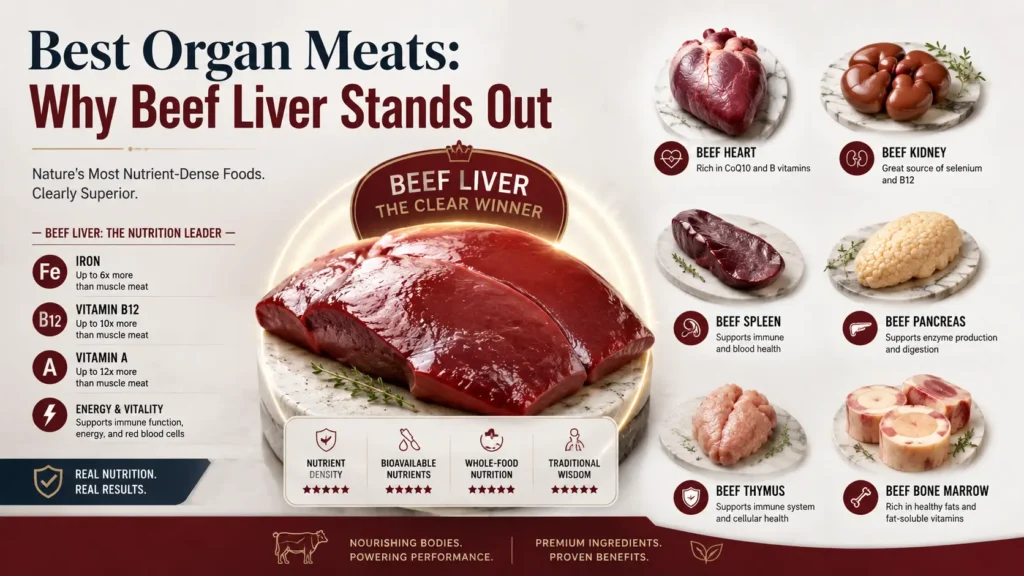
Liver has long held a special place among organ meats, and there is a good nutritional reason for that reputation. Beef liver is one of the best organ meats for overall micronutrient density, providing a particularly broad combination of preformed vitamin A, vitamin B12, riboflavin, folate, iron, copper, choline, protein and other naturally occurring nutrients.
But calling liver simply the “king of organ meats” misses an important point.
Different organs have different nutritional profiles. Beef heart, kidney, spleen, pancreas, thymus, bone marrow and other tissues can offer characteristics that liver does not. The spleen may be especially interesting in iron-focused formulations; the heart is associated with CoQ10 and cardiac muscle nutrients; and the kidney is commonly used in selenium- and DAO-focused organ supplements.
The better question, therefore, is not whether liver defeats every other organ. It is why beef liver works so well as a nutritional foundation, and when another organ or a multi-organ formula may make more sense.
For supplement manufacturers, this distinction is especially important. Unicorns Biotechnology supplies a broad range of bovine glandular powders, including liver, heart, kidney, spleen, pancreas, thymus, adrenal, brain, bone marrow, lung, stomach, intestine, and other bovine tissues for capsules, tablets, powder blends, and private-label organ supplements.
What Makes Beef Liver So Nutrient-Dense?
The liver is a highly metabolically active organ. In the body, it participates in nutrient metabolism and storage, protein synthesis, bile production, and the processing and elimination of many metabolic waste products and foreign substances. It also stores substantial quantities of vitamin A.
That biological role helps explain why liver tissue has such a distinctive nutritional composition.
According to the U.S. National Institutes of Health, 3 ounces of pan-fried beef liver provides approximately:
| Nutrient | Approximate Amount per 3 oz Cooked Beef Liver | % Daily Value |
|---|---|---|
| Vitamin A | 6,582 mcg RAE | 731% |
| Vitamin B12 | 70.7 mcg | 2,944% |
| Riboflavin (B2) | 2.9 mg | 223% |
| Choline | 356 mg | 65% |
| Iron | 5 mg | 28% |
These figures illustrate why liver attracts so much attention in whole-food nutrition.
They should, however, be interpreted correctly. These are values for cooked food, not guaranteed specifications for every raw, dehydrated, spray-dried or freeze-dried liver powder. Breed, diet, age, raw material selection, moisture removal, and processing can all influence the final composition.
For a commercial Bovine Liver Powder, nutrient claims should therefore be based on the actual batch specification, COA or appropriate third-party analysis rather than simply copying values from a fresh-food nutrition database. Unicorns Biotechnology offers grass-fed bovine liver powder in freeze-dried or spray-dried forms, with an annual manufacturing capability of 600 tons.
Why Beef Liver Stands Out Among Organ Meats
There is no single scientific definition of the “best organ meat.” It depends on what is being measured.
If “best” means the highest concentration of one particular compound, another organ may outperform liver.
If “best” means an unusually broad range of vitamins, minerals, and other nutrients in one organ, liver becomes particularly compelling.
Its strength is nutritional breadth.
Preformed Vitamin A
Animal liver is one of the richest natural dietary sources of preformed vitamin A, primarily retinol and retinyl esters. Unlike provitamin A carotenoids from plant foods, preformed vitamin A does not need to undergo the same conversion process before it can be used by the body.
Vitamin A contributes to normal vision, immune function, reproduction, cellular communication, growth and development.
This exceptional vitamin A concentration is one of the liver’s biggest nutritional advantages, but it is also why serving size matters.
Vitamin B12
Beef liver is exceptionally concentrated in vitamin B12. NIH data list approximately 70.7 mcg of B12 in a 3-ounce serving of cooked beef liver, almost 30 times the U.S. Daily Value.
Vitamin B12 is required for normal red blood cell formation, neurological function, and DNA synthesis. That concentration is one reason liver frequently appears in whole-food multinutrient and organ supplement formulas.
Riboflavin and Other B Vitamins
Liver and kidney are among the foods particularly rich in riboflavin. A 3-ounce serving of pan-fried beef liver provides about 2.9 mg, or 223% of the Daily Value. Liver is also recognized as a major dietary source of folate and vitamin B6.
Heme Iron
Beef liver also provides iron. NIH lists about 5 mg in a 3-ounce cooked serving.
Because iron in animal tissue includes heme iron, liver is frequently used in animal-derived nutritional concepts and iron-focused whole-food products.
However, liver is not necessarily the most iron-rich organ. The spleen can be particularly interesting when iron concentration is the primary formulation objective.
Copper and Trace Minerals
Beef liver is well known as a rich dietary source of copper and also contains iron, zinc, selenium, and other trace minerals. The NIH Office of Dietary Supplements specifically lists beef liver as an important food source of copper.
Again, high concentration creates both nutritional value and a reason to formulate responsibly.
Choline
Liver is also a rich source of choline, providing about 356 mg per 3-ounce cooked serving, which is roughly 65% of the Daily Value. Choline contributes to cell membrane structure, acetylcholine synthesis, and other physiological processes.
Put together, these nutrients explain the liver’s reputation better than any single “superfood” claim.
Beef Liver vs Other Organ Meats
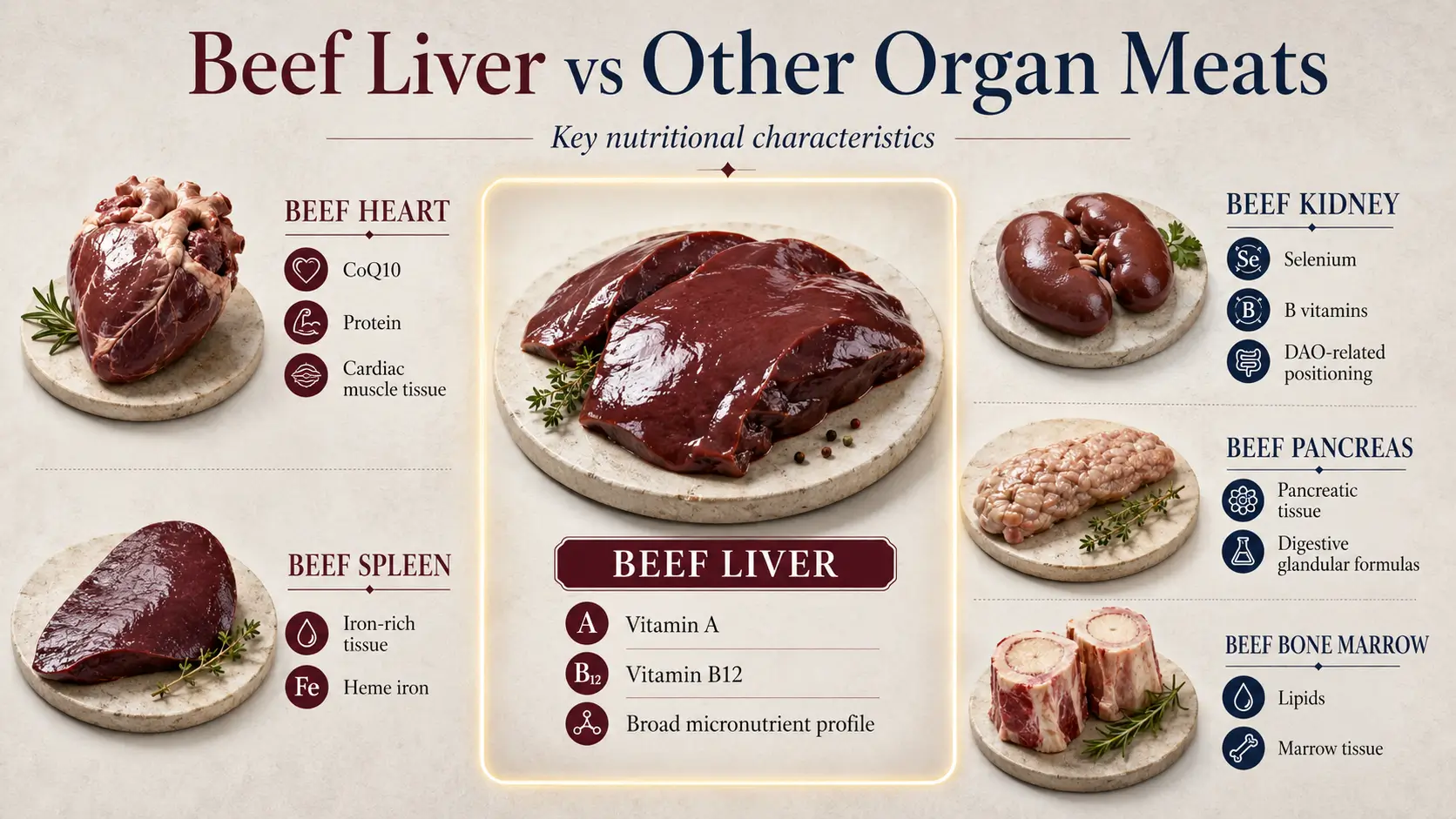
The most useful way to compare organ meats is not to rank them from good to bad. Each tissue has a different biological composition and may serve a different nutritional or formulation purpose.
| Beef Organ | Notable Nutritional or Tissue Characteristics | Common Formulation Role |
| Liver | Vitamin A, B12, folate, riboflavin, copper, iron, choline | Broad whole-organ nutrition |
| Heart | Cardiac muscle protein, CoQ10 and associated nutrients | Heart and multi-organ formulas |
| Kidney | B vitamins, selenium, kidney proteins, DAO-focused positioning | Kidney and histamine-focused formulas |
| Spleen | Iron-rich organ tissue | Iron and multi-organ formulas |
| Pancreas | Pancreatic tissue proteins, peptides and enzymes | Specialized glandular blends |
| Thymus | Thymic glandular tissue | Multi-glandular formulas |
| Adrenal | Adrenal glandular tissue | Specialty glandular formulas |
| Bone Marrow | Lipid-rich marrow tissue and proteins | Ancestral and nose-to-tail formulas |
| Brain | Neural tissue, lipids and phospholipids | Specialized organ formulas |
| Lung | Lung tissue proteins and organ-specific matrix | Multi-organ blends |
| Stomach | Gastric tissue proteins and peptides | Digestive-oriented organ blends |
| Intestine | Intestinal tissue matrix | Gut-focused and ancestral formulas |
This comparison concerns composition and common product positioning. It should not be interpreted to mean that consuming a specific animal organ has been clinically proven to treat or repair the corresponding human organ.
That distinction is particularly important for supplement brands.
Beef Liver vs Beef Heart
Beef Heart Powder and liver are both nutrient-rich bovine tissues, but they are nutritionally quite different.
Heart is primarily a specialized muscle organ. It contains substantial protein and is frequently highlighted for naturally occurring CoQ10 and components associated with cardiac muscle metabolism. Liver, in contrast, offers much greater concentrations of several micronutrients, particularly preformed vitamin A and B12.
This makes liver a logical choice when the formulation objective is broad micronutrient density.
Heart may make more sense when the objective is a heart-based whole-organ ingredient, a multi-organ blend, or a product positioned around cardiac muscle nutrition.
For that reason, liver and heart are often more complementary than competitive.
Beef Liver vs Beef Kidney
Beef Kidney Powder offers another distinctive nutrient profile.
Kidney is a recognized source of riboflavin, and bovine kidney products are frequently positioned around selenium, B vitamins and naturally occurring diamine oxidase, or DAO. If DAO activity is commercially important, however, manufacturers should verify the relevant analytical specification rather than assume that all dried kidney powders exhibit the same enzyme activity.
The liver generally holds a stronger position when a brand wants a broad vitamin- and mineral-rich organ ingredient.
Kidney can complement liver when the product concept calls for greater organ diversity or kidney-specific tissue components.
Beef Liver vs Beef Spleen
The spleen is one of the most interesting alternatives to the liver, especially for iron-related products.
The spleen is biologically involved in blood filtration and red blood cell turnover, and its tissue can be particularly rich in iron. This makes Bovine Spleen Powder useful in organ formulas where spleen-derived tissue and naturally occurring iron are part of the product concept.
Liver still offers a broader spectrum of micronutrients, particularly vitamin A, folate, B12, and copper.
So the choice can be simplified as:
Broad micronutrient nutrition: liver
More specialized iron-focused organ positioning: spleen
Broader ancestral formulation: liver + spleen
For brands developing iron products, it is also useful to distinguish whole-organ powders from concentrated or processed iron ingredients such as heme iron polypeptide. They are not interchangeable ingredient categories.
Beef Liver vs Beef Pancreas
The pancreas is both an endocrine and a digestive organ, and pancreatic tissue has a very different composition from that of the liver.
Bovine Pancreas Powder is primarily used in specialized glandular and digestive-oriented organ formulations rather than as a general micronutrient ingredient. Unicorns Biotechnology supplies pancreas powder both as a standalone ingredient and for combinations with liver, kidney, spleen, heart, thymus, adrenal and other bovine tissues.
For a general organ-nutrition supplement, the liver will usually have stronger consumer recognition.
For a multi-glandular or digestive-oriented formula, pancreas can broaden the tissue profile.
Beef Liver vs Thymus and Adrenal
Beef Thymus Powder and Bovine Adrenal Powder belong more clearly to the traditional glandular supplement category.
Unlike liver, these organs are rarely selected primarily because of a well-known vitamin or mineral profile. Their commercial value generally lies in providing whole glandular tissue for single-gland or multi-glandular formulas.
That distinction matters.
The liver is especially compelling because of its nutritional density.
The thymus and adrenal glands are mainly compelling because of their tissue identity and glandular function.
Claims should reflect that difference.
Beef Liver vs Bone Marrow
Bovine Bone Marrow Powder represents another category altogether.
Bone marrow contains a lipid-rich tissue matrix and differs substantially from both liver and skeletal muscle. It has become popular in ancestral, carnivore, and nose-to-tail supplement concepts, particularly when brands want to represent a broader range of traditionally consumed animal tissues.
A formula combining liver with bone marrow therefore provides diversity rather than simple duplication.
Liver contributes a concentrated micronutrient profile, while marrow contributes the characteristics of marrow tissue.
What About Beef Brain?
Bovine Brain Powder contains neural tissue components and is sometimes used in specialized multi-organ or ancestral formulations.
However, this category highlights something that B2B buyers should not overlook: not every bovine tissue has the same regulatory status in every country.
Bovine spongiform encephalopathy, or BSE, regulations identify certain cattle tissues as specified risk materials under particular conditions. For example, U.S. FSIS rules restrict specified high-risk bovine tissues from entering the human food supply.
Therefore, buyers sourcing brain, eyes, intestinal materials, or other potentially sensitive tissues should verify:
- cattle age
- country of origin
- veterinary controls
- BSE/TSE documentation
- tissue-specific import restrictions
- slaughterhouse documentation
- applicable destination-market regulations
This is one area where a generic “grass-fed” statement is not enough.
Beef Liver vs Regular Beef Muscle Meat
Beef steak and beef liver are both nutritious, but they serve different nutritional roles.
Muscle meat is an excellent source of protein and provides iron, zinc, B12, creatine and other nutrients.
Liver contains protein too, but its major advantage is micronutrient concentration.
For example, NIH data show that 3 ounces of beef liver contains 356 mg of choline compared with 117 mg in the same serving of beef top round. Beef liver also provides 2.9 mg of riboflavin, while a 3-ounce beef tenderloin steak provides approximately 0.4 mg.
So organ meat should not necessarily be viewed as a replacement for muscle meat.
A better way to think about the relationship is:
Muscle meat = major protein food
Liver = protein plus unusually concentrated micronutrients
That is one reason nose-to-tail nutrition traditionally incorporates both rather than choosing one exclusively.
Is Beef Liver Really the “King” of Organ Meats?
The answer depends on what “king” means.
If it means:
Does liver contain the highest amount of every useful nutrient?
No.
Other organs can equal or exceed it for particular nutrients or tissue components.
If it means:
Does liver combine an unusually broad selection of essential nutrients in one commonly available organ?
Then liver has an exceptionally strong case.
Its real advantage is not domination of every nutritional category. It is nutrient breadth plus concentration plus practical availability.
That combination explains why liver is frequently the first ingredient used in organ supplement products.
Why Liver Often Becomes the Foundation of Beef Organ Supplements
From a product-development perspective, liver has several advantages beyond nutrition.
Strong Consumer Recognition
Consumers already recognize terms such as:
- beef liver
- grass-fed beef liver
- desiccated liver
- beef liver capsules
- beef liver supplements
- freeze-dried beef liver
- ancestral organ supplements
That lowers the educational barrier compared with more specialized organs such as thymus, pancreas or adrenal.
Broad Product Positioning
Liver can fit naturally into:
- single-ingredient beef liver capsules
- organ meat supplements
- ancestral nutrition products
- whole-food multinutrient formulas
- women’s and men’s nutrition products
- multi-organ capsules
- tablets
- powder blends
- pet nutrition products
Better Availability Than Some Small Glands
A cow has a much larger liver than organs such as the adrenal glands or thymus. From a manufacturing perspective, tissue yield affects raw-material availability, batch scale, procurement cost and ultimately finished-product economics.
This matters enormously when a brand moves from a small pilot order to commercial production.
Easy Combination With Other Organs
Liver can become the nutritional base of a formula while smaller quantities of other tissues create greater organ diversity.
For example:
Liver + Heart + Kidney + Spleen
or:
Liver + Heart + Kidney + Spleen + Pancreas
or a broader ancestral formula using liver alongside Bovine Lung Powder, Bovine Stomach Powder and Bovine Intestine Powder.
Unicorns Biotechnology’s bovine range includes these and many other tissues for custom multi-organ formulations.
Single-Organ vs Multi-Organ Supplements: Which Is Better?
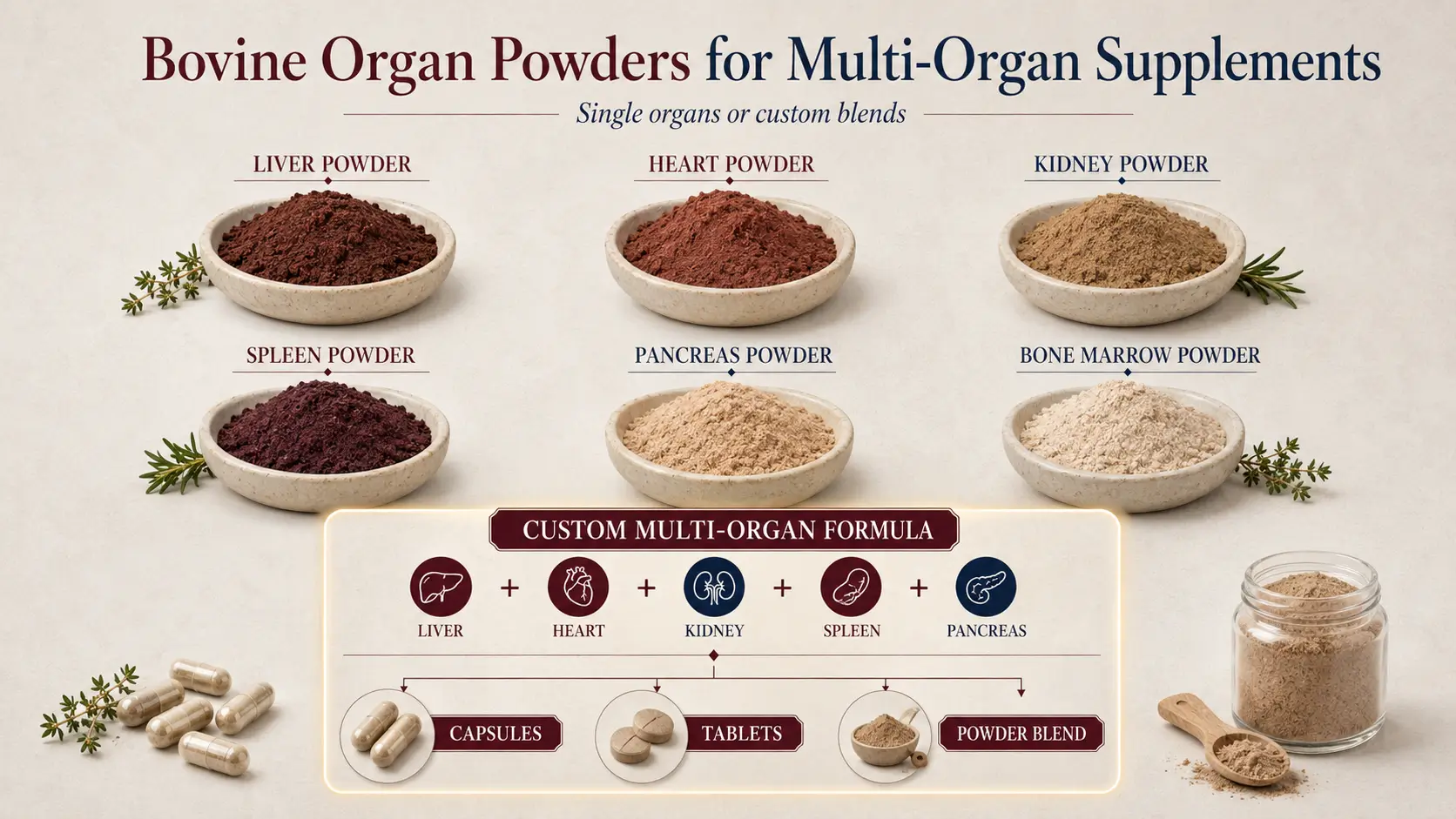
Neither format is inherently superior.
They serve different product strategies.
Single Beef Liver Supplements
A single-organ product is simple to explain and easy for consumers to understand.
Typical positioning includes:
- grass-fed beef liver capsules
- freeze-dried liver supplements
- desiccated liver tablets
- whole-food multinutrient formulas
The simple ingredient story also works well for clean-label brands.
Multi-Organ Supplements
A multi-organ supplement sacrifices some simplicity in exchange for tissue diversity.
A formula might contain:
- liver
- heart
- kidney
- spleen
- pancreas
- lung
- thymus
- adrenal
- bone marrow
This aligns naturally with ancestral and nose-to-tail nutrition concepts.
Brands developing this type of product should decide whether they want equal organ proportions or a liver-dominant formula. Liver-dominant formulations can provide the recognizable nutritional foundation while smaller quantities of other organs broaden the tissue profile.
Beef Liver Powder vs Fresh Beef Liver
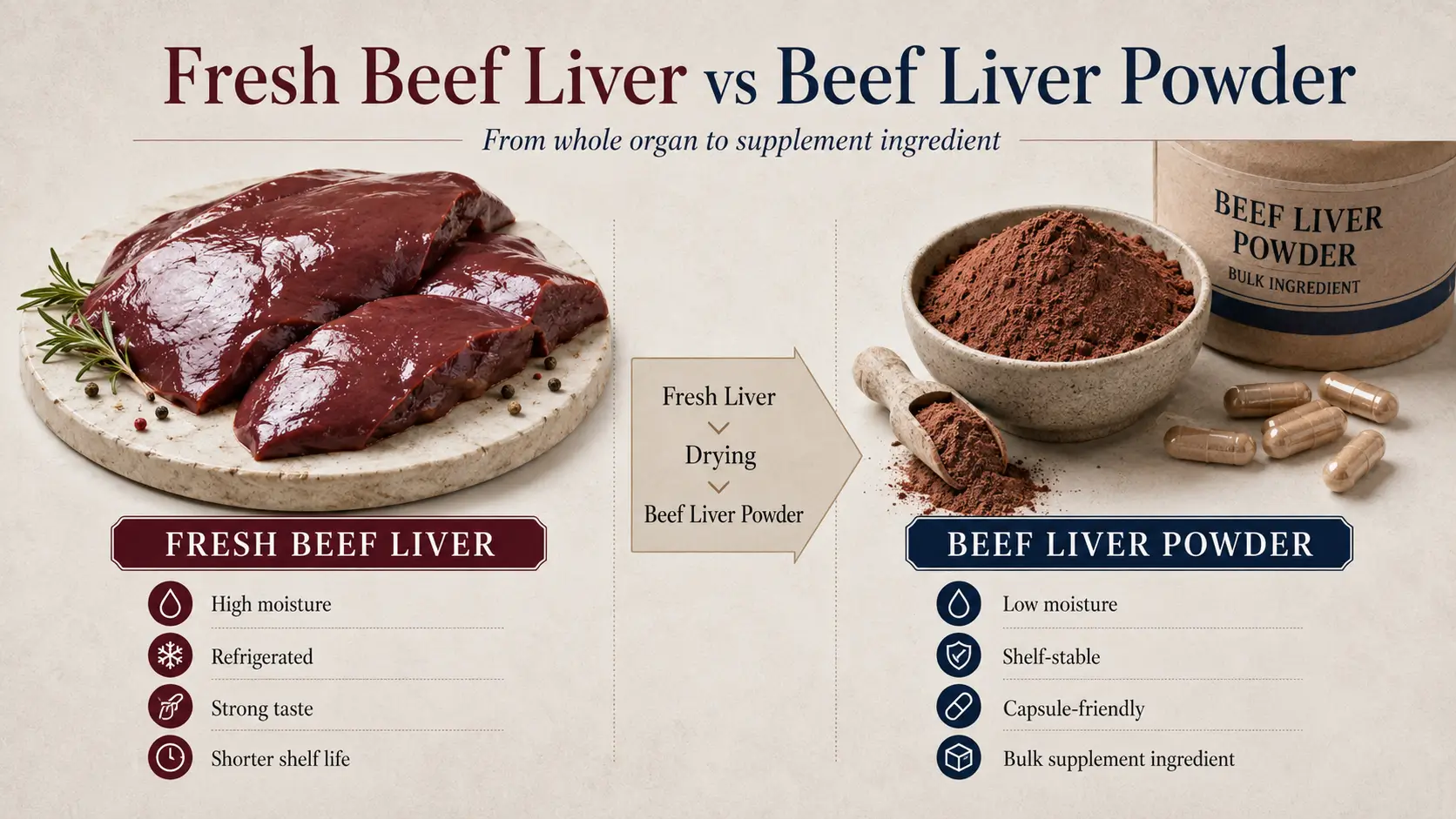
Fresh liver and powdered liver begin with the same organ, but they are not identical products.
| Factor | Fresh Beef Liver | Beef Liver Powder |
| Moisture | High | Low |
| Shelf stability | Limited | Significantly improved |
| Refrigeration | Normally required | Usually not after proper drying and packaging |
| Taste | Strong | Can be masked in capsules |
| Portion measurement | Food serving | Precise formulation weight |
| Manufacturing use | Limited | Capsules, tablets, blends |
| International transport | More complex | Easier as dry bulk ingredient |
| Nutrient concentration | Based on wet weight | Concentrated by water removal, but processing matters |
| Specification control | Food-dependent | Can be batch tested |
The convenience of powder is why many consumers use liver capsules even when they would not regularly eat fresh liver.
However, manufacturers should avoid making a simplistic statement such as:
“1 gram of powder equals exactly X grams of fresh liver.”
That relationship depends on the original tissue moisture, drying yield, defatting, carriers if any and the finished product’s composition.
A scientifically sound equivalency should be based on actual processing data.
Freeze-Dried vs Spray-Dried Beef Liver
Processing method is another factor brands often oversimplify.
Freeze-Dried Beef Liver
Freeze drying removes moisture under low-temperature, low-pressure conditions.
It is popular for premium whole-organ supplements because it can reduce the degree of heat exposure and supports a strong clean-label, minimally processed positioning.
Spray-Dried Beef Liver
Spray drying converts liquid or prepared material into powder using heated drying air.
It can offer excellent production efficiency and scalability and may be more economical for high-volume formulas.
Neither label alone tells buyers the complete nutritional story.
A statement such as “freeze-dried therefore contains more nutrients” should not be made unless comparative analytical data support it.
The final product should instead be evaluated using:
- nutrient testing
- protein content
- moisture
- microbiology
- heavy metals
- raw-material identity
- process controls
- storage stability
Unicorns Biotechnology’s Bovine Liver Powder is available with freeze-dried or spray-dried processing depending on application requirements.
Does Beef Liver Store Toxins?
This is one of the most common misconceptions about eating liver.
The liver is involved in processing, transforming and helping eliminate many drugs, toxins and metabolic waste products. That does not mean its biological function is simply to act as a permanent container where all toxins are stored. It also processes and stores nutrients and performs hundreds of metabolic functions.
At the same time, it would also be incorrect to claim that liver or other animal tissues can never contain environmental contaminants.
Animals can be exposed to elements such as arsenic, lead, cadmium, veterinary drug residues and other contaminants through their environment, feed and production system. This is why raw-material controls and finished-product testing matter. FDA notes that environmental contaminants such as arsenic can enter foods from the environment in which food animals or crops are raised.
For a commercial bovine organ ingredient, “natural” should never replace analytical quality control.
Grass-Fed Beef Liver: Does Grass-Fed Automatically Mean More Nutritious?
Grass-fed origin is valuable for traceability and premium product positioning, and many organ supplement buyers specifically request it.
But grass-fed does not automatically prove that every vitamin and mineral is present at a higher level.
An animal’s diet can affect the composition of its tissues, but differences depend on the nutrient, farming system and other variables. For example, NIH specifically notes that animal diet can affect vitamin D levels in tissues.
Therefore, a better B2B approach is:
Grass-fed origin = sourcing attribute
Nutrient concentration = analytical attribute
Brands that want to make quantified nutritional claims should test the actual powder.
Whole-Organ Powder vs Standardized Extract
This distinction is particularly important for ingredient buyers.
A bovine liver powder is a complex biological material. It contains proteins, peptides, lipids, vitamins, minerals and many other tissue constituents.
It is not one purified molecule.
Therefore, whole Bovine Liver Powder normally does not have:
- one molecular formula
- one molecular weight
- one CAS number
- one universal assay value
Instead, buyers commonly control specifications through parameters such as:
- species and tissue identity
- bovine origin
- drying method
- appearance
- particle size
- loss on drying
- ash
- protein
- microbiology
- heavy metals
- vitamin or mineral assays when required
- pesticide residues
- veterinary drug residues
- BSE/TSE statement
- allergen declaration
- non-GMO statement
This is fundamentally different from sourcing a standardized single compound such as vitamin B12 or an isolated iron ingredient.
Important Safety Considerations
The same nutrient density that makes liver attractive also makes responsible serving-size design important.
Vitamin A
Preformed vitamin A is fat soluble and can accumulate in the body. NIH lists 3,000 mcg RAE per day as the tolerable upper intake level for preformed vitamin A for adults, whereas a 3-ounce cooked beef liver serving can contain substantially more than that amount.
That does not mean beef liver is inherently unsafe. It means serving size and frequency matter.
For supplements, manufacturers should calculate vitamin A exposure from both the organ ingredient and other vitamin-containing ingredients in the finished formula.
Pregnancy
Vitamin A is necessary during pregnancy, but excessive preformed vitamin A can cause fetal harm. NIH specifically cautions against high-dose preformed vitamin A supplementation during pregnancy.
Pregnancy-related marketing therefore requires particular care.
Iron
Consumers with disorders involving excessive iron accumulation, or people already using high-dose iron products, may require professional guidance before adding iron-rich organ supplements.
Purines and Gout
Organ meats are generally high in purines, which can be relevant to individuals with hyperuricemia or gout.
Multiple Supplements
Consumers may take beef liver alongside multivitamins, prenatal products, iron supplements and other fortified foods. Total exposure matters more than the quantity from one product alone.
“Like Supports Like” Is Not the Same as Clinical Evidence
Traditional glandular nutrition often follows the idea that consuming a particular animal organ supports the corresponding human tissue.
That concept has historical and marketing importance, but brands should distinguish it from clinical evidence.
A bovine heart ingredient should not automatically be described as treating heart disease.
A kidney powder should not be described as treating kidney disease.
A thyroid glandular product requires especially careful handling because animal-derived thyroid material can contain biologically active thyroid constituents.
This is not merely theoretical. In April 2025, the U.S. FDA issued an advisory letter concerning disease-treatment claims made for an animal-derived thyroid product. The agency stated that claims related to treating or preventing hypothyroidism and Graves’ disease caused the product to meet the legal definition of a drug.
For supplement manufacturers, the safest distinction is:
Ingredient composition and nutritional positioning: appropriate when substantiated.
Disease prevention, treatment or cure claims: potentially drug claims and subject to a different regulatory framework.
What Should Bulk Buyers Look for in Beef Organ Powders?
For supplement brands, contract manufacturers and ingredient distributors, choosing an organ is only half of the sourcing decision.
Quality systems are equally important.
A commercial buyer should evaluate:
1. Species and Organ Identity
Documentation should clearly identify the animal species and tissue.
“Bovine organ powder” is not specific enough when the formula requires liver, spleen, kidney or pancreas.
2. Raw-Material Traceability
Ask about:
- country of origin
- slaughter source
- animal health controls
- batch traceability
- grass-fed documentation when claimed
- veterinary inspection
3. Drying Process
Confirm whether the ingredient is:
- freeze-dried
- spray-dried
- conventionally dehydrated
- defatted
- non-defatted
Processing affects physical characteristics, cost and potentially composition.
4. Microbiological Quality
At minimum, buyers commonly review:
- total aerobic microbial count
- yeast and mold
- E. coli
- Salmonella
5. Heavy Metals
Specifications should address contaminants such as:
- lead
- arsenic
- cadmium
- mercury
6. BSE/TSE and Tissue-Specific Controls
These are especially important for bovine-derived materials.
Certain tissues can face stricter controls based on animal age and destination market. Buyers should verify compliance before placing commercial orders.
7. Nutrient Testing
If the finished product label states a specific quantity of:
- vitamin A
- B12
- iron
- copper
- selenium
- protein
- CoQ10
- DAO
then the manufacturer should have appropriate analytical evidence to support that claim.
8. Manufacturing Suitability
Ask about:
- mesh size
- flowability
- bulk density
- odor
- taste
- capsule filling performance
- tablet compression
- blend uniformity
A nutritionally interesting ingredient still needs to work in production.
Which Organ Meat Is Best for a Supplement Formula?
The answer depends on the product.
Choose Liver When:
You need broad micronutrient positioning, high consumer recognition and a strong foundation for a whole-food organ product.
Choose Heart When:
You want cardiac muscle tissue or a heart-focused component in an organ blend.
Explore Bovine Heart Powder.
Choose Kidney When:
You want kidney tissue, selenium-rich organ positioning or a DAO-focused ingredient concept.
Explore Bovine Kidney Powder.
Choose Spleen When:
Iron-rich organ tissue is particularly relevant to the formula.
Explore Bovine Spleen Powder.
Choose Pancreas When:
The product is a specialized digestive or multi-glandular formula.
Explore Bovine Pancreas Powder.
Choose Several Organs When:
The brand is positioned around whole-animal, ancestral or nose-to-tail nutrition.
Explore Unicorns Biotechnology’s complete range of Bovine Glandular Powders.
Is Beef Liver the Best Organ Meat?
For overall nutrient density, beef liver deserves its reputation as one of the best organ meats.
It combines exceptionally high levels of vitamin A and vitamin B12 with riboflavin, folate, iron, copper, choline, protein and numerous other naturally occurring components in one food. Few animal tissues offer that same breadth.
But that does not make every other organ inferior.
Heart provides a different muscle-tissue profile. Kidney brings different micronutrients and tissue components. Spleen is particularly interesting for iron. Pancreas, thymus and adrenal have specialized glandular applications. Bone marrow adds a very different tissue and lipid matrix.
This is why beef liver works so well in two very different roles:
as a standalone organ supplement, and
as the nutritional foundation of a multi-organ formula.
The better conclusion is therefore not “liver is the only organ you need.”
It is:
Beef liver stands out because it combines exceptional micronutrient density, broad nutritional diversity, consumer recognition and practical formulation versatility, while other organ meats provide complementary characteristics that can make a thoughtfully designed multi-organ formula even broader.
Bulk Beef Liver and Organ Powders from Unicorns Biotechnology
Unicorns Biotechnology is a China manufacturer of animal-derived ingredients supplying bulk Bovine Liver Powder and a comprehensive portfolio of Bovine Glandular Powders for supplement brands, ingredient distributors, private label companies and contract manufacturers.
Available bovine ingredients include liver, heart, kidney, spleen, pancreas, thymus, adrenal, bone marrow, brain, lung, stomach, intestine and other bovine tissues.
Depending on the ingredient and project requirements, buyers can request freeze-dried or spray-dried options, custom particle sizes, bulk packaging, COA, specification sheets, MSDS, third-party testing, custom organ blends and OEM/private label manufacturing.
For a single-organ beef liver product, a liver-dominant ancestral formula or a customized multi-organ supplement, ingredient selection should begin with the intended nutritional positioning, required analytical specifications and regulatory requirements of the destination market.
Frequently Asked Questions
Which organ meat is the most nutritious?
There is no universal ranking because organ meats have different nutrient profiles. Beef liver is one of the strongest choices for overall micronutrient breadth, particularly vitamin A, B12, riboflavin, folate, copper, iron and choline. Other organs may provide higher concentrations of particular nutrients or different tissue components.
Is beef liver better than beef heart?
Not necessarily. Beef liver is generally more useful for broad micronutrient nutrition, while beef heart provides cardiac muscle tissue, protein and naturally occurring compounds such as CoQ10. Many multi-organ supplements use both.
Is beef liver better than beef kidney?
Liver and kidney have different strengths. Liver stands out for vitamin A and broad micronutrient density. Kidney is also nutrient-rich and is commonly used in selenium-, B-vitamin- and DAO-focused formulations.
Is beef liver high in iron?
Yes. NIH lists about 5 mg of iron in a 3-ounce serving of pan-fried beef liver, equivalent to approximately 28% of the Daily Value.
Is beef liver high in vitamin B12?
Yes. A 3-ounce serving of cooked pan-fried beef liver provides approximately 70.7 mcg of vitamin B12, according to NIH data.
Can you take beef liver supplements every day?
The appropriate serving depends on the supplement’s actual nutrient composition and the consumer’s overall diet. Because liver can be very high in preformed vitamin A, manufacturers and consumers should consider total vitamin A intake rather than assuming that more liver is always better.
Is freeze-dried beef liver the same as fresh liver?
No. Freeze-dried liver originates from fresh liver, but the removal of moisture changes its weight. Processing, moisture content, and raw material variation can also affect composition. Nutrient values for fresh or cooked liver should not automatically be treated as guaranteed values for a commercial liver powder.
Does beef liver store toxins?
The liver processes nutrients, medications, metabolic waste, and many potentially harmful compounds rather than functioning simply as a storage container for toxins. Nevertheless, animal tissues can be exposed to environmental contaminants, which is why traceable sourcing and analytical testing remain important.
Is grass-fed beef liver more nutritious?
Grass-fed origin is an important sourcing and product-positioning characteristic, but it does not by itself prove a higher concentration of every nutrient. Quantitative nutrient claims should be supported by analysis of the actual ingredient.
Is a multi-organ supplement better than beef liver alone?
It depends on the formula objective. Beef liver alone offers a simple, highly recognizable and nutrient-dense product. A multi-organ formula provides a wider variety of tissues such as liver, heart, kidney, spleen and pancreas. Neither format is inherently superior.
What is the best organ meat for an organ supplement brand?
For a first or flagship organ product, beef liver is often the most practical choice due to its nutritional profile and consumer familiarity. Brands seeking ancestral or nose-to-tail positioning may instead combine liver with heart, kidney, spleen, pancreas, bone marrow and other organs.
References
- National Institutes of Health, Office of Dietary Supplements. Vitamin A and Carotenoids: Fact Sheet for Health Professionals.
https://ods.od.nih.gov/factsheets/VitaminA-HealthProfessional/ - National Institutes of Health, Office of Dietary Supplements. Vitamin B12: Fact Sheet for Health Professionals.
https://ods.od.nih.gov/factsheets/VitaminB12-HealthProfessional/ - National Institutes of Health, Office of Dietary Supplements. Iron: Fact Sheet for Health Professionals.
https://ods.od.nih.gov/factsheets/Iron-HealthProfessional/ - National Institutes of Health, Office of Dietary Supplements. Choline: Fact Sheet for Health Professionals.
https://ods.od.nih.gov/factsheets/Choline-HealthProfessional/ - National Institutes of Health, Office of Dietary Supplements. Riboflavin: Fact Sheet for Health Professionals.
https://ods.od.nih.gov/factsheets/Riboflavin-HealthProfessional/ - National Institutes of Health, Office of Dietary Supplements. Copper: Fact Sheet for Health Professionals.
https://ods.od.nih.gov/factsheets/Copper-HealthProfessional/ - U.S. Department of Agriculture, Food Safety and Inspection Service. Bovine Spongiform Encephalopathy and Specified Risk Material Resources.
https://www.fsis.usda.gov/inspection/compliance-guidance/specified-risk-material-resources - U.S. Food and Drug Administration. Ancestral Supplements, LLC, Online Advisory Letter, April 24, 2025.
https://www.fda.gov/inspections-compliance-enforcement-and-criminal-investigations/ancestral-supplements-llc