
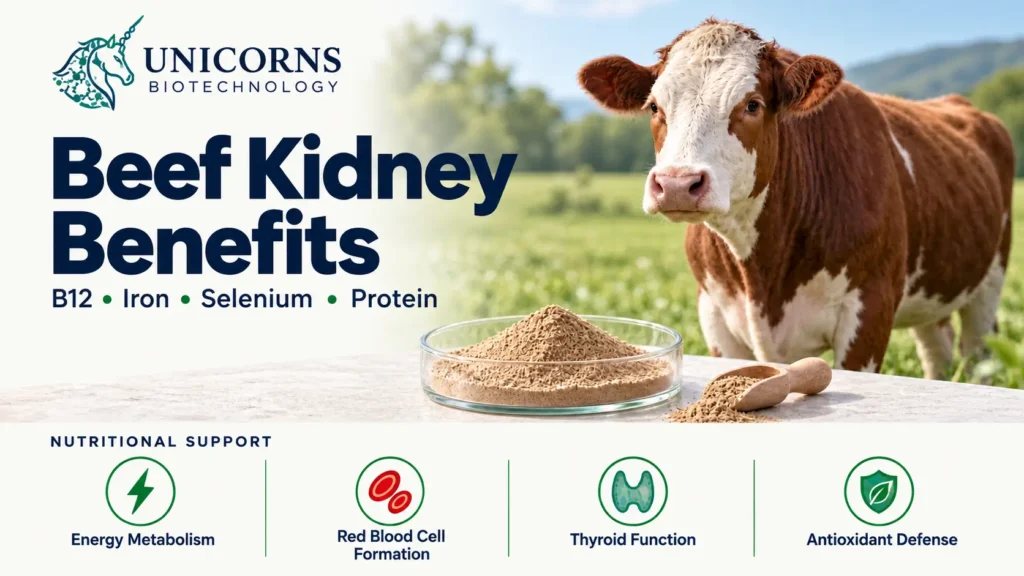
Beef kidney benefits start with its protein, vitamin B12, riboflavin, selenium, and iron. These nutrients support normal metabolism, blood formation, and other body functions. For supplement brands, the value depends on how much the finished serving delivers.
Fresh kidney, desiccated powder, and DAO extracts differ in composition and use. If you buy bovine kidney powder, start with the ingredient specification and connect each claim to the evidence behind it.
Beef Kidney as Food and a Nutritional Ingredient
Beef kidney, or cow kidney, refers to kidney tissue from cattle. Ingredient suppliers use the term bovine kidney powder for the same animal source. The food trade groups it with organ meat, offal, and other edible animal tissues.
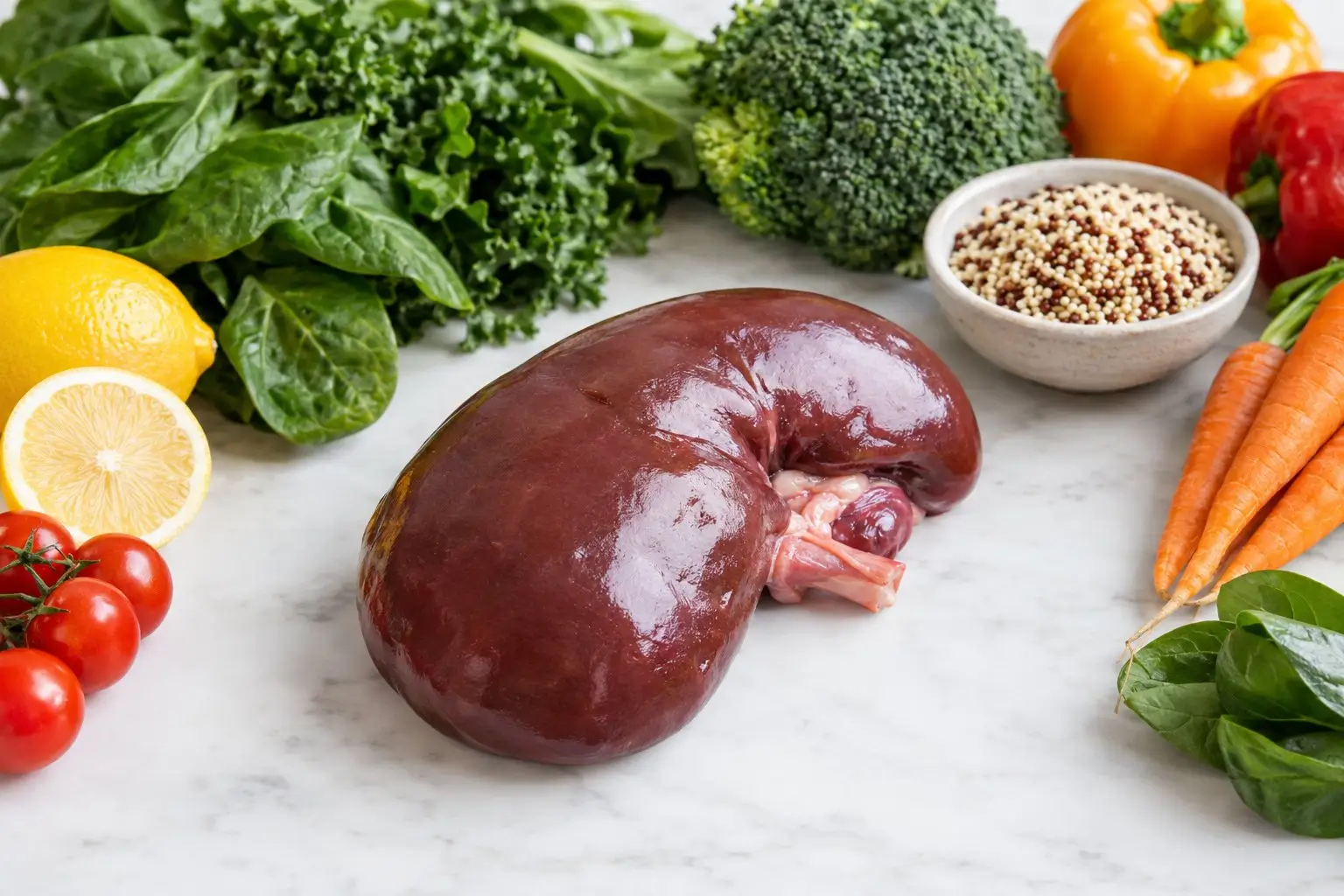
Manufacturers clean, dry, and mill kidney tissue to make whole kidney powder. Some suppliers also offer extracts, which require a separate description of the extraction process and composition.
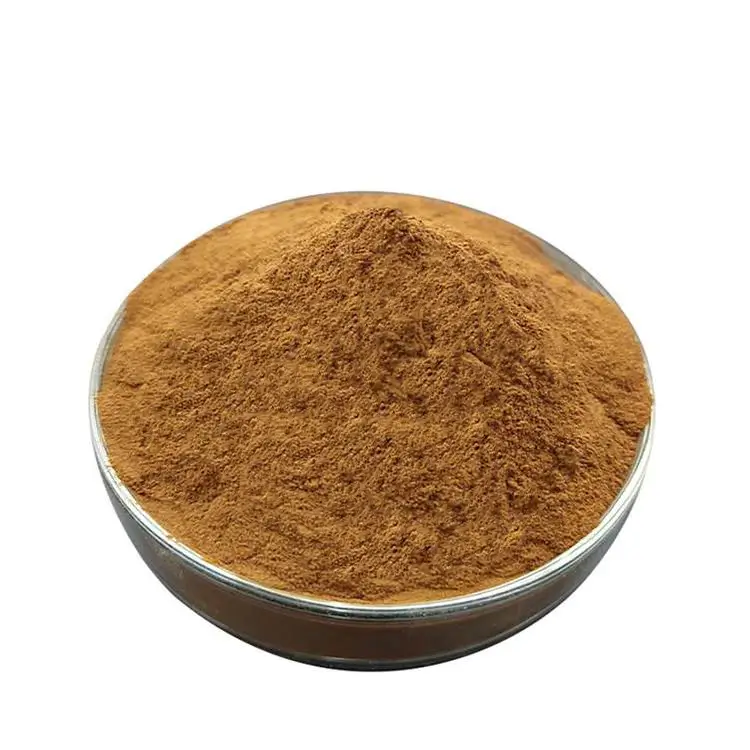
Supplement brands use kidney powder in single-organ capsules and multi-organ blends. Although the trade often calls these products glandular supplements, kidney and adrenal gland powders contain different tissues.
Nose-to-tail eating puts more edible parts of an animal to use. That provides a practical reason to explore organ ingredients alongside their nutritional value.
Beef Kidney Nutrition Facts and Key Nutrients
The table below uses USDA SR Legacy data for raw beef kidney, FoodData Central entry 169449. These food values provide a reference point. They do not describe a commercial powder or finished supplement.
| Nutrient | Amount per 100 g raw kidney | Approximate U.S. Daily Value |
|---|---|---|
| Calories | 99 kcal | — |
| Protein | 17.4 g | — |
| Total fat | 3.09 g | 4% |
| Saturated fat | 0.87 g | 4% |
| Carbohydrate | 0.29 g | <1% |
| Cholesterol | 411 mg | 137% |
| Vitamin B12 | 27.5 mcg | 1,146% |
| Riboflavin, B2 | 2.84 mg | 218% |
| Niacin, B3 | 8.03 mg | 50% |
| Pantothenic acid, B5 | 3.97 mg | 79% |
| Vitamin B6 | 0.665 mg | 39% |
| Folate | 98 mcg DFE | 25% |
| Selenium | 141 mcg | 256% |
| Iron | 4.6 mg | 26% |
| Zinc | 1.92 mg | 17% |
| Copper | 0.426 mg | 47% |
| Phosphorus | 257 mg | 21% |
Daily Values use U.S. reference amounts for adults and children aged four and older. A dash means this table does not calculate a percentage. The selected raw-kidney entry does not report choline, so it cannot support a choline value here.
Vitamin B12, Riboflavin and Selenium
B12, riboflavin, and selenium stand out in the beef kidney nutrient profile. A 100 g raw portion exceeds the Daily Value for each. A smaller serving contributes less, and more than the Daily Value does not mean more benefit.
Beef Kidney Iron Content, Calories and Protein
The reference entry supplies 4.6 mg iron and 17.4 g protein per 100 g. It contains little carbohydrate, which can suit low-carbohydrate food formulations.
Low fat does not mean low cholesterol. Kidney contains 411 mg cholesterol per 100 g in this dataset, so buyers should consider both measures.
Raw versus Cooked Beef Kidney Nutrition
Cooking changes water content and can change nutrient retention. Drying also changes the weight basis, while extraction can change the composition itself.
Compare raw foods with raw foods and finished powders with finished powders. The 2024 analysis by Fuerniss and colleagues adds laboratory data for beef offal, but no food database replaces a supplier’s product testing.
Nutritional Benefits of Beef Kidney
B Vitamins for Energy Metabolism
Riboflavin, niacin, and pantothenic acid help enzymes process nutrients from food. These vitamins support normal energy metabolism rather than act as stimulants.
Avoid promising an energy boost from B12 alone. NIH notes that B12 supplements do not appear to improve athletic performance or endurance in people with adequate B12 status.
Vitamin B12 and Iron for Healthy Blood Formation
Vitamin B12 supports red blood cell formation. Iron forms part of hemoglobin, which carries oxygen through the blood.
Beef kidney contributes dietary iron, including heme iron. However, a total-iron result does not tell you how much heme iron a powder contains.
Low iron or B12 status can contribute to fatigue. Persistent fatigue needs clinical assessment, since food or supplements cannot resolve every cause.
Selenium for Normal Thyroid Function
Selenium forms part of enzymes that help regulate thyroid hormone metabolism. These include enzymes that convert thyroxine, or T4, into active triiodothyronine, or T3.
This supports a nutritional discussion about selenium and thyroid function. It does not establish beef kidney powder as a treatment for hypothyroidism or other thyroid disorders.
Nutrients for Antioxidant Defenses and Immune Function
Selenium-containing proteins help protect cells from oxidative damage. Zinc also contributes to normal immune function.
For a formulator, the next question concerns the amount per serving. A food composition table cannot establish that a capsule formula prevents infections or improves immune outcomes.
Protein for Muscle Maintenance and Tissue Repair
Beef kidney contributes animal protein and essential amino acids. The body uses these building blocks to maintain muscle and other tissues.
A capsule serving has a different role from a protein-rich meal. Even a 3 g serving of pure kidney powder cannot supply more than 3 g protein, and its actual protein content falls below that limit.
The same distinction applies to skin claims. Research on hydrolyzed collagen does not establish equivalent benefits from whole kidney powder.
B12 and Choline for Nervous System Function
Vitamin B12 supports normal nerve function. Choline contributes to cell membranes and acetylcholine, a neurotransmitter involved in muscle control and other functions.
Use an appropriate food source or product assay before assigning a choline value to kidney ingredients. Neither nutrient’s biological role proves that beef kidney capsules improve memory or mood.
Beef Kidney, DAO and Histamine Metabolism
What Is Diamine Oxidase?
Diamine oxidase, or DAO, breaks down histamine and certain other biogenic amines. Intestinal DAO helps limit exposure to histamine from food.
DAO is a copper-containing enzyme. Its biochemical role explains interest in kidney-derived preparations, but that role alone does not prove a commercial powder’s efficacy.
Does Beef Kidney Provide Active DAO?
Kidney tissue can provide a source of DAO. Processing, storage, and formulation determine whether a finished ingredient retains useful enzyme activity.
Ask for activity per gram and per intended serving, with the test method and units. Do not treat milligrams of kidney powder as a measurement of DAO activity.
What Does Human Research Show About DAO Supplements?
Schnedl and colleagues studied 28 people with suspected histamine intolerance in a 2019 pilot trial. Participants took a porcine kidney-derived DAO preparation for four weeks and reported lower symptom scores.
The study lacked a placebo control, and participants continued a histamine-reduced diet. It provides preliminary evidence for that preparation, not proof that whole beef kidney powder produces the same effect.
| Ingredient or evidence | What it establishes | What it does not establish |
|---|---|---|
| Whole bovine kidney powder | Tissue composition and any measured activity | Clinical benefit without relevant trials |
| Standardized DAO preparation | Defined enzyme activity under a stated method | Equivalence to every kidney supplement |
| 2019 porcine DAO pilot | Symptom improvement during a small uncontrolled study | Proven efficacy of bovine kidney capsules |
Can Beef Kidney Help with Allergies?
Histamine intolerance and allergic disease involve different mechanisms. DAO research on dietary histamine does not establish treatment benefits for pollen allergies or food allergies.
If your brief targets “beef kidney for allergies,” reconsider the claim. The keyword describes a consumer question, not an established indication.
Beef Kidney versus Beef Liver Nutrition
Both organs supply protein and B vitamins, but their nutrient profiles differ. The comparison below uses USDA SR Legacy entries for raw kidney and raw liver on the same 100 g basis.
| Nutrient | Beef kidney | Beef liver |
|---|---|---|
| Protein | 17.4 g | 20.36 g |
| Vitamin B12 | 27.5 mcg | 59.3 mcg |
| Riboflavin | 2.84 mg | 2.76 mg |
| Selenium | 141 mcg | 39.7 mcg |
| Iron | 4.6 mg | 4.9 mg |
| Copper | 0.426 mg | 9.755 mg |
| Vitamin A | 419 mcg RAE | 4,968 mcg RAE |
| Cholesterol | 411 mg | 275 mg |
Kidney supplies more selenium in these entries. Liver supplies more B12, copper, and vitamin A. Those differences can guide a multi-organ blend, but the finished formula still needs its own composition data.
If you combine kidney and liver, calculate total nutrient intake per serving. Do not assume that adding organs improves every nutritional target.
Beef Kidney Supplement Benefits and Available Forms
Beef kidney supplements offer a way to use organ ingredients without preparing fresh offal. Their nutritional contribution depends on the powder, serving size, and any other ingredients.
| Form | Practical use | Buyer check |
|---|---|---|
| Cooked kidney | Food portions and prepared meals | Food composition and handling |
| Desiccated kidney powder | Capsules and dry blends | Drying method and measured nutrients |
| Freeze-dried kidney powder | Organ nutrition formulations | Process controls and retained activity |
| Kidney capsules | Defined powder intake | Fill weight, capsule count, and excipients |
| Multi-organ blend | Combined organ ingredients | Each organ’s proportion and total nutrients |
| DAO extract | Enzyme-focused formulations | Source, activity, stability, and evidence |
Desiccated means dried. Freeze-drying, or lyophilization, names a specific drying method. Neither term guarantees a nutrient level or DAO potency.
For example, six capsules with 500 mg kidney powder each deliver 3 g powder. That calculation establishes powder intake, not fresh-kidney equivalence. A fresh-equivalent claim needs a documented yield and moisture basis.
Grass-Fed Beef Kidney and Processing Quality
Grass-fed, grass-finished, pasture-raised, and organic describe different sourcing attributes. Ask your supplier what each claim covers and which records support it.
Treat those records as sourcing evidence. They do not replace nutrient assays, contaminant testing, or clinical studies on the finished product.
For freeze-dried beef kidney, review the process alongside its microbiological controls. Freeze-drying removes water but does not guarantee pathogen elimination or full enzyme retention.
Confirm storage temperature, packaging, moisture limits, and shelf life. If DAO drives the product concept, request activity data through the claimed storage period.
Beef Kidney Cholesterol, Purines and Safety
Beef kidney contains substantial cholesterol and contributes purines. The body converts purines into uric acid, which matters for people with gout or hyperuricemia.
NIH gout guidance advises avoiding organ meats such as kidney. Beef kidney does not offer an established way to lower uric acid or prevent gout attacks.
People with kidney disease need advice that fits their condition and diet. Those with beef allergy should avoid beef-derived kidney ingredients unless their clinician advises otherwise.
Review combined nutrient exposure when users take several supplements. A blend containing kidney, liver, and added minerals requires a total-intake calculation.
Safe Preparation of Fresh Beef Kidney
Keep raw kidney refrigerated and prevent contact with ready-to-eat foods. USDA recommends cooking beef organ meats to an internal temperature of 160°F, or 71.1°C.
Soaking may change flavor, but it does not replace safe cooking. Do not sacrifice food safety to preserve an unverified enzyme benefit.
Common Beef Kidney Claims and the Evidence
Some claims extend beyond nutrient composition. Before using them, check whether the supporting research tested whole kidney, an extract, an isolated compound, or a different organ.
| Claim | Evidence limit |
|---|---|
| Kidney repair and urinary detox | Current evidence does not establish these effects from eating kidney or taking whole-kidney capsules. |
| Organ-specific peptides | Tissue similarity does not prove targeted delivery or repair in human kidneys. |
| Adrenal fatigue relief | Endocrinology guidance does not recognize “adrenal fatigue” as an established diagnosis. Kidney and adrenal powders also differ. |
| Broad digestive enzyme support | DAO breaks down histamine; it does not replace enzymes that digest fat, protein, and carbohydrate. |
| Heart protection or cholesterol reduction | Nutrient content alone does not establish cardiovascular outcomes. |
| Skin rejuvenation | Collagen supplement trials do not establish the same effects for kidney powder. |
| Glutathione or ergothioneine benefits | Research on isolated compounds cannot establish an effective dose or benefit from kidney capsules. |
The systematic review by Cadegiani and Kater found no substantiation for “adrenal fatigue” as a medical condition. That claim should not guide kidney supplement development.
Beef Kidney for Dogs and Cats
Beef kidney can contribute to pet food formulations, but one organ cannot supply a complete diet. Pet nutrition teams must balance the full recipe for the species and life stage.
FDA guidance distinguishes complete foods from treats, toppers, and supplements. It also identifies pathogen risks from raw pet foods.
Can Dogs Eat Beef Kidney?
Dogs that tolerate beef can eat cooked kidney within an appropriate diet. Ask a veterinarian about portions when adding it to an existing feeding plan.
Is Beef Kidney Good for Dogs?
Kidney can contribute protein and micronutrients. Its value depends on the dog’s total diet, and it does not serve as a treatment for canine kidney disease.
Can Cats Eat Beef Kidney?
Cats that tolerate beef can consume kidney as part of a balanced diet. Kidney alone does not meet a cat’s full nutritional needs, and raw feeding adds microbial risk.
Selecting Bovine Kidney Powder for Supplement Manufacturing
Start with ingredient identity, then work toward the finished serving. A whole-tissue powder, a carrier-containing powder, and an extract can require different purchasing specifications.
| Purchasing requirement | What to request |
|---|---|
| Identity | Species, tissue description, whole powder or extract, and added carriers |
| Traceability | Origin records and links between raw materials and production lots |
| Nutritional composition | Product assays for nutrients that support intended claims |
| DAO activity | Method, substrate, units, activity per gram, and stability data |
| Physical properties | Particle size, bulk density, moisture, and flow characteristics |
| Microbiology | Agreed limits, methods, sampling plan, and relevant pathogen results |
| Contaminants | Individual heavy-metal results and applicable residue testing |
| Documents | Batch COA, specification, allergen statement, storage conditions, and shelf life |
Compare prices against the same specification. A lower powder price may offer little value if the ingredient cannot meet capsule-fill targets or substantiate the planned nutrient claims.
Trial the material in your actual formula. Whole kidney tissue may suit capsules and dry blends, while a clear beverage can demand different solubility and sensory properties.
Frequently Asked Questions
Is Beef Kidney Good for You?
Beef kidney supplies protein, B vitamins, selenium, and iron. Its suitability depends on portion size and individual needs, including cholesterol intake, gout risk, and food allergies.
What Are the Main Benefits of Beef Kidney Supplements?
They offer convenient organ ingredient intake and can contribute measured nutrients. The label and supporting tests should show what each serving provides.
How Much Vitamin B12 and Iron Does Beef Kidney Contain?
The raw USDA reference provides 27.5 mcg B12 and 4.6 mg iron per 100 g. Finished powders and capsules need separate composition data.
Is Beef Kidney High in Cholesterol?
Yes. The raw reference contains 411 mg per 100 g, so serving size matters even though the food contains little total fat.
Is Beef Kidney Suitable for a Low-Carbohydrate Diet?
Plain kidney contains little carbohydrate. Added sauces, carriers, and other formula ingredients can change the finished product’s carbohydrate content.
Is Beef Kidney Better Than Beef Liver?
Neither organ wins across all nutrients. Kidney supplies more selenium in the reference comparison, while liver supplies more vitamin A, copper, and B12.
Can You Take Beef Kidney and Beef Liver Supplements Together?
Some formulas combine them. Review their serving sizes and total nutrient contribution alongside food and any other supplements.
Does Freeze-Drying Preserve DAO?
The process alone cannot prove retention. Request enzyme activity and stability results for the ingredient and finished formulation.
How Much Beef Kidney Powder Should You Take?
Research does not establish one therapeutic dose for all whole-kidney powders. Follow the product directions and seek clinical advice when a health condition affects suitability.
How Long Does It Take to Notice Benefits?
No reliable timeline applies to every user or product. The outcome depends on composition, intake, and whether the person has a relevant nutrient shortfall.
Can Beef Kidney Supplements Treat Adrenal Fatigue?
Research does not support that claim. Persistent fatigue deserves an assessment for recognized causes rather than an assumption about adrenal exhaustion.
Does Eating Beef Kidney Improve Human Kidney Function?
Current evidence does not establish that effect. The animal organ’s function does not predict the therapeutic effect of consuming its tissue.
Can You Open Beef Kidney Capsules and Mix the Powder into Food?
Check the product instructions first. Some formulations rely on capsule design, while heat and food conditions may affect any claimed enzyme activity.
What Should Buyers Check Before Ordering Bulk Kidney Powder?
Confirm tissue identity, traceability, batch testing, and suitability for the intended formula. Request nutrient or enzyme assays when those features drive the product’s claims.
Bulk Bovine Kidney Powder from Unicorns Biotechnology
Unicorns Biotechnology manufactures and supplies bovine kidney powder in China for supplement brands, contract manufacturers, ingredient distributors, and pet nutrition companies. We offer freeze-dried and spray-dried options, organ blends, and OEM development for capsules, tablets, and powders.
For a bulk quotation, share your destination market, order quantity, drying method, and testing requirements. For finished supplements, include the serving size, dosage form, and packaging brief.
Explore our bovine kidney powder or contact Unicorns Biotechnology to request a sample, current specifications, quality documents, and factory pricing.
References
- Fuerniss, H. F., Gifford, C. L., Mortensen, E. G., Belk, K. E., Engle, T. E., & Woerner, D. R. (2024). Nutrient analysis of raw United States beef offal items. Nutrients, 16(18), 3104. https://doi.org/10.3390/nu16183104
- Schnedl, W. J., Schenk, M., Lackner, S., Enko, D., Mangge, H., & Forster, F. (2019). Diamine oxidase supplementation improves symptoms in patients with histamine intolerance. Food Science and Biotechnology, 28(6), 1779–1784. https://doi.org/10.1007/s10068-019-00627-3
- McGrath, A. P., Hilmer, K. M., Collyer, C. A., Shepard, E. M., Elmore, B. O., Brown, D. E., Dooley, D. M., & Guss, J. M. (2009). Structure and inhibition of human diamine oxidase. Biochemistry, 48(41), 9810–9822. https://doi.org/10.1021/bi9014192
- Green, R., Allen, L. H., Bjørke-Monsen, A.-L., Brito, A., Guéant, J.-L., Miller, J. W., Molloy, A. M., Nexo, E., Stabler, S., Toh, B.-H., Ueland, P. M., & Yajnik, C. (2017). Vitamin B12 deficiency. Nature Reviews Disease Primers, 3, 17040. https://doi.org/10.1038/nrdp.2017.40
- Rayman, M. P. (2012). Selenium and human health. The Lancet, 379(9822), 1256–1268. https://doi.org/10.1016/S0140-6736(11)61452-9
- Kaneko, K., Aoyagi, Y., Fukuuchi, T., Inazawa, K., & Yamaoka, N. (2014). Total purine and purine base content of common foodstuffs for facilitating nutritional therapy for gout and hyperuricemia. Biological and Pharmaceutical Bulletin, 37(5), 709–721. https://doi.org/10.1248/bpb.b13-00967
- Cadegiani, F. A., & Kater, C. E. (2016). Adrenal fatigue does not exist: A systematic review. BMC Endocrine Disorders, 16, 48. https://doi.org/10.1186/s12902-016-0128-4
- U.S. Department of Agriculture, Agricultural Research Service. (n.d.). FoodData Central: SR Legacy entries 169449 and 169451, raw beef kidney and liver. https://fdc.nal.usda.gov/. Data reproductions: raw kidney and raw liver.
- National Institutes of Health, Office of Dietary Supplements. (n.d.). Health professional fact sheets. Vitamin B12, iron, selenium, zinc, and choline.
- National Institute of Arthritis and Musculoskeletal and Skin Diseases. (2023). Gout: Diagnosis, treatment, and steps to take. https://www.niams.nih.gov/health-topics/gout/diagnosis-treatment-and-steps-to-take
- U.S. Department of Agriculture, Food Safety and Inspection Service. (n.d.). Beef from farm to table. https://www.fsis.usda.gov/food-safety/safe-food-handling-and-preparation/meat-catfish/beef-farm-table
- U.S. Food and Drug Administration. (n.d.). “Complete and balanced” pet food. https://www.fda.gov/animal-veterinary/animal-health-literacy/complete-and-balanced-pet-food
- U.S. Food and Drug Administration. (n.d.). Get the facts! Raw pet food diets can be dangerous to you and your pet. https://www.fda.gov/animal-veterinary/animal-health-literacy/get-facts-raw-pet-food-diets-can-be-dangerous-you-and-your-pet