
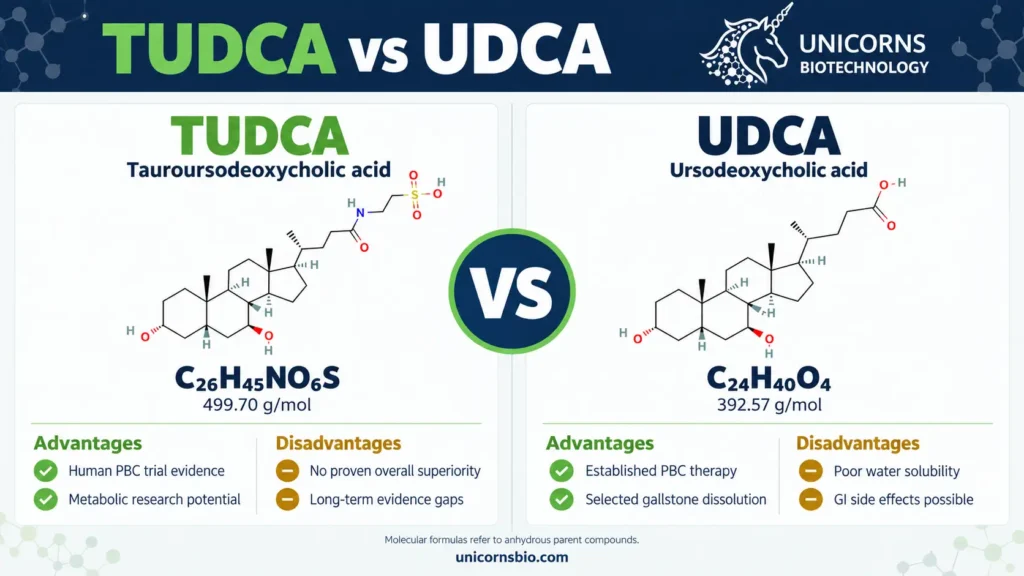
TUDCA vs UDCA starts with one chemical difference: TUDCA contains taurine linked to the UDCA molecule. That change affects molecular weight, ionization, and formulation behavior. It does not make TUDCA the better choice for every application.
UDCA, or ursodeoxycholic acid, has established prescription uses for primary biliary cholangitis and selected cholesterol gallstones. TUDCA, or tauroursodeoxycholic acid, has human research in liver disease and other conditions. The evidence varies by indication.
For procurement managers and formulators, the task has two parts. Match the ingredient to the evidence, then confirm that the supplied chemical form meets your product requirements.
TUDCA vs UDCA at a Glance
| Comparison | TUDCA | UDCA |
|---|---|---|
| Full name | Tauroursodeoxycholic acid | Ursodeoxycholic acid |
| Other name | Taurursodiol | Ursodiol |
| Chemical relationship | Taurine-conjugated form of UDCA | Unconjugated bile acid |
| Parent-compound molecular weight | 499.70 g/mol | 392.57 g/mol |
| Main clinical context | Liver disease trials; metabolic and neurological research | Established prescription use for PBC and selected cholesterol gallstones |
| Absorption comparison | No proven universal advantage | Poor water solubility does not prevent therapeutic use |
| Selection priority | Verify evidence, chemical form, quality, and market eligibility | Match the authorized product and specification to the indication |
Are TUDCA and UDCA the same thing?
No. They share a steroid framework, but TUDCA adds taurine through an amide bond. That creates a distinct compound with different specifications.
Is TUDCA better than UDCA?
No single answer covers every use. UDCA has an established role in specific prescription treatments. TUDCA has comparative liver research, but that evidence does not support broad claims of superior absorption, safety, or efficacy.
Chemical Properties of TUDCA and UDCA
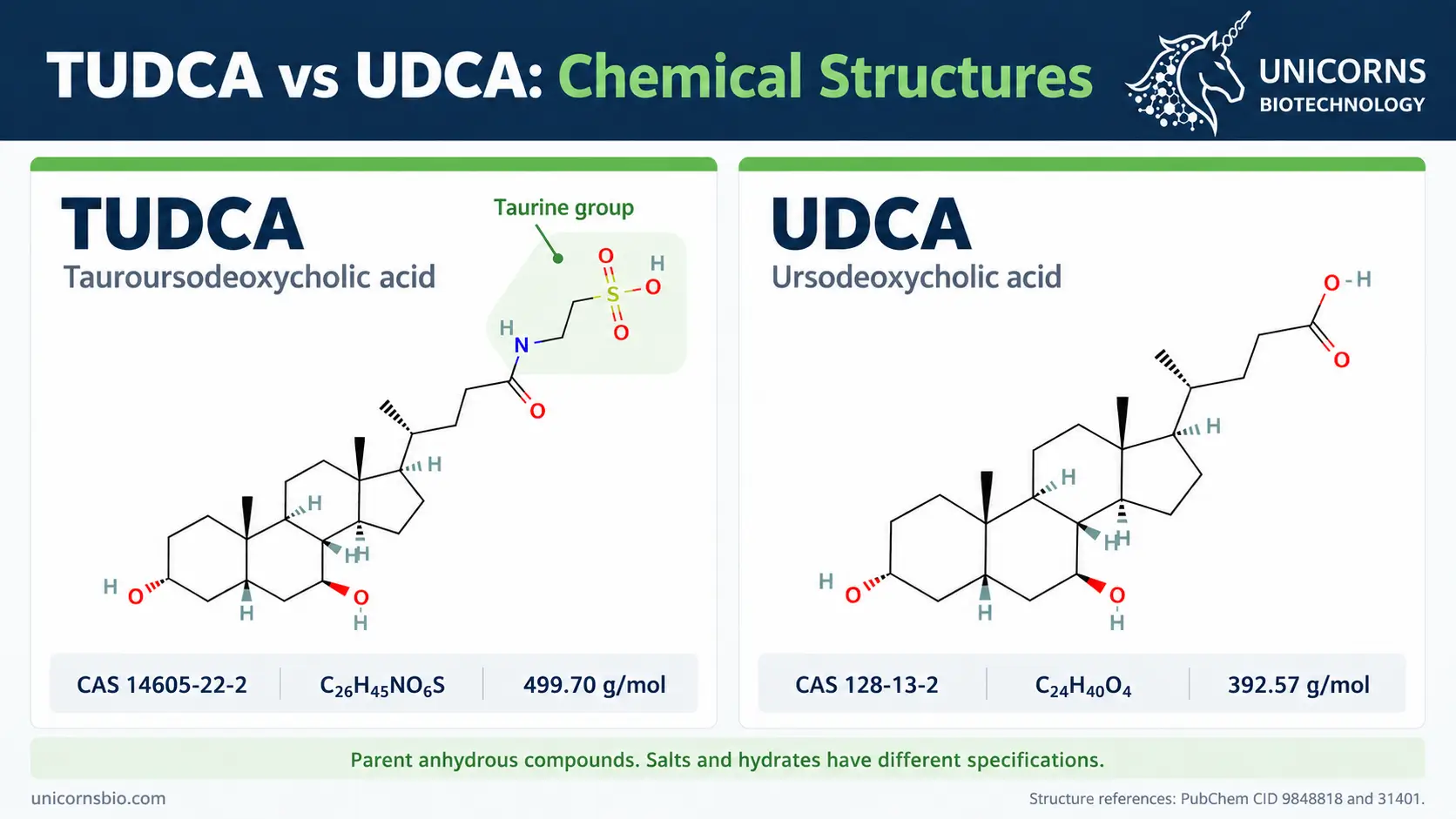
How do their CAS numbers, formulas, and molecular weights compare?
The following table describes the parent, anhydrous compounds. Salt formation and hydration change the specification.
| Property | TUDCA | UDCA |
|---|---|---|
| CAS number | 14605-22-2 | 128-13-2 |
| Molecular formula | C₂₆H₄₅NO₆S | C₂₄H₄₀O₄ |
| Molecular weight | 499.70 g/mol | 392.57 g/mol |
| Main functional groups | Hydroxyl groups, amide linkage, and sulfonic acid group | Hydroxyl groups and carboxylic acid group |
| Structural feature | Taurine joins the UDCA side chain | Unconjugated UDCA side chain |
PubChem, technical datasheets, and ursodiol labeling support these parent-compound identifiers.
TUDCA powder is not taurodeoxycholic acid. These related bile acids have different structures despite sharing a molecular formula. A formula or molecular-weight result alone cannot establish identity.
How do water solubility and solvent solubility differ?
UDCA shows poor water solubility. Taurine conjugation changes TUDCA’s ionization and solution behavior, but commercial forms and testing conditions still matter.
| Material | Reported solubility | Context |
|---|---|---|
| UDCA | Practically insoluble in water; freely soluble in alcohol and glacial acetic acid | Qualitative description in ursodiol capsule labeling |
| TUDCA, listed parent form | Water: 19 mg/mL; ethanol: 99 mg/mL; DMSO: 99 mg/mL | Selleck data for its material at 25°C |
| TUDCA sodium salt hydrate | Approximately 1 mg/mL in phosphate-buffered saline | Cayman data at pH 7.2 for its research material |
These figures come from different materials and methods. They do not form a controlled head-to-head test, and they do not define Unicorns’ product specifications.
Ask suppliers to state the chemical form, solvent, pH, temperature, and method behind a solubility claim. Then test the ingredient in your actual formulation.
Why do TUDCA salts and hydrates need separate specifications?
A salt adds a counterion. A hydrate includes water within the solid form. Both affect formula weight and the amount of parent compound per gram.
| TUDCA form | Formula | Approximate formula weight |
|---|---|---|
| Anhydrous parent compound | C₂₆H₄₅NO₆S | 499.70 g/mol |
| Parent-compound dihydrate | C₂₆H₄₅NO₆S·2H₂O | 535.74 g/mol |
| Anhydrous sodium salt | C₂₆H₄₄NNaO₆S | 521.69 g/mol |
| Sodium salt hydrate | C₂₆H₄₄NNaO₆S·xH₂O | Depends on water content |
Cayman identifies its anhydrous sodium salt with CAS 35807-85-3. Confirm the supplied form against the specification and COA; a catalog heading alone may not resolve it.
Mechanisms, Absorption, and Metabolism
How do TUDCA and UDCA affect bile and liver cells?
UDCA changes the composition of the bile acid pool and reduces cholesterol saturation in bile. Its conjugated forms participate in this system.
Researchers also study TUDCA’s effects on protein handling, endoplasmic reticulum stress, and cell survival. Laboratory mechanisms provide a research rationale; human trials must establish the clinical benefit.
Does greater water solubility mean better absorption?
No. Dissolution, intestinal uptake, liver extraction, and recycling all influence exposure. A water-solubility figure cannot summarize these steps.
Rudolph and colleagues compared the compounds in eight patients with restored biliary drainage. They measured absorption of 64.6% for TUDCA and 55.1% for UDCA, but the difference lacked statistical significance.
The small sample and unusual clinical setting limit generalization. The study supports neither guaranteed equivalence nor universal TUDCA superiority.
Can the body convert UDCA into TUDCA?
Yes. The liver links UDCA to taurine or glycine, forming TUDCA or glycoursodeoxycholic acid, also called GUDCA. It then secretes these conjugates into bile.
Intestinal bacteria can remove the conjugated amino acid and transform bile acids further. Reabsorption returns part of this pool to the liver through enterohepatic circulation.
How does intestinal metabolism affect their activity?
Gut microbes influence bile acid composition, including metabolites such as lithocholic acid. The liver and intestine also process and eliminate these compounds.
These pathways do not support a simple claim that one ingredient avoids all harmful metabolites. Assess safety through clinical evidence, dose, and patient context.
TUDCA vs UDCA for Liver Health
How do they compare in primary biliary cholangitis?
Primary biliary cholangitis, or PBC, damages small bile ducts within the liver. Prescription ursodiol has an established role in treatment.
In a 2016 randomized trial, 199 patients received TUDCA or UDCA for 24 weeks. Both groups took 250 mg three times daily.
An ALP reduction above 25% occurred in 75.97% of the TUDCA group and 80.88% of the UDCA group. The difference lacked statistical significance. Several other biochemical measures also improved to a similar extent.
The study supports comparable short-term biochemical responses under its protocol. It does not establish identical long-term outcomes or justify substitution across all commercial products.
What does the evidence show in cirrhosis?
A 2013 study enrolled 23 patients and included 18 in its final analysis. Both groups received 750 mg per day for six months.
The TUDCA group showed improvement from baseline in several liver enzymes. The small sample cannot establish a broad clinical advantage or prove reversal of cirrhosis.
What is known about fatty liver and metabolic liver disease?
Older studies use NAFLD and NASH terminology. Current terminology includes metabolic dysfunction-associated steatotic liver disease, or MASLD, and metabolic dysfunction-associated steatohepatitis, or MASH.
Do not treat evidence from PBC as evidence for fatty liver. AASLD’s 2023 guidance advises against UDCA as a NASH treatment because it lacks meaningful histological benefit. Small TUDCA metabolic studies also do not establish a treatment for MASH or liver fibrosis.
Why should PBC findings not be applied to PSC?
Primary sclerosing cholangitis, or PSC, differs from PBC. The diagnosis and dose change the benefit-risk assessment.
A randomized PSC trial tested high-dose UDCA at 28–30 mg/kg/day. Liver tests improved, but clinical outcomes worsened. That finding does not negate appropriate UDCA treatment for PBC.
Do lower liver enzymes prove that liver disease has improved?
ALT and AST help assess liver injury. ALP and GGT help assess a cholestatic pattern, while bilirubin adds information about processing and excretion.
These markers do not tell the whole story. Review symptoms, fibrosis, complications, and longer-term outcomes alongside laboratory changes.
| Evidence | Population and duration | Main finding | Limit |
|---|---|---|---|
| TUDCA vs UDCA in PBC | 199 patients; 24 weeks | Similar responses on several biochemical measures | Does not establish long-term equivalence |
| TUDCA vs UDCA in cirrhosis | 23 enrolled; 18 analyzed; six months | Enzyme changes from baseline | Small study; no proof of cirrhosis reversal |
| TUDCA metabolic trial | 20 obese adults; four weeks | Improved liver and muscle insulin sensitivity | No UDCA arm; no proof of fibrosis benefit |
| High-dose UDCA in PSC | 150 patients | Better liver tests but worse clinical outcomes | Condition- and dose-specific finding |
TUDCA vs UDCA for Gallstones and Gallbladder Health
Which has established use for dissolving cholesterol gallstones?
Ursodiol has a labeled role for selected noncalcified cholesterol gallstones. It reduces cholesterol saturation in bile and can support gradual dissolution.
Patient selection matters. Treatment takes months, does not work for every stone, and does not prevent all recurrences. Pigment stones and calcified stones require a different assessment.
Can TUDCA replace ursodiol for gallstones?
The evidence reviewed here does not establish a retail TUDCA product as an interchangeable replacement. A prescriber must consider the diagnosis, product, dose, and local authorization.
Are gallstones, biliary sludge, and bile duct obstruction the same problem?
No. Gallstones form solid deposits. Sludge contains small particles within bile. Obstruction blocks bile drainage and may require a procedure rather than oral dissolution therapy.
Ursodiol labeling contraindicates use in complete biliary obstruction. A general “bile flow support” claim should never obscure that distinction.
Is either ingredient routinely needed after gallbladder removal?
Gallbladder removal does not stop the liver from producing bile. Bile flows into the intestine without gallbladder storage.
That change alone does not establish a need for TUDCA or UDCA. Persistent digestive symptoms need assessment rather than an automatic bile acid supplement.
Metabolic and Neurological Research
What does human research show about insulin sensitivity?
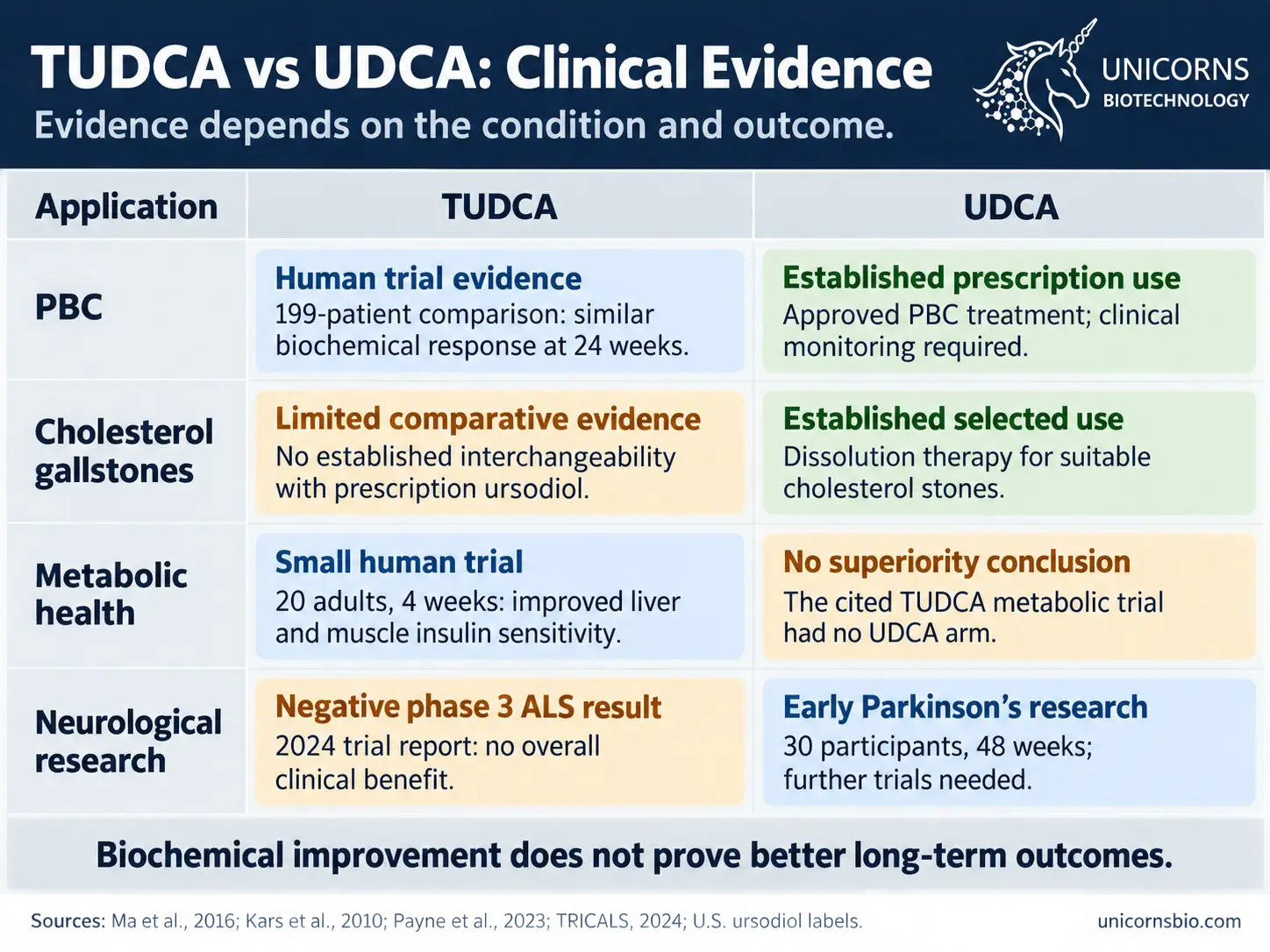
Kars and colleagues studied 20 obese adults for four weeks. TUDCA at 1,750 mg/day improved liver and muscle insulin sensitivity, but not adipose tissue insulin sensitivity.
The trial compared TUDCA with placebo, not UDCA. It cannot establish that TUDCA outperforms UDCA or treats diabetes.
What does neurological research show for each compound?
Early TUDCA research attracted interest in amyotrophic lateral sclerosis, or ALS. However, the phase 3 TUDCA trial involving more than 300 participants did not show slower disease progression or a survival benefit, according to the consortium’s 2024 report.
UDCA also has human neurological research. A 30-person Parkinson’s trial assessed safety, tolerability, and brain energy metabolism over 48 weeks. It supported further research, not an established Parkinson’s treatment.
Does blood–brain barrier penetration prove a neurological benefit?
No. Tissue exposure does not prove that a treatment improves symptoms or slows disease. Judge neurological claims by human outcomes, not the phrase “crosses the blood–brain barrier.”
Dosage, Duration, and Taking TUDCA with UDCA
What doses have clinical studies and prescription products used?
The table shows study protocols and labeled uses. It does not provide a self-treatment schedule.
| Compound and context | Dose | Duration or instructions |
|---|---|---|
| UDCA prescription treatment for PBC | 13–15 mg/kg/day | Label specifies divided doses with food |
| UDCA for selected gallstones | 8–10 mg/kg/day | Divided doses; treatment requires months |
| TUDCA and UDCA in the 2016 PBC trial | 750 mg/day for either compound | 24 weeks |
| TUDCA and UDCA in the cirrhosis trial | 750 mg/day for either compound | Six months |
| TUDCA in the metabolic trial | 1,750 mg/day | Four weeks |
The prescription doses and research regimens serve different purposes. A supplement serving size does not establish a therapeutic dose. Match any scientific claim to the population, formulation, and regimen that researchers studied.
Are TUDCA and UDCA interchangeable milligram for milligram?
No. Their molecular weights differ, and salts or hydrates introduce further differences. Equal mass does not mean equal molecule count or equal clinical effect.
Even a molar calculation cannot establish a treatment conversion. Clinical evidence must support the proposed switch.
Can TUDCA and UDCA be taken together?
The comparative trials discussed here do not establish an added benefit from combining them. Overlapping bile acid exposure also complicates dose selection and tolerability assessment.
A patient who takes prescription ursodiol should ask the prescriber before adding TUDCA. A formulator should not infer combination efficacy from separate ingredient studies.
Can TUDCA replace prescribed UDCA?
A consumer should not make that substitution without the prescriber. A TUDCA label does not establish pharmaceutical equivalence to an authorized ursodiol product.
How long does either compound take to work?
The target outcome determines the timeline. A study may measure a biochemical change after weeks, while gallstone dissolution can require months or longer.
Follow the specific product instructions for food timing. UDCA’s PBC labeling specifies administration with food; that does not create a universal rule for every TUDCA formulation.
Side Effects, Interactions, and Safety
What side effects have researchers reported?
Gastrointestinal effects feature in research on both compounds. Ursodiol labeling lists diarrhea, nausea, and abdominal discomfort. The TUDCA ALS consortium also reported gastrointestinal adverse effects.
Do not compare adverse-event percentages across unrelated trials as though the patients and protocols matched.
Can TUDCA or UDCA cause liver problems?
Neither a natural origin nor a liver-related application guarantees safety. Underlying disease, dose, concomitant medicines, and product quality all matter.
Ursodiol labeling calls for liver-test monitoring and clinical review when values worsen. Existing TUDCA trials cannot rule out rare effects or establish safety for every long-term user.
Which interactions and contraindications matter?
Cholestyramine and colestipol can reduce ursodiol absorption. Aluminum-containing antacids can also interfere. Complete biliary obstruction and hypersensitivity appear among ursodiol’s contraindications.
TUDCA has less complete interaction documentation. A lack of reported interactions does not prove their absence.
What is known about long-term use, pregnancy, and breastfeeding?
These questions require a compound- and product-specific assessment. Clinical experience with prescription UDCA does not establish equivalent safety for TUDCA products.
Pregnant or breastfeeding patients need advice from their treating clinician. For product development, avoid transferring safety claims between the compounds or extrapolating short trials to indefinite use.
Manufacturing Sources and Regulatory Status
Are TUDCA and UDCA animal-derived or synthetic?
A compound’s presence in bile does not identify the source of a commercial batch. Production routes can use bile acid intermediates, chemical synthesis, and enzyme-mediated conversion.
For example, researchers use hydroxysteroid dehydrogenases to change the orientation of a hydroxyl group in bile acid intermediates. Such processing does not, by itself, establish an animal-free starting material.
Can TUDCA or UDCA qualify as vegan?
The molecular name cannot answer that question. Obtain a signed origin statement and review starting materials, processing aids, and any relevant certification.
For a finished capsule, check the shell and excipients as well. A non-animal active ingredient does not make a gelatin capsule vegan.
How do prescription, supplement, and research products differ?
Each category serves a different intended use and carries different requirements. A research reagent does not become suitable for human use because its HPLC purity reaches 99%.
In the United States, FDA does not approve dietary supplements before marketing. An online listing therefore does not establish ingredient eligibility, approval, or permission to make disease-treatment claims.
Taurursodiol also has a specific drug history. FDA approved the sodium phenylbutyrate–taurursodiol combination Relyvrio in 2022, then withdrew that approval in 2025 after the confirmatory trial failed. That history does not authorize standalone TUDCA for liver treatment.
Ingredient Quality and Formulation Considerations
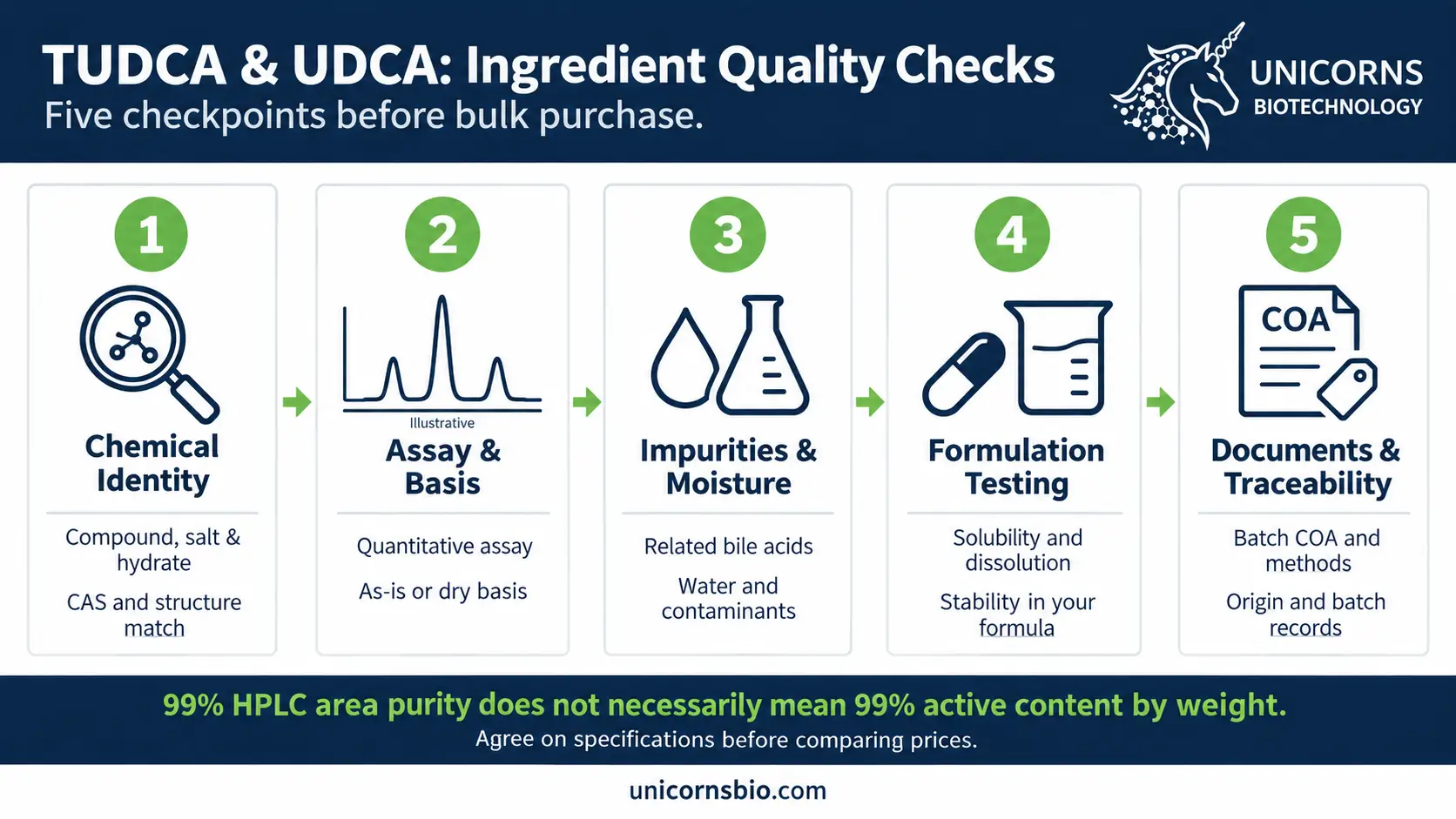
Which specifications should buyers compare?
Start with the intended application and destination market. Then build a specification that defines identity, composition, impurities, and manufacturing performance.
| Specification | What to confirm |
|---|---|
| Identity | Correct compound, stereochemistry, salt, and hydrate form |
| Assay | Quantitative method, reference standard, units, and reporting basis |
| Related substances | Relevant bile acids, intermediates, and degradation products |
| Water content | Method and allowance for hydration or residual moisture |
| Contaminants | Appropriate residual solvent, elemental impurity, and microbial limits |
| Solubility and dissolution | Results under conditions relevant to your product |
| Physical properties | Appearance, particle size, bulk density, and flow |
| Stability | Data supporting storage, packaging, and retest or shelf-life claims |
| Traceability | Batch records, source declarations, and change-control arrangements |
Use the supplier’s COA to confirm batch results against an agreed specification. A generic sample COA cannot replace qualification of the material you purchase.
Does “99% HPLC purity” mean 99% active ingredient by weight?
Not necessarily. HPLC area percentage describes detector response under a stated method. Water, counterions, and compounds that the method does not detect may escape that calculation.
Ask for a quantitative assay and its basis: as-is, dried, or anhydrous. Read our bile acids powder quality guide for related purchasing considerations.
How do the ingredients fit capsules, tablets, and liquids?
For capsules, review fill weight, flow, and content uniformity. For tablets, assess compression, disintegration, and dissolution.
For liquids, test solubility at the target pH alongside taste, precipitation, and stability. A clear laboratory solution does not establish a stable commercial formula.
How should bulk prices be compared?
Compare equivalent forms and assay bases. Include testing, documentation, freight, minimum order quantity, and formulation yield in the calculation.
A lower price per kilogram may not produce a lower cost per conforming batch. Request a current quotation against the same specification before comparing suppliers.
Choosing Between TUDCA and UDCA
The best choice follows the application. Clinical evidence guides treatment decisions; identity, quality, and market requirements guide raw-material qualification.
| Objective | Decision basis |
|---|---|
| PBC treatment | Indication-specific guidance, authorized medicine, and prescriber oversight |
| Cholesterol gallstone dissolution | Stone characteristics, patient selection, and an appropriate prescription product |
| General liver-health formulation | Relevant human evidence and permissible positioning in the destination market |
| Metabolic or neurological research | Exact compound, experimental design, and evidence limitations |
| Bulk ingredient purchase | Chemical form, quantitative assay, impurities, traceability, and total delivered cost |
Unicorns Biotechnology supplies Tauroursodeoxycholic Acid Powder within its specialty ingredient range. Explore our liver support ingredients to compare related options.
For a bulk TUDCA inquiry, send your target form, specification, application, quantity, and destination market. Ask our team for current technical documents, sample availability, and a project-specific quotation.
Frequently Asked Questions
Is ursodiol the same as UDCA?
Yes. Ursodiol is another name for ursodeoxycholic acid. Finished medicines can differ in strength, formulation, and labeled uses.
Is taurursodiol the same as TUDCA?
Taurursodiol names the same active molecular entity as tauroursodeoxycholic acid. Check the specified salt or hydration state when comparing material weights.
Is TUDCA the same as taurine?
No. Taurine is an amino sulfonic acid. TUDCA links taurine to ursodeoxycholic acid through a chemical bond.
Is taking taurine with UDCA equivalent to taking TUDCA?
No established clinical equivalence supports that assumption. The liver can conjugate UDCA with taurine, but separate oral ingredients do not guarantee the same exposure or outcome.
How do TUDCA and UDCA differ from ox bile?
TUDCA and UDCA identify specific compounds. Ox bile extract contains a mixture whose composition depends on the source and processing. See our Ox Bile vs TUDCA comparison.
How does TUDCA differ from milk thistle?
TUDCA is a bile acid conjugate. Milk thistle extracts contain compounds such as the silymarin flavonolignan mixture. Their chemistry and evidence differ, so shared liver-health positioning does not make them interchangeable.
References
- Rudolph, G., Kloeters-Plachky, P., Sauer, P., & Stiehl, A. (2002). Intestinal absorption and biliary secretion of ursodeoxycholic acid and its taurine conjugate. European Journal of Clinical Investigation, 32(8), 575–580. https://doi.org/10.1046/j.1365-2362.2002.01030.x
- Ma, H., Zeng, M., Han, Y., Yan, H., Tang, H., Sheng, J., Hu, H., Cheng, L., Xie, Q., Zhu, Y., Chen, G., Gao, Z., Xie, W., Wang, J., Wu, S., Wang, G., Miao, X., Fu, X., Duan, L., … Jia, J. (2016). A multicenter, randomized, double-blind trial comparing the efficacy and safety of TUDCA and UDCA in Chinese patients with primary biliary cholangitis. Medicine, 95(47), e5391. https://doi.org/10.1097/MD.0000000000005391
- Pan, X.-L., Zhao, L., Li, L., Li, A.-H., Ye, J., Yang, L., Xu, K.-S., & Hou, X.-H. (2013). Efficacy and safety of tauroursodeoxycholic acid in the treatment of liver cirrhosis: A double-blind randomized controlled trial. Journal of Huazhong University of Science and Technology [Medical Sciences], 33(2), 189–194. https://doi.org/10.1007/s11596-013-1095-x
- Kars, M., Yang, L., Gregor, M. F., Mohammed, B. S., Pietka, T. A., Finck, B. N., Patterson, B. W., Horton, J. D., Mittendorfer, B., Hotamisligil, G. S., & Klein, S. (2010). Tauroursodeoxycholic acid may improve liver and muscle but not adipose tissue insulin sensitivity in obese men and women. Diabetes, 59(8), 1899–1905. https://doi.org/10.2337/db10-0308
- Payne, T., Appleby, M., Buckley, E., van Gelder, L. M. A., Mullish, B. H., Sassani, M., Dunning, M. J., Hernandez, D., Scholz, S. W., McNeill, A., Libri, V., Moll, S., Marchesi, J. R., Taylor, R., Su, L., Mazzà, C., Jenkins, T. M., Foltynie, T., & Bandmann, O. (2023). A double-blind, randomized, placebo-controlled trial of ursodeoxycholic acid (UDCA) in Parkinson’s disease. Movement Disorders, 38(8), 1493–1502. https://doi.org/10.1002/mds.29450