
The bovine colostrum market is growing as demand for immune health, gut health, sports nutrition, and beauty supplements increases. U.S. retail data shows that bovine colostrum is moving beyond niche wellness products into mainstream supplement categories.
According to SPINS data reported by Nutritional Outlook in February 2026, bovine colostrum sales grew 203.4% in the natural-channel immune-health category during the 52 weeks ending November 30, 2025. Sales in the mainstream hair, skin, and nails category increased 2,454.2%, reaching more than $13 million.
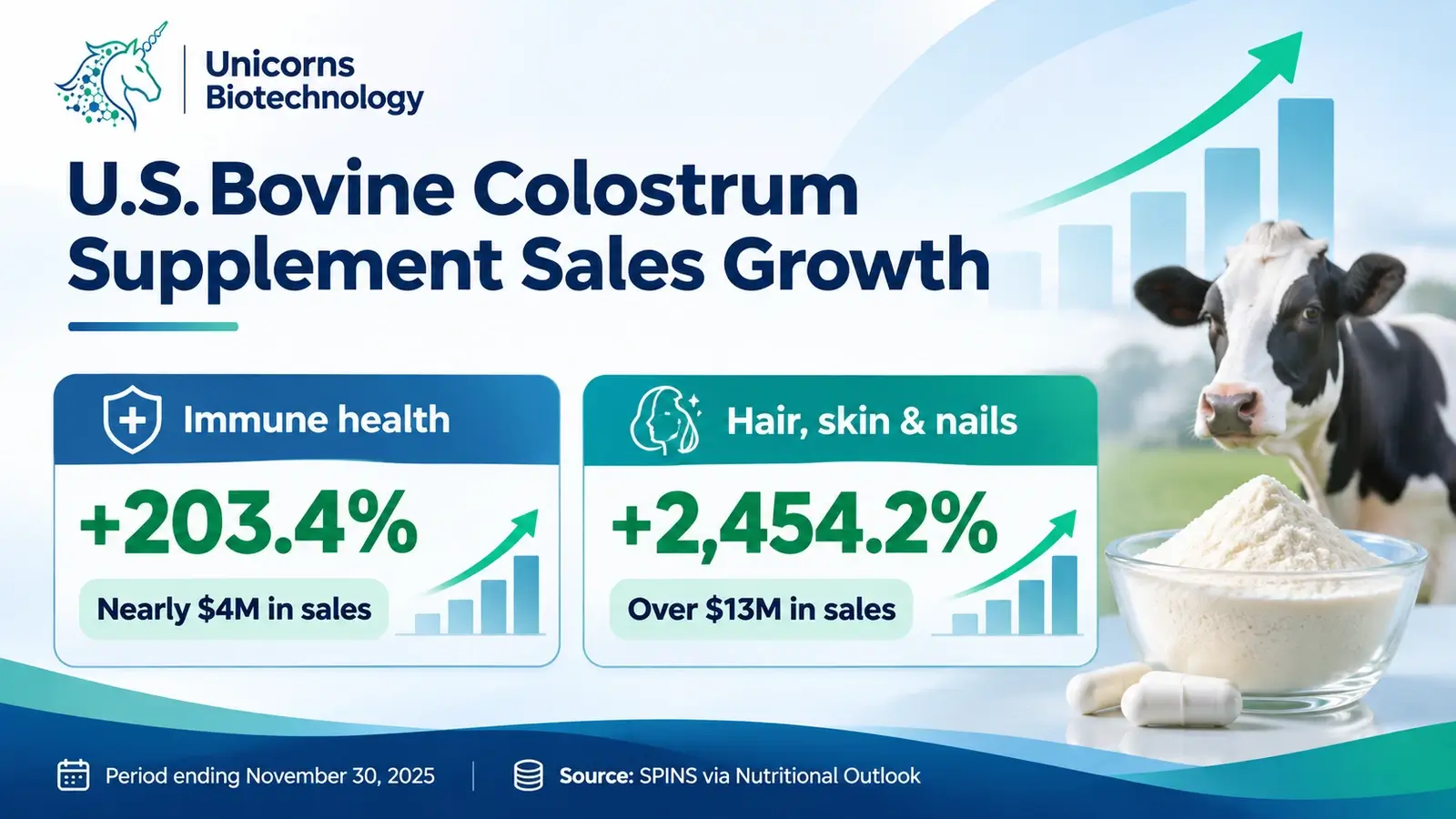
Global Info Research valued the bovine colostrum market at $212 million in 2025, with a forecast of $306 million by 2032. The firm also reported approximately 3,637 metric tons of global bovine colostrum production in 2024.
These figures point to growing commercial interest in bovine colostrum powder. However, market estimates differ by product type, distribution channel, and whether they include finished supplements.
This report examines global bovine colostrum market size, annual production volume, supplement sales, major suppliers, wholesale pricing, consumer demand, regulations, and the industry outlook through 2032.
2026 Bovine Colostrum Market Overview
| Market indicator | Latest reported data |
|---|---|
| Global market value, 2025 | $212 million |
| Global market estimate, 2026 | Approximately $224 million, calculated from the reported 5.5% growth rate |
| Market forecast, 2032 | $306 million |
| Forecast annual growth | 5.5% CAGR |
| Global production, 2024 | Approximately 3,637 metric tons |
| Average global market price, 2024 | Approximately $53.10/kg |
| U.S. natural-channel immune-health sales growth | +203.4% |
| U.S. mainstream hair, skin, and nails sales growth | +2,454.2% |
| Important growth areas | Gut health, immune support, sports nutrition, beauty, functional foods, and animal nutrition |
Sources: Global Info Research, June 2026; SPINS retail data reported by Nutritional Outlook, February 2026. Market growth figures refer to different product categories and reporting periods. The 2026 market value is a calculated estimate, not a separately published observation.
1. Global Bovine Colostrum Market Size and Annual Production Volume
How Big Is the Global Bovine Colostrum Market in 2026?
The global bovine colostrum ingredient market is worth several hundred million dollars annually. Broader estimates that include more product categories and finished supplements can exceed $1 billion.
Global Info Research estimated the market at $212 million in 2025. Applying its reported 5.5% annual growth rate gives an approximate 2026 value of $224 million.
However, other market research firms report larger figures.
| Research firm | 2025 market size | 2026 estimate | 2032 forecast |
|---|---|---|---|
| Global Info Research | $212M | ~$224M* | $306M |
| 360iResearch, Bovine Colostrum Powder | $245.66M | $261.11M | $384.45M |
| 360iResearch, Bovine Colostrum, March 2026 edition | $345.87M | $367.17M | $553.25M |
| 360iResearch, Bovine Colostrum, September 2026 edition | $1.32B | $1.50B | $3.22B |
The Global Info Research 2026 value is calculated from its reported growth rate. The 360iResearch reports cover different or revised market definitions. Their figures are not directly comparable.
Sources: Global Info Research, 360iResearch Bovine Colostrum Powder, and 360iResearch Bovine Colostrum.
Why are these market estimates so different?
Market research firms do not always measure the same products.
Some focus on processed bovine colostrum ingredients sold to manufacturers. Others include finished dietary supplements, animal nutrition, functional foods, beverages, and retail distribution.
The September 2026 360iResearch report also differs sharply from its earlier bovine colostrum report. Public summaries do not provide enough detail to reconcile the difference.
For procurement managers and ingredient suppliers, the narrower $212 million market estimate offers a useful starting point. The larger figures show the possible reach of the broader colostrum product market.
Do not add these estimates together.
How Many Metric Tons of Bovine Colostrum Are Produced Each Year?
Global Info Research reported approximately 3,637 metric tons of bovine colostrum production worldwide in 2024.
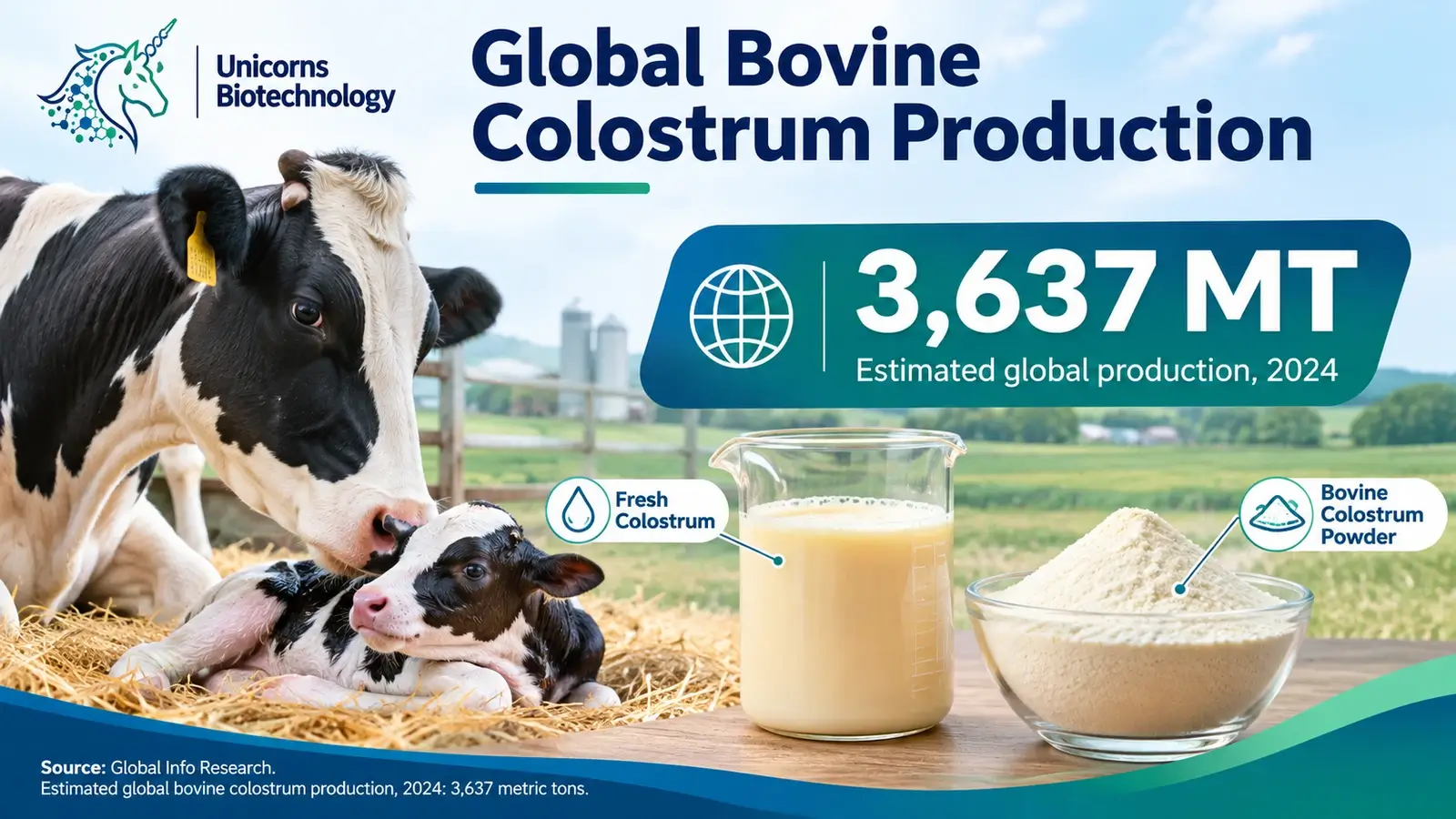
This is a useful benchmark for the commercial industry. However, it should not be treated as a verified total of all fresh bovine colostrum collected on dairy farms.
Fresh colostrum and finished colostrum powder represent different quantities.
| Material | Description | Commercial use |
|---|---|---|
| Fresh bovine colostrum | First milk produced after calving | Calf nutrition and commercial processing |
| Whole colostrum powder | Dried colostrum containing its natural milk components | Supplements and animal nutrition |
| Skimmed colostrum powder | Colostrum powder with reduced fat | Nutritional formulations and ingredient blends |
| IgG-standardized powder | Colostrum processed or blended to meet an immunoglobulin specification | Premium supplements and specialized nutrition |
| Immunoglobulin concentrate | More highly processed fraction enriched in immunoglobulins | Specialized ingredients, subject to product-specific regulatory review |
A kilogram of fresh colostrum cannot be compared with a kilogram of dried powder. Removing water reduces mass, while filtration and protein concentration can change the composition.
Public market reports also differ in how they treat human-grade and animal-grade products.
For this reason, a reliable global production series must identify the material being measured before comparing annual tonnage.
How Much Raw Bovine Colostrum Is Available?
Bovine colostrum is produced during a short period after a cow gives birth.
Its composition changes rapidly after calving. The first milking generally contains higher immunoglobulin concentrations than later transition milk.
Newborn calves require colostrum for passive immune protection. Dairy farms must meet calf nutrition and welfare needs before collecting surplus material for commercial processing.
Unlike conventional milk, commercial colostrum supply cannot increase through normal daily milk production.
Supply depends on calving rates, herd management, collection practices, refrigeration, and processing capacity.
Dairy farms must also manage variations in immunoglobulin content and microbial quality.
These limits help explain why bovine colostrum commands higher prices than many conventional dairy ingredients.
2. Bovine Colostrum Supplement Sales by Distribution Channel
U.S. Colostrum Supplement Sales Show Rapid Growth
The United States is an important market for bovine colostrum supplements. Consumers purchase these products for gut health, immune support, wellness, and beauty-related goals.
SPINS retail data shows strong growth across two supplement categories.
| U.S. retail category | Sales growth | Sales value | Reporting period |
|---|---|---|---|
| Natural-channel immune health | +203.4% | Nearly $4M | 52 weeks ending Nov. 30, 2025 |
| Mainstream multioutlet hair, skin, and nails | +2,454.2% | Over $13M | 52 weeks ending Nov. 30, 2025 |
Source: Nutritional Outlook, Colostrum Boom, February 12, 2026.
The 203.4% increase means sales in that specific immune-health category were approximately three times the prior period’s level.
The 2,454.2% increase represents a much larger percentage gain. However, it also reflects growth from a small starting base.
Neither figure represents the growth rate of the entire global bovine colostrum market.
E-Commerce and Direct-to-Consumer Brands Support Market Growth
Online channels have helped bovine colostrum reach consumers outside traditional pharmacies and supplement stores.
Brand websites, Amazon, social media, and subscription services allow companies to introduce new ingredients without relying only on retail shelf space.
Direct-to-consumer brands also use educational content to explain colostrum’s immunoglobulins, lactoferrin, and other bioactive components.
This approach creates repeat exposure and encourages consumers to compare products by serving size, ingredient origin, and IgG content.
Public data does not yet establish a consistent global split between online and offline bovine colostrum supplement sales. Different reports use different channel definitions.
Mainstream Retail Distribution Is Expanding
Bovine colostrum is no longer limited to specialty wellness stores.
In 2026, ARMRA reported distribution across more than 7,600 retail locations and introduced a colostrum-based soda product.
Lemme expanded its gut-health product range in November 2025 with colostrum gummies and a liposomal liquid supplement.
These launches show how consumer brands are moving colostrum into new formats and sales channels.
For bulk ingredient suppliers, wider retail distribution can increase demand for standardized powder, reliable raw material sourcing, and contract manufacturing.
3. Bovine Colostrum Market Segmentation by Product Form and Application
The bovine colostrum market includes both raw ingredients and finished consumer products.
Manufacturers need to separate product form, end use, and ingredient grade when comparing demand.
Bovine Colostrum Powder and Capsules
Powder remains a practical format for bulk ingredient supply.
It offers flexible serving sizes and works in standalone products, drink mixes, sachets, and functional powder blends.
Capsules and tablets appeal to consumers who prefer measured servings without mixing powder into beverages.
For manufacturers, capsule and tablet development requires suitable powder flow, bulk density, moisture control, and stability.
Gummies, Liquids, and Functional Beverages
Gummies and liquid supplements offer new ways to reach consumers who do not use traditional powders.
However, bovine colostrum contains proteins that can lose activity under unsuitable processing conditions.
Gummy production may expose ingredients to heat and moisture. Beverage formulations must also address protein stability, flavor, microbial safety, and shelf life.
Manufacturers should test finished products rather than assume the original raw material specification remains unchanged after processing.
Main Applications of Bovine Colostrum
| Application | Common products | Main commercial focus |
|---|---|---|
| Dietary supplements | Capsules, tablets, powders | Immune and digestive wellness positioning |
| Sports nutrition | Powders, drink mixes | Active lifestyle and recovery-focused products |
| Beauty supplements | Gummies, capsules, powders | Beauty-from-within positioning |
| Functional foods | Bars, beverages, nutritional mixes | Convenient daily nutrition |
| Pet supplements | Powders, chews, pet nutrition blends | Premium animal wellness |
| Livestock nutrition | Calf supplements and replacers | Passive immunity and neonatal nutrition |
| Specialized nutrition | Research and selected nutrition applications | Product-specific scientific and regulatory requirements |
Not every application has the same regulatory status. Infant formula, pharmaceutical products, and specialized medical nutrition require separate assessments.
Standardized IgG Powder Versus Whole Colostrum Powder
Immunoglobulin G, or IgG, is a key commercial quality marker for bovine colostrum.
Common marketed ingredient grades include 10%, 20%, 30%, and 40% IgG.
Higher IgG content can support premium pricing. However, the declared percentage does not establish clinical effectiveness.
Buyers should compare analytical methods, protein composition, allergen content, processing conditions, and product stability.
4. Major Bovine Colostrum Producing Countries and Industry Players
Leading Bovine Colostrum Supply Regions
The United States, New Zealand, Australia, Europe, India, and China are important participants in the bovine colostrum supply chain.
Their roles differ by dairy herd structure, ingredient processing, product grades, and export markets.
| Region | Main industry strengths |
|---|---|
| United States | Large dairy industry, established colostrum processors, mature supplement market |
| New Zealand | Dairy exports, pasture-based sourcing, established nutritional ingredient businesses |
| Australia | Dairy ingredient processing and supplement manufacturing |
| European Union | Specialty dairy ingredients, processing technology, and quality standards |
| India | Dairy raw material supply and cost-competitive colostrum powder production |
| China | Dairy ingredient processing, domestic supplement manufacturing, and growing interest in bioactive ingredients |
These regions should not be treated as a ranking by production volume. Comparable public country-level colostrum output statistics remain limited.
Major Bovine Colostrum Ingredient Companies
Several established companies operate in the commercial bovine colostrum industry.
| Company | Country or region | Industry position |
|---|---|---|
| Glanbia Nutritionals | United States / Ireland | Large colostrum processor and nutritional ingredient group |
| Colostrum BioTec | Germany | Specialized bovine colostrum ingredients |
| Ingredia | France | Dairy-based nutritional ingredients |
| NIG Nutritionals | New Zealand | Colostrum and dairy nutrition ingredients |
| New Image International | New Zealand | Colostrum-based nutritional products |
Glanbia has expanded its bovine colostrum operations through Sterling Technology, APS BioGroup, and La Belle Associates.
The company reports more than 3,500 metric tons of annual human- and animal-grade colostrum production capacity across three U.S. facilities.
This figure measures reported capacity, not confirmed annual production.
It also covers both human and animal applications. Therefore, it cannot be directly compared with a global production estimate that may use a different product definition.
As the industry expands, buyers increasingly need suppliers that can document collection practices, IgG specifications, microbiological quality, and batch traceability.
5. Bovine Colostrum Powder Pricing and Raw Material Costs
What Is the Wholesale Price of Bovine Colostrum Powder?
Global Info Research reported an average global bovine colostrum market price of approximately $53.10 per kilogram in 2024.
This provides a historical industry benchmark, not a current wholesale quotation.
Published supplier listings show that prices vary by IgG grade, fat content, processing, purchase quantity, and origin.
The following examples come from publicly listed prices at Total Ingredients.
| Ingredient specification | Published price per kg |
|---|---|
| Non-skimmed colostrum powder, 10% IgG | $28.50–$37 |
| Non-skimmed colostrum powder, 15% IgG | $30.50–$39 |
| Skimmed colostrum powder, 20% IgG | $40–$47 |
| Skimmed instantized colostrum powder, 30% IgG | $55–$62 |
Source: Total Ingredients product listings reviewed in November 2026. These are advertised supplier prices, not verified market averages or negotiated export quotations.
The figures illustrate how specifications affect commercial pricing. Buyers should confirm minimum order quantities, delivery terms, testing methods, and quotation validity.
Why Higher IgG Grades Cost More
Higher immunoglobulin content can require stricter raw material selection or additional processing.
The supplier must also control microbial quality, moisture, and protein stability.
Grass-fed sourcing, organic certification, third-party testing, and traceability can add procurement costs.
Still, IgG percentage alone is not enough to compare supplier value.
A lower-priced ingredient with consistent testing may serve a formulation better than a higher-priced powder with weak documentation.
Bulk Ingredient Prices Versus Retail Supplement Prices
Finished bovine colostrum supplements usually cost more per kilogram than bulk powder.
Retail pricing includes formulation, packaging, brand development, distribution, testing, and marketing.
For procurement teams, the relevant measure is often cost per serving or cost per specified quantity of IgG.
For example, one gram of powder standardized to 20% IgG contains a theoretical 200 mg of IgG based on its declared composition.
That calculation does not establish how much IgG remains active after processing, storage, and digestion.
6. Why Are Bovine Colostrum Supplements Becoming So Popular?
Immune Health Has Become a Daily Wellness Category
Consumer interest in immune health expanded during the COVID-19 pandemic and remains part of the supplement market.
Bovine colostrum contains immunoglobulins and lactoferrin, which play biological roles in immune defense.
Brands use these natural components to position colostrum as an immune-support ingredient.
However, the presence of immune-related proteins does not prove that an oral supplement prevents infections or treats immune disorders.
Gut Health Has Expanded Beyond Probiotics
Gut health is another major source of consumer interest.
Many consumers now recognize probiotics, prebiotics, digestive enzymes, and other digestive wellness ingredients.
Bovine colostrum has entered this market through research on intestinal permeability and gastrointestinal function.
Some clinical studies report improvements in selected intestinal permeability markers. Other trials show limited or inconsistent results.
This has created commercial interest, but product claims still require appropriate evidence.
Beauty-From-Within Creates New Demand
Colostrum has also entered the beauty supplement market.
Brands position it alongside collagen, hyaluronic acid, and other ingredients associated with skin and healthy-aging products.
The SPINS data shows how quickly the category expanded in U.S. mainstream beauty retail during 2025.
This does not mean colostrum has been proven to reverse skin aging or improve hair growth.
It shows that consumers are purchasing products marketed around these goals.
Social Media Accelerates Ingredient Awareness
Social media has helped bovine colostrum reach younger wellness consumers.
Influencers discuss digestive health, skin appearance, nutrition routines, and animal-derived supplements.
Online brands then convert this attention into product sales through educational videos, reviews, and subscription offers.
This demand can develop faster than clinical research or formal regulatory guidance.
Manufacturers should separate short-term social media growth from long-term ingredient demand.
Sports Nutrition and Active Lifestyle Products
Bovine colostrum has also been studied in athletes and physically active adults.
Research has examined intestinal permeability, immune markers, and responses to exercise stress.
Sports nutrition brands may see formulation opportunities, especially when targeting digestive wellness and active lifestyles.
However, sports performance claims require careful review.
Athletes subject to anti-doping testing should also consider warnings concerning colostrum and insulin-like growth factor 1, or IGF-1.
7. Consumer Demographics and Scientific Evidence Behind Bovine Colostrum
Who Is Buying Bovine Colostrum Supplements?
The market serves several consumer groups with different buying motivations.
| Consumer group | Main purchasing interest |
|---|---|
| Wellness-focused adults | Daily nutrition and immune-health positioning |
| Digestive wellness consumers | Gut health and intestinal barrier interest |
| Athletes and fitness consumers | Recovery and exercise-related digestive health |
| Beauty supplement buyers | Skin, hair, and healthy-aging positioning |
| Older adults | General wellness and nutritional support |
| Pet owners | Premium animal wellness products |
These are commercial audience segments, not verified shares of total colostrum sales.
Consumer demographics will also vary by country, brand, and distribution channel.
What Does Clinical Research Say About Bovine Colostrum?
Bovine colostrum contains immunoglobulins, lactoferrin, growth factors, proteins, lipids, and other bioactive components.
These compounds support studying colostrum in human nutrition.
However, their presence does not guarantee a specific health outcome after oral consumption.
| Research topic | Current evidence | Main limitation |
|---|---|---|
| Intestinal permeability | Some controlled studies and meta-analyses report improvements | Small trials and differences in study design |
| Gastrointestinal disorders | Mixed clinical results | Different conditions, populations, and treatment periods |
| Immune function | Biological rationale and some human studies | Inconsistent clinical outcomes |
| Exercise recovery | Investigated in sports nutrition trials | Limited and conflicting findings |
| Skin health and healthy aging | Emerging research and commercial interest | Insufficient evidence for broad anti-aging claims |
A 2024 meta-analysis published in Digestive Diseases and Sciences examined ten studies on intestinal permeability.
The authors reported improvements in selected urinary permeability markers. They also called for more research because study methods, quality, doses, and treatment periods differed.
A separate 2024 systematic review examined 22 clinical trials involving 1,427 patients with gastrointestinal conditions. The findings were mixed.
A 2025 position statement from Sports Dietitians Australia and the Ultra Sports Science Foundation also found no strong, consistent evidence to recommend colostrum for exercise-associated gastrointestinal disturbances.
These findings show why research interest does not automatically support finished-product marketing claims.
8. Bovine Colostrum Supply Chain, Processing, and Quality Challenges
Limited Collection Windows Affect Supply
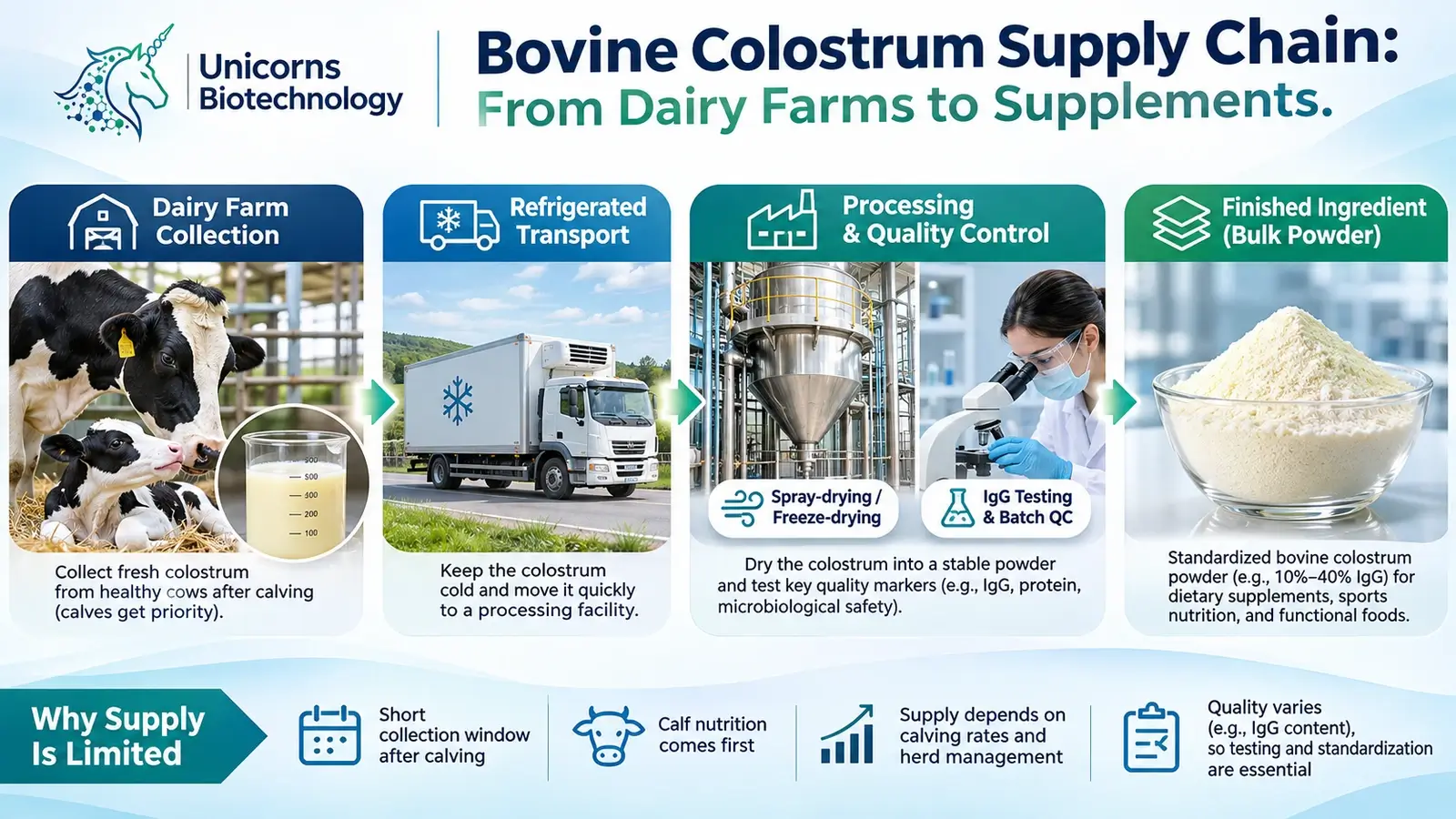
Bovine colostrum supply begins at dairy farms.
The first milkings after calving are valuable because their immunoglobulin content is generally higher than that of later transition milk.
Farmers must meet calf requirements before collecting excess material.
Collection volume also depends on herd management, calving patterns, labor, refrigeration, and collection infrastructure.
These conditions make bovine colostrum less flexible than conventional milk powder production.
Spray-Dried Versus Freeze-Dried Colostrum Powder
Spray drying and freeze drying are two common processing methods.
Spray drying is widely used in commercial dairy processing because it supports continuous production and industrial-scale output.
Freeze drying removes moisture under reduced pressure at low temperatures. It may suit selected products, but it typically requires more time and higher processing costs.
Neither method guarantees superior product quality on its own.
Manufacturers must validate processing conditions and test the finished powder for protein integrity, microbiological quality, moisture, and other specifications.
IgG Standardization and Quality Control
Bovine colostrum powder is not a single, uniform ingredient.
Its composition changes with collection timing, animal health, handling, and processing.
Procurement managers should review the certificate of analysis, testing methods, and source documentation before approving a supplier.
| Quality parameter | Why it matters |
|---|---|
| IgG concentration | Confirms the declared immunoglobulin specification |
| Total protein | Helps characterize nutritional composition |
| Moisture | Affects storage stability and powder handling |
| Total plate count | Supports microbiological quality assessment |
| Yeast and mold | Indicates microbial quality |
| Coliforms and pathogens | Supports product safety requirements |
| Antibiotic residues | Verifies compliance with applicable residue limits |
| Heavy metals | Supports contaminant control |
| Allergen declaration | Identifies milk-derived allergen risks |
| Traceability | Links finished powder to its production and source records |
Testing methods should also be consistent. IgG results from different analytical methods may not be directly comparable.
9. Regulatory Landscape and Regional Compliance Requirements
The legal status of bovine colostrum depends on the ingredient, manufacturing process, intended use, and target market.
Do not assume a standard colostrum powder has the same regulatory status as a concentrated immunoglobulin fraction.
United States: FDA Dietary Supplement Requirements
Bovine colostrum is sold in the United States as a dietary supplement ingredient.
Manufacturers must meet applicable dietary supplement requirements, including current good manufacturing practices, labeling, ingredient compliance, and claim substantiation.
The U.S. Food and Drug Administration does not generally approve dietary supplements before sale.
Structure/function claims require supporting evidence and the applicable FDA disclaimer. Companies must also submit the required claim notification within 30 days after first marketing.
Claims to treat, cure, or prevent diseases can cause a supplement to be regulated as a drug.
Companies must evaluate the regulatory status of their specific ingredient, including any applicable new dietary ingredient requirements.
Source: FDA Structure/Function Claims.
European Union: Novel Food and Health Claims
The European Union regulates novel foods under Regulation (EU) 2015/2283.
In November 2021, an EU novel-food consultation classified a processed bovine colostrum immunoglobulin concentrate as a novel food.
The concentrate contained approximately 50–70% immunoglobulins, compared with around 31% in the ordinary colostrum powder described in the consultation.
This determination applies to the ingredient and processing conditions examined. It does not establish that all ordinary bovine colostrum powders are novel foods.
Food businesses must also assess permitted uses, microbiological standards, labeling, and health claims.
Source: European Commission Novel Food Consultation Process.
China: Restrictions on Bovine Colostrum in Infant Formula
China has specific restrictions on bovine colostrum in infant formula.
In 2012, the Ministry of Health confirmed that infant formula products must not contain bovine colostrum or dairy products manufactured using bovine colostrum.
The transition period ended on September 1, 2012.
This restriction should not be interpreted as a blanket prohibition on every bovine colostrum product sold in China. Other applications require their own regulatory assessment.
Source: National Health Commission of China.
Australia, New Zealand, and Sports Nutrition Compliance
Australian and New Zealand manufacturers must determine whether a bovine colostrum product falls under applicable food standards or therapeutic goods regulation.
Product presentation, intended use, formulation, and claims affect its classification.
In sports nutrition, anti-doping risks require attention.
The U.S. Anti-Doping Agency notes that colostrum can contain detectable IGF-1, a prohibited substance in sport. It warns that athletes use such products at their own risk.
Colostrum itself is not specifically listed as a prohibited substance, but manufacturers should not promise that every colostrum product is safe for drug-tested athletes.
Source: USADA, Natural Products Derived from Plants and Animals.
10. Emerging Opportunities in the Bovine Colostrum Market
Functional Foods and Ready-to-Drink Products
Bovine colostrum is moving beyond traditional capsules and powder supplements.
New product concepts include protein blends, functional drink mixes, gummies, nutritional bars, and ready-to-drink beverages.
These formats may reach consumers who do not buy standalone supplements.
However, protein stability, taste, shelf life, and permitted ingredient use can limit formulation options.
Pet Nutrition and Livestock Applications
Animal nutrition provides another market for colostrum ingredients.
Colostrum is already important for neonatal calves, while pet supplement brands are exploring bovine colostrum in premium nutrition products.
Human-grade supplement powders and animal-feed ingredients may require different specifications, safety documentation, and manufacturing controls.
For suppliers, pet nutrition offers another potential sales channel, but demand should be measured separately from human dietary supplements.
Precision Fermentation and Bioactive Protein Innovation
Precision fermentation and recombinant protein technology may create new sources of selected dairy bioactives.
Lactoferrin and other milk proteins are areas of commercial research and development.
These technologies could expand access to specific functional proteins without relying entirely on conventional dairy collection.
However, recombinant proteins are not equivalent to whole bovine colostrum. They do not reproduce its complete natural composition.
Growing Demand for Standardized Ingredients
As more brands enter the market, ingredient quality may become a stronger purchasing factor.
Standardized IgG content, traceable dairy origins, consistent manufacturing, and third-party testing can help suppliers differentiate their products.
This may shift competition away from ingredient price alone.
11. Challenges and Risks Facing the Bovine Colostrum Industry
The bovine colostrum market faces several limits that may slow future growth.
The first is raw material supply. Colostrum collection depends on calving cycles, suitable milkings, calf nutrition, and dairy farm participation.
The second is pricing. Higher IgG grades and specialized processing increase costs, which can limit demand in price-sensitive markets.
The third is consumer safety and scientific evidence. Bovine colostrum is a milk-derived ingredient and may not be suitable for people with cow’s milk protein allergies. Lactose content also varies by grade.
Marketing claims create another risk. Consumers may lose confidence if brands promise benefits that clinical studies cannot support.
Trade policy, veterinary controls, import requirements, and currency changes can also affect supply costs.
Meanwhile, bovine colostrum competes with established ingredients such as probiotics, lactoferrin, beta-glucans, collagen, and other specialty proteins.
For manufacturers, sustained market growth will require more than promotional campaigns. Products must deliver consistent quality and clear value.
12. Bovine Colostrum Market Forecast and Industry Outlook to 2032
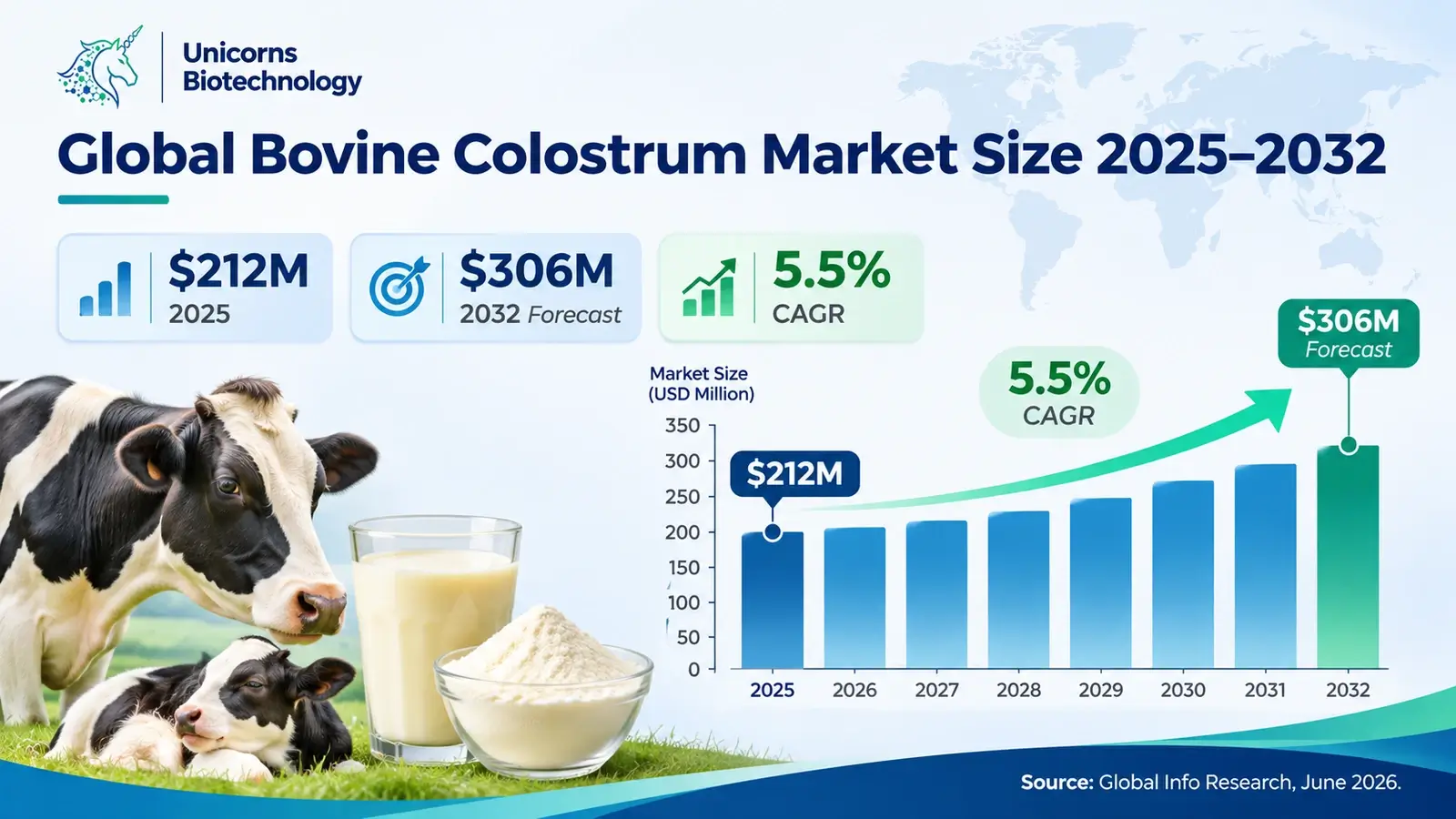
Global Bovine Colostrum Market Revenue Forecast
Global Info Research forecasts the market will grow from $212 million in 2025 to approximately $306 million by 2032.
The reported compound annual growth rate is 5.5%.
This provides a conservative reference point compared with several broader industry forecasts.
| Year | Illustrative market value |
|---|---|
| 2025 | $212M |
| 2026 | $224M |
| 2027 | $236M |
| 2028 | $249M |
| 2029 | $263M |
| 2030 | $277M |
| 2031 | $292M |
| 2032 | $306M |
Source: Global Info Research. The 2025 and 2032 values are published report figures. Intermediate values are rounded illustrations based on the reported annual growth rate, with the 2032 endpoint aligned to the publisher’s forecast. They are not independently reported annual market observations.
The forecast implies continued market expansion, but not the extreme annual growth seen in selected U.S. retail categories during 2025.
As the category matures, percentage growth may slow even as total sales increase.
Will Global Bovine Colostrum Production Increase by 2032?
Global Info Research reported approximately 3,637 metric tons of production in 2024.
If production increased at an illustrative 5.5% annually for eight years, output would reach approximately 5,580 metric tons by 2032.
This is a mathematical scenario, not an independently published production forecast.
Actual output will depend on dairy herd size, surplus colostrum collection, processing yields, supplier investment, and changes in product grade.
Revenue may also grow faster than physical volume if average selling prices or the share of premium ingredients increase.
Therefore, procurement managers should not assume that a 5.5% increase in market value requires an equal increase in annual tonnage.
Which Regions Could Grow Fastest?
North America should remain an important consumer market because of its established supplement industry and widespread retail distribution.
Europe offers demand for specialized dairy ingredients, but product-specific regulatory requirements can affect market entry.
Asia-Pacific may offer further opportunities as health supplement adoption and dairy processing investment expand.
China, India, Japan, South Korea, Australia, and New Zealand have different roles in ingredient production, consumer demand, and regulatory oversight.
Country-level growth rates should be evaluated using comparable market data rather than assuming every region will follow the same pattern.
Bovine Colostrum Market Growth Scenarios
Different market conditions could lead to different outcomes through 2032.
| Scenario | Market conditions | Expected direction |
|---|---|---|
| Bear case | Consumer interest slows, prices remain high, and regulatory limits restrict new applications | Slower growth |
| Base case | Retail distribution expands, ingredient supply remains stable, and product innovation continues | Moderate growth |
| Bull case | New applications succeed, standardized supply increases, and international consumer demand expands | Faster growth |
The base case is consistent with the moderate growth projected by Global Info Research.
The bull case would require more than social media popularity. It would depend on stronger repeat purchases, wider retail access, reliable supply, and successful product development.
What Should Bulk Ingredient Buyers Expect Through 2032?
The next phase of the market will place more pressure on ingredient quality and supply reliability.
Supplement manufacturers should compare bovine colostrum suppliers by more than price per kilogram.
IgG testing, traceability, raw material collection, processing validation, allergen documentation, and regulatory compliance will influence supplier selection.
Manufacturers developing premium colostrum supplements should also test finished products for stability and declared ingredient composition.
The companies that manage these requirements will be better positioned to serve a growing market.
Conclusion: Bovine Colostrum Market Growth Depends on Supply, Science, and Consumer Demand
The bovine colostrum market is expanding across dietary supplements, sports nutrition, beauty products, functional foods, and animal nutrition.
Global Info Research valued the market at $212 million in 2025 and forecasts $306 million by 2032. It also reported approximately 3,637 metric tons of global production in 2024.
U.S. retail data shows much faster growth in selected supplement categories. However, category-level sales increases should not be confused with global market growth.
Future demand will depend on consumer adoption, raw material availability, processing technology, ingredient quality, and regulatory compliance.
For dietary supplement brands and ingredient buyers, the long-term opportunity lies in developing products supported by consistent specifications, responsible sourcing, and evidence-based claims.
Unicorns Biotechnology specializes in animal-derived ingredients, including bovine glandular powders, animal peptides, and specialty extracts. The company also provides OEM supplement manufacturing services for custom powders, capsules, tablets, and private-label formulations.
For broader insights into animal-derived nutrition, see our guide to beef liver supplements, nutrition, and safety.
Frequently Asked Questions About the Bovine Colostrum Market
How big is the global bovine colostrum market in 2026?
Global Info Research valued the market at $212 million in 2025. Applying its reported 5.5% annual growth rate gives an approximate 2026 market value of $224 million.
Other research firms report higher figures because they use different market definitions. For example, 360iResearch estimated the bovine colostrum powder market at $261.11 million in 2026.
How many metric tons of bovine colostrum are produced annually?
Global Info Research estimated worldwide bovine colostrum production at approximately 3,637 metric tons in 2024.
This is a reported industry estimate, not a verified global total covering all fresh colostrum collected from dairy farms. Finished powder, fresh colostrum, and standardized ingredients have different measurement bases.
Why are bovine colostrum supplements becoming popular?
Consumer interest is growing around immune health, gut health, sports nutrition, beauty, and healthy aging.
Social media, online wellness brands, and expanding retail distribution have increased product awareness.
SPINS reported 203.4% sales growth in the U.S. natural-channel immune-health category during the 52 weeks ending November 30, 2025.
Which countries produce the most bovine colostrum?
The United States, New Zealand, Australia, several European countries, India, and China are important participants in the bovine colostrum supply chain.
However, reliable public production figures are not consistently available for every country.
The United States has substantial specialized processing capacity. Glanbia reports more than 3,500 metric tons of annual human- and animal-grade colostrum capacity across its U.S. facilities.
How much does bovine colostrum powder cost per kilogram?
Global Info Research reported an average global market price of approximately $53.10/kg in 2024.
Public supplier listings reviewed in November 2026 showed examples ranging from about $28.50/kg for 10% IgG powder to $62/kg for 30% IgG instantized powder.
Actual wholesale prices depend on IgG concentration, source, processing, purchase volume, certifications, and delivery terms.
What is the difference between bovine colostrum powder and IgG concentrate?
Bovine colostrum powder contains a range of naturally occurring milk proteins, fats, carbohydrates, and other components.
IgG concentrate undergoes additional processing to increase immunoglobulin content.
These ingredients may have different specifications, prices, and regulatory requirements. A highly concentrated ingredient cannot automatically be treated as equivalent to ordinary colostrum powder.
Is bovine colostrum safe for dietary supplements?
Bovine colostrum is used in commercially available dietary supplements, but safety depends on the individual product, intended consumer, and manufacturing quality.
It contains milk-derived components and may be unsuitable for people with cow’s milk protein allergies.
Manufacturers must also assess microbial safety, contaminants, ingredient status, and permitted claims in each target market. Limited clinical evidence should not be used to support disease-treatment claims.
How large will the bovine colostrum market be by 2032?
Global Info Research forecasts approximately $306 million by 2032, based on a reported annual growth rate of 5.5%.
360iResearch projects $384.45 million for its bovine colostrum powder market definition.
Broader bovine colostrum market reports project larger totals. These forecasts should be compared by product coverage, valuation method, and base year.
Market Research and Industry References
- Global Info Research. (2026). Global bovine colostrum market 2026 by manufacturers, regions, type and application, forecast to 2032. https://www.marketresearch.com/GlobalInfoResearch-v4117/Global-Bovine-Colostrum-Manufacturers-Regions-45409650/
- 360iResearch. (2026). Bovine colostrum powder market: Global forecast 2026–2032. https://www.360iresearch.com/library/intelligence/bovine-colostrum-powder
- 360iResearch. (2026). Bovine colostrum market: Global forecast 2026–2032. https://www.360iresearch.com/library/intelligence/bovine-colostrum
- McEvoy, E. (2026, February 12). Colostrum boom: Increased distribution for multi-benefit formulas is driving growth of colostrum. Nutritional Outlook. https://www.nutritionaloutlook.com/view/colostrum-boom-increased-distribution-for-multi-benefit-formulas-is-driving-growth-of-colostrum
- Glanbia Nutritionals. (n.d.). About colostrum. https://www.glanbianutrition.com/en/nutri-knowledge-center/nutritional-resources/about-colostrum
- Wisconsin Cheese Makers Association. (2026). WCMA notes: Colostrum rising. https://www.wischeesemakersassn.org/news/wcma-notes-colostrum-rising
- Total Ingredients. (n.d.). Skim colostrum powder 20% IgG (instantized). https://total-ingredients.com/products/colostrum-powder-20-igg-skimmed
- Lemme. (2025, November 4). Lemme expands gut-health innovation with new colostrum duo. PR Newswire. https://www.prnewswire.com/news-releases/lemme-expands-gut-health-innovation-with-new-colostrum-duo-302598513.html
Scientific References
- Hajihashemi, P., Haghighatdoost, F., Kassaian, N., Hoveida, L., Tamizifar, B., Nili, H., Rahim Khorasani, M., & Adibi, P. (2024). Bovine colostrum in increased intestinal permeability in healthy athletes and patients: A meta-analysis of randomized clinical trials. Digestive Diseases and Sciences, 69, 1345–1360. https://doi.org/10.1007/s10620-023-08219-2
- Hajihashemi, P., et al. (2024). Therapeutics effects of bovine colostrum applications on gastrointestinal diseases: A systematic review. Systematic Reviews, 13, Article 76. https://doi.org/10.1186/s13643-024-02489-1
- Sports Dietitians Australia & Ultra Sports Science Foundation. (2025). Sports Dietitians Australia and Ultra Sports Science Foundation joint position statement: A practitioner guide to the prevention and management of exercise-associated gastrointestinal perturbations and symptoms. Sports Medicine. https://doi.org/10.1007/s40279-025-02186-6
Regulatory References
- U.S. Food and Drug Administration. Structure/function claims. https://www.fda.gov/food/nutrition-food-labeling-and-critical-foods/structurefunction-claims
- European Commission. Consultation process on novel food status. https://food.ec.europa.eu/food-safety/novel-food/consultation-process-novel-food-status_en
- National Health Commission of China. (2012). Explanation of restrictions on bovine colostrum in infant formula. https://www.nhc.gov.cn/wjw/spaqyyy/201204/128800f9d986486d996f8957540a14f7.shtml
- U.S. Anti-Doping Agency. Natural products derived from plants and animals. https://www.usada.org/spirit-of-sport/natural-products-derived-plants-animals/