
The Feed Palatability Enhancers & Modifiers Market 2026 is positioned for sustained expansion. Animal feed additives specialists like Alltech and Adisseo invest heavily in sensory additives. Detailed market segmentation helps these firms identify regional growth and species-specific needs. This supports the livestock nutrition market and the shift toward precision nutrition.
Precision feeding is a key component of this industry shift. Companies like Kemin Industries are leading these developments. By analyzing market segmentation, manufacturers can better tailor products for swine, poultry, and aquaculture applications.
In 2026, published market estimates place the global market value in a range from roughly USD 2.7 billion to over USD 6 billion. This range reflects variations in product scope, as seen in reports such as mrr-43539e5d29d8. What remains consistent across all major forecasts is a clear growth trajectory.
The compound annual growth rates (CAGR) are clustered between 2% and 7.7% through the early-to-mid 2030s. This growth is deeply rooted in advances in sensory science related to animal preference. The market’s expansion is being driven by rising global feed production, growing demand for aquaculture feed, greater reliance on alternative protein ingredients, and the premiumization of pet food.
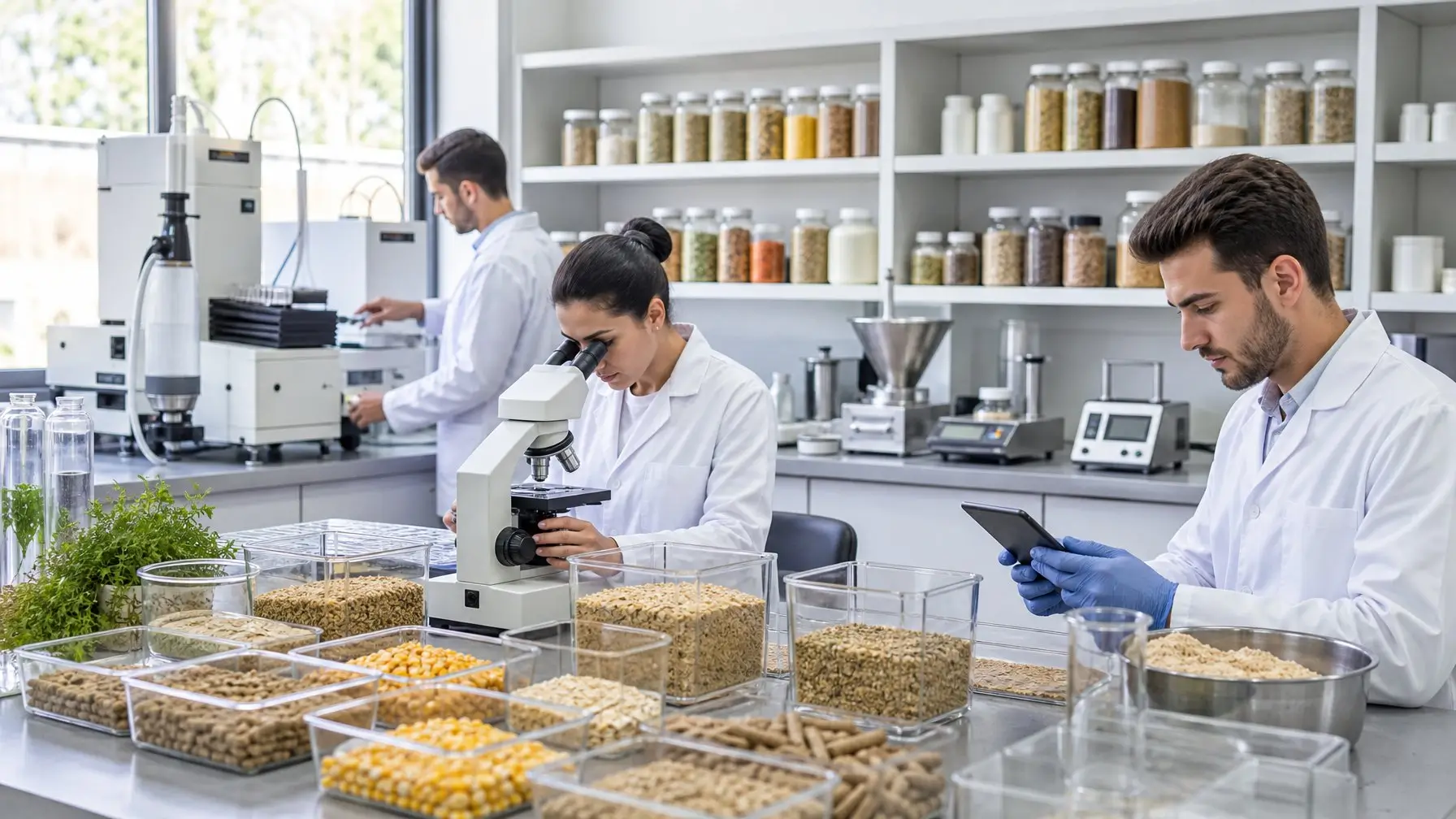
Feed palatability enhancers and modifiers include flavors, sweeteners, animal-derived palatants, aroma enhancers, attractants, and taste-masking agents. These ingredients are formulated to increase voluntary feed intake and mask off-flavors from medications or alternative proteins.
The additives standardize the sensory profile of compound feed across production batches. The major animal sectors using these products are swine, poultry, ruminants, aquaculture, and pet food. Each sector has distinct sensory requirements and formulation constraints.
This article examines the current global market size, CAGR projections, product-type and animal-type segmentation, and regional market shares. It also explores the growing role of animal-derived palatability ingredients. Manufacturers like Unicorns Biotechnology supply bulk liver powders and animal protein hydrolysates to global B2B buyers.
If you are sourcing palatability ingredients for feed, pet food, or specialty nutrition, Unicorns Biotechnology can provide product specifications. They offer organ peptide powders and custom pet food palatability solutions tailored to your requirements.
Feed Palatability Enhancers And Modifiers Market Overview
Competitive Landscape
The competitive landscape includes specialized flavor houses and large multinational corporations. Associated British Foods, Symrise, and DuPont maintain significant roles in developing new sensory technologies. Large players like DSM, BASF, and ADM also provide integrated nutritional and palatability solutions. Adisseo France, Cargill, and Kent Nutrition Group are also expanding their footprint.
Other prominent players in the competitive landscape include DSM-Firmenich, Nutreco, and Pancosma. Novus International, Kemin Industries, and Tanke International Group further contribute to the high market concentration seen in this sector. These firms utilize market segmentation to target high-value niches like young-animal nutrition.https://www.youtube.com/embed/WRZE4gNAQJk
Feed palatability enhancers and modifiers encompass a broad category of sensory feed additives designed to influence animal feed acceptance. Leading companies such as Elanco Animal Health and Adisseo are defining the technical standards for these products. Demand is concentrated across swine, poultry, ruminant, aquaculture, and pet food sectors.
What These Ingredients Include
Feed palatability ingredients fall into several functional groups. Flavors and flavoring agents add recognizable aroma and taste profiles. Fermentation-derived palatants provide savory, umami-rich notes that improve feed acceptance. Sweeteners and texturizers improve the sweetness and physical mouthfeel of starter and creep feeds.
These additives are essential for maintaining high consumption levels during life stage transitions. Animal-derived palatants include animal digest, liver hydrolysate, and protein hydrolysates. Aroma enhancers and attractants use volatile compounds, yeast extracts, or Maillard reaction products to draw animals toward their feed.
Taste and sensory modifiers mask bitter, metallic, or off-flavor notes often introduced by medications or alternative protein sources. These ingredients can be supplied in dry, liquid, granule, or pellet form. Some are designed for surface coating while others utilize specialized carriers.
Techniques like encapsulation and microencapsulation allow additives to remain heat-stable for use in pelleted or extruded feed. This is vital when including oilseed processing by-products that may have bitter notes. Such technologies ensure the sensory profile remains intact through the entire production process.
Core Functions In Commercial Feed Formulation
You use palatability enhancers to accomplish several practical goals in feed manufacturing:
- Improve feed aroma and taste so animals begin eating sooner and consume more per feeding event.
- Increase feed acceptance when introducing new or unfamiliar raw materials into a ration.
- Mask bitter or undesirable flavors that come from medications, minerals, or plant-protein concentrates.
- Maintain intake during feed transitions, particularly during weaning in piglets and calves.
- Standardize the sensory profile of compound feed when raw material quality varies between batches or seasons.
These functions directly affect voluntary feed intake, feed conversion ratio, and feed waste reduction. Improving the feed conversion ratio is a primary goal for commercial livestock operations. Incorporating these additives into precision nutrition programs helps maximize the return on investment for producers. This technical approach is supported by market leaders like Alltech and Nutreco.
Precision feeding strategies ensure that every animal receives the exact sensory profile needed to optimize performance. This technical approach is supported by market leaders like Alltech and Nutreco. It allows for more efficient use of expensive protein sources while maintaining growth rates.
Major End-Use Animal Sectors
Global feed mills and large-scale integrators are the primary buyers of these additives. The five primary animal sectors driving demand for feed palatability enhancers are:
- Swine: Piglet starter feeds and medicated rations require sweeteners and bitter-masking systems.
- Poultry: Broiler and layer feeds rely on consistent flavor profiles, especially with alternative protein sources.
- Ruminants: Calf milk replacers and cattle concentrates use molasses, dairy, and herbal flavor systems.
- Aquaculture: Fish and shrimp feeds demand marine attractants and plant-protein taste-masking solutions.
- Pet food: Dry kibble and treats use natural meat and liver palatants as topical coatings.
Market Snapshot And Baseline Indicators
The table below summarizes the market’s key baseline indicators as of 2026:
| Market Indicator | Information |
|---|---|
| Market base year | 2025 (or latest available) |
| Current market value (2026) | USD 2.7 billion to USD 6.2 billion |
| Forecast period | 2026 to 2035 |
| Expected CAGR | 2% to 7.7% (range reported by major sources) |
| Leading product categories | Flavors, sweeteners, animal-derived palatants, and aroma enhancers |
| Major animal segments | Swine, poultry, ruminants, aquaculture, and pets |
| Leading region | Asia-Pacific |
| Key growth areas | Aquaculture, young-animal feed, and premium pet food |
Current Global Market Size And CAGR

Published market estimates for the Feed Palatability Enhancers & Modifiers Market 2026 range from under USD 1 billion to over USD 6 billion. CAGR projections span from 2% to nearly 8%.
The wide range reflects different product-scope definitions and geographic coverage. A robust market size estimation involves a top-down approach using global feed production data.
Analysts also utilize a bottom-up approach by tracking the revenues of individual ingredient suppliers. Using data triangulation ensures that the resulting forecasts are as accurate as possible for the livestock nutrition market.
Current Market Size Across Published Estimates
Multiple research firms have published valuations for the global feed palatability enhancers market in 2025 or 2026. Comparing their estimates reveals the breadth of scope variation in this sector:
| Research Source | Base Year Value | Forecast Year | Forecast Value | CAGR |
|---|---|---|---|---|
| Source A | USD 3.8B (2026) | 2035 | USD 6.81B | 6.7% |
| Source B | ~USD 3.7B (2025 est.) | 2034 | USD 5.67B | 5.1% |
| Source C | USD 3.38B (2025) | 2033 | Not specified | 5.9% |
| Source D | USD 479M (2025) | 2035 | USD 900M | 6.5% |
| Source E | USD 2.9B (2026) | 2035 | USD 3.57B | 2.33% |
The United States alone holds an estimated 18.9% market share according to one source, underscoring North America’s position as a high-value market.
Why Reported Values And Growth Rates Vary
Significant differences between these estimates stem from methodological factors. Some reports include only flavors, sweeteners, and aroma compounds. Others add colorants, texturants, and acidifiers.
Nutritional additives like yeast extracts and fermentation-derived nucleotides also influence totals. Reports that fold in the pet food palatants market produce substantially higher total valuations due to the premium nature of those ingredients.
Base-year timing captures different market conditions and production volumes. The line between a feed additive and a feed ingredient is drawn differently across various research firms.
How To Interpret The Market Direction
Despite the wide range in published figures, the consensus direction is clear. The global feed palatability enhancers and modifiers market is already worth several billion dollars and all major forecasts expect continued growth.
Growth will be fueled by expanding global compound feed production and rising aquaculture output. Pet food premiumization and the increasing complexity of feed formulations also play major roles.
For your sourcing and planning purposes, the takeaway is clear. Demand for feed palatability ingredients is structurally growing across the entire industry.
Market Segmentation By Product Type

Flavors hold the largest revenue share at roughly 41.7% of global feed palatability market value. These are followed by sweeteners, animal-derived palatants, aroma enhancers, and taste-masking modifiers.
Feed Flavors
Feed flavors represent the dominant product segment in the feed palatability market. These include fruit and dairy profiles for piglet feed and molasses-based flavors for ruminant concentrates. Advanced flavoring agents rely on precise aroma compounds to ensure consistent attraction across various batches.
Meat, liver, and fish flavors are formulated for pet food and aquafeed applications. Specialists like Lucta and Symrise develop advanced profiles to meet these specific needs. These solutions often rely on specific aroma compounds to create a distinctive olfactory signature.
Many manufacturers are now incorporating natural feed additives like natural botanical extracts into their formulations. These natural botanical extracts appeal to the demand for clean-label solutions. Advanced solutions include liquid concentrates and encapsulated feed flavors engineered for pellets.
Feed Sweeteners
Feed sweeteners are especially important in young-animal nutrition. The main types include sugar, molasses-based ingredients, and high-intensity sweeteners such as neohesperidin dihydrochalcone.
Natural feed sweeteners derived from plant sources are gaining popularity. Piglet feed sweeteners and calf feed sweeteners are critical during weaning transitions when animals shift to solid feed.
These products help mask the bitterness of soybean meal and mineral premixes. The swine segment drives a significant share of sweetener demand, particularly in the US Midwest market.
Animal-Derived Palatants
Animal-derived palatants deliver intense savory and umami profiles. This category includes animal digest used in dry pet food and liver powder for animal feed.
Meat protein hydrolysate and organ peptide powder are used in specialty formulations. This is the product category where Unicorns Biotechnology operates as a bulk manufacturer, supplying liver powder and glandular powders.
Companies like Kerry Group utilize these ingredients to deliver savory feed ingredients with depth. These natural feed palatants are increasingly preferred in premium pet food formulations where consumers expect quality.
Aroma Enhancers And Attractants
Aroma enhancers and feed attractants work by stimulating olfactory responses. Key products include volatile aroma ingredients and marine attractants for fish and shrimp feeds.
Fermentation-derived feed flavors and yeast extract feed additives provide complex umami notes. Maillard reaction palatants are created through controlled heating of amino acids and sugars for intense scent profiles.
These products are particularly important in pet food and aquaculture. In aquafeed, attractants must be water-stable to prevent rapid leaching into the environment before consumption.
Taste And Sensory Modifiers
Taste and sensory modifiers solve specific formulation problems. These include acidifiers, which balance pH-related taste issues while supporting digestive health.
Other functional additives include bitter taste masking and off-flavor masking when using alternative protein sources. Metallic taste masking is essential for feeds containing high-trace mineral premixes.
Feed texture modifiers and feed mouthfeel enhancers improve the physical palatability of the ration. These tools allow feed mills to maintain intake levels regardless of the raw material mix.
| Product Type | Primary Function | Common Applications |
|---|---|---|
| Flavors | Add recognizable aroma and taste | Swine, poultry, ruminant, and pet feed |
| Sweeteners | Improve sweetness and mask bitterness | Piglet and calf feed |
| Animal palatants | Add meat, liver, or savory profiles | Pet food and specialty feed |
| Modifiers | Mask undesirable tastes or odors | Medicated and mineral-rich feed |
Market Segmentation By Animal Type
Swine and poultry account for the largest volume-based demand for palatability enhancers. Pet food and aquaculture represent the fastest-growing and highest-value application segments on a per-unit basis.
Swine Demand Patterns
The swine feed segment is a major application area for feed palatability enhancers. Primary demand drivers include piglet starter and creep feed formulations that use sweeteners.
Post-weaning feed transitions create a need for specialized milk-like flavors. Large integrated swine operations and companies like Cargill now specify palatability additive standards at the corporate level.
This consolidates procurement and standardizes feed sensory profiles across multiple production sites. Such strategies help reduce feed refusal rates and ensure faster growth during early life stages.
Poultry Demand Patterns
Poultry feed palatability enhancers serve the broiler and layer sectors. These sectors demand cost-sensitive palatability solutions that deliver measurable intake improvements at low inclusion rates.
Increasing use of alternative raw materials introduces off-flavors that require masking. Flavor systems must remain stable through pelleting and conditioning to be effective.
Brazilian integrated poultry producers in Paraná are actively reformulating rations to improve conversion efficiency. Poultry feed palatability enhancers are becoming a standard part of large-scale compound feed production.
Ruminant Demand Patterns
Ruminant feed palatability enhancers address specific challenges in cattle nutrition. Calf milk replacers use dairy-type and vanilla feed flavor profiles to encourage early solid-feed intake.
Cattle concentrates and mineral feeds often contain bitter trace minerals that require masking agents. Large-scale feedlots in Texas specify centralized procurement standards for these additives.
Companies such as Elanco Animal Health provide nutritional solutions that often incorporate these modifiers. Ruminant demand is often tied to calving cycles and feedlot placement schedules.
Aquaculture Demand Patterns
The aquaculture feed sector represents one of the strongest future growth opportunities. Fish and shrimp feed formulations face unique challenges as they move away from fishmeal.
Fishmeal replacement with plant-based proteins creates strong demand for taste-masking and attractant systems. Aquafeed attractants must be water-stable and species-specific to be effective.
Expanding production in India and Southeast Asia is creating concentrated new demand. These aquaculture feed palatability enhancers command premium pricing due to their technical complexity and required efficacy.
Pet Food Demand Patterns
Pet food is a high-value segment where palatability determines repeat consumption. Dry pet food uses topical palatants to enhance aroma and taste for discerning animals.
Wet pet food relies on animal digest palatants and liver hydrolysate. Premium pet food manufacturers and experts like Kerry Group increasingly use natural meat and liver palatants to differentiate products.
The trend toward pet food premiumization is expanding demand for animal-derived palatability ingredients. Suppliers like Unicorns Biotechnology provide bulk liver powder and organ peptide powders for global pet food brands.
Regional Shares And Growth Outlook
Asia-Pacific leads the global feed palatability enhancers market by volume. North America and Europe are mature markets where technical sophistication and regulatory compliance shape purchasing behaviors.
Asia-Pacific
Asia-Pacific commands the largest share of the global market. China’s swine and poultry sectors generate enormous compound feed volumes, while the region’s aquaculture industry is the world’s largest.
Key drivers include rapid expansion of commercial aquaculture in Vietnam and India. Strong regional manufacturing capability includes expanded fermentation capacity and GMP-compliant production facilities across China.
The region’s combination of scale and diversification makes it a primary engine of market expansion. Companies like Kemin Industries maintain a strong presence to serve these growing demands.
North America
North America is a mature, high-value market. The United States holds a significant share, driven by a large premium pet food sector and advanced formulation capabilities.
Centralized procurement by large integrated protein companies in the US Midwest shapes the market. FDA GRAS notification and AAFCO feed ingredient pathways govern product registration and technical standards.
The US market is especially significant for animal-derived palatants and clean-label feed additives. High demand exists for standardized, documented products from firms like Alltech and Elanco Animal Health.
Europe
Europe is a highly regulated, premium-oriented market. The EU’s feed additive authorization process under Regulation (EC) No 1831/2003 creates high barriers to entry for new suppliers.
Strong demand exists for natural feed flavors and traceable ingredients. European pet food manufacturers in Germany and France lead the way in adopting sustainable and clean-label feed additives.
Traceability and EFSA feeding trial requirements ensure that only high-quality additives enter the market. Maintaining strict regulatory compliance rewards suppliers who can provide rigorous documentation for their ingredients.
Growth Drivers, Challenges, And Future Opportunities
Structural forces like rising global feed output and pet food premiumization are expanding demand. Regulatory complexity and processing-stability requirements remain significant barriers for many suppliers.
Primary Forces Expanding Demand
Strategic investments by Nutreco and botanical specialists like Nor-Feed are shaping the industry. Five main drivers are expanding the Feed Palatability Enhancers & Modifiers Market 2026 projections:
- Growth of global animal feed production. Increasing livestock and pet food production expands the addressable market for sensory feed additives.
- Greater use of alternative feed ingredients. Plant proteins and insect protein often introduce bitterness or off-odors that require specialized masking systems.
- Growth of aquaculture. Fish and shrimp feeds frequently need attractants and taste-masking solutions as fishmeal replacement continues.
- Premiumization of pet food. Manufacturers increasingly use natural meat and protein-hydrolysate palatants to improve preference and differentiate products.
- Increased focus on feed efficiency. Producers want to reduce feed rejection and improve the economic performance of their formulations.
Commercial And Technical Barriers
The market faces several practical constraints. Different animal species respond differently to the same flavor, requiring costly species-specific formulation and testing by firms like Kemin Industries.
Regulatory requirements vary significantly between the EU, US, and China. Some flavors and palatants lose effectiveness during pelleting, demanding heat-stable encapsulation or microencapsulation technologies.
Natural raw materials may vary between batches, complicating quality standardization. Feed manufacturers also remain highly sensitive to cost per tonne, limiting adoption in price-competitive livestock segments.
Outlook For Animal-Derived Palatability Ingredients
Looking ahead, the feed palatability enhancers market is expected to continue growing. Key future trends include stronger demand for natural palatability enhancers and more species-specific formulations.
Expansion of aquafeed attractants will follow as plant-based aquaculture scales up. More customized palatability solutions will be designed for specific feed matrices and production processes.
Growth will depend on products that combine reliable sensory performance with processing stability. Animal-derived palatability ingredients, such as those from animal-derived peptides, are well-positioned for these premium trends.
About Unicorns Biotechnology
Unicorns Biotechnology is a GMP-compliant manufacturer based in Henan, China. They specialize in animal-derived raw materials for global B2B buyers in the feed additives market.
The company produces animal glandular powders, organ powders, and pet food palatability solutions. They support custom specifications and bulk packaging, from 1 kg sample bags to 25 kg drums.
Export-ready documentation includes COA, TDS, MSDS, and animal origin statements. Contact Unicorns Biotechnology for specifications and bulk quotations for liver powders and animal protein hydrolysates.
Frequently Asked Questions
What is the current feed palatability enhancers & modifiers market size?
Published estimates for the global market in 2026 range from USD 2.7 billion to over USD 6 billion. The wide range reflects whether pet food palatants are included in the livestock data.
What is the expected CAGR of the market?
Major research sources report CAGR estimates between 2% and 7.7% through the mid-2030s. Most estimates cluster near 6.7% when premium pet food and aquaculture segments are factored in.
Which product types dominate the feed palatability market?
Flavors are the dominant product type, holding about 41.7% of global revenue. This includes natural and synthetic flavor systems. Sweeteners and animal-derived palatants represent the next largest segments.
Which animal segment uses the most palatability enhancers?
Swine is the largest application segment by volume, particularly for piglet starter feeds. Pet food is the fastest-growing segment by value, driven by high-quality natural palatants and consumer preference.
Which region has the largest market share?
Asia-Pacific holds the largest share due to massive feed production in China and India. North America is the second-largest market, with a heavy emphasis on premium pet food additives.
What are the main future trends in feed palatability enhancers?
Key trends include demand for natural palatability enhancers and species-specific formulations. The market will also see increased use of microencapsulation for better processing stability and acidifiers for taste modification.
Which firms like Elanco are adopting palatability modifiers the fastest?
Aquaculture and pet food sectors are adopting these modifiers rapidly. Large firms like Elanco Animal Health and Nutreco use them to mask off-flavors and improve feed conversion efficiency in specialty diets.
How do acidifiers and microencapsulation affect feed palatability?
Acidifiers help balance feed pH and mask metallic notes, while microencapsulation ensures that delicate flavors survive the high heat of pelleting. These technologies improve the reliability of animal feed additives.