
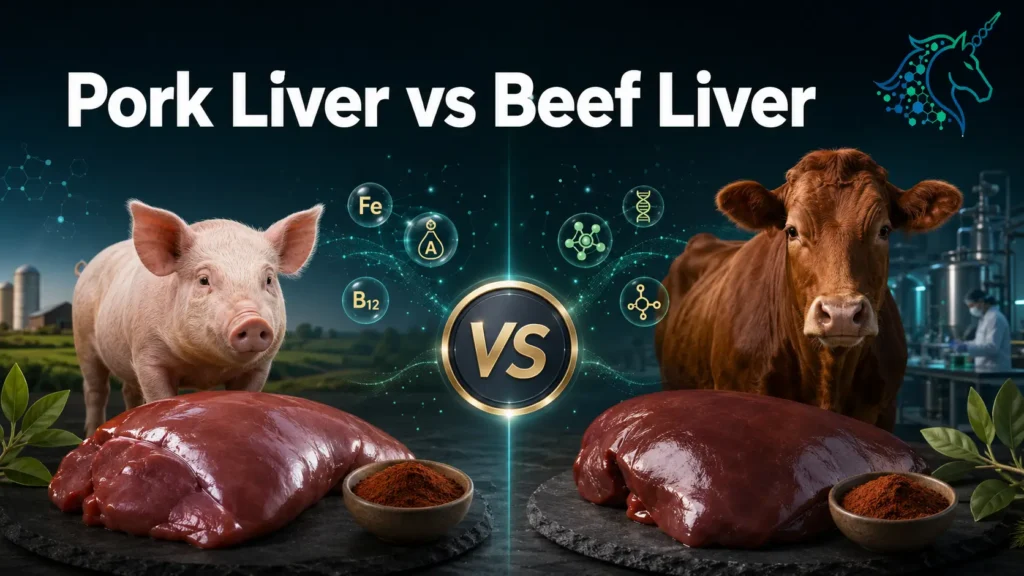
When comparing pork liver vs beef liver, both stand out as nutrient-dense organ meats packed with complete protein, a rich iron content, preformed vitamin A, vitamin B12, and essential trace minerals. Yet these two animal livers differ in meaningful ways across their micronutrient profiles, flavor, price, safety considerations, and suitability for supplement and ingredient manufacturing.
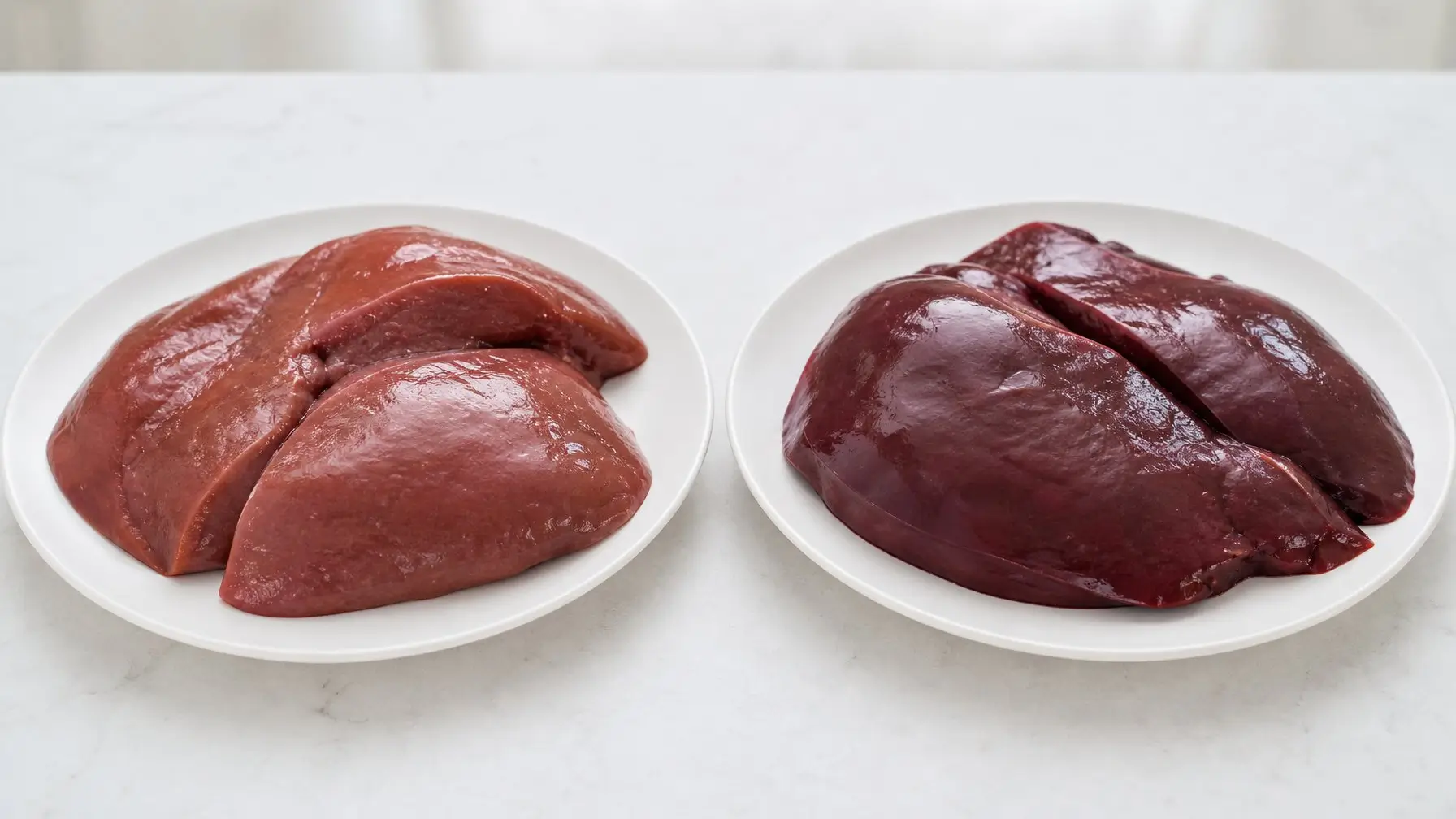
The better choice depends on whether you are eating liver for personal nutrition, formulating a glandular supplement, or sourcing bulk liver powder for commercial production. This guide provides a detailed nutritional comparison: nutrition facts per 100 grams, health benefits without overclaiming, taste and texture differences, safe serving sizes, religious and dietary restrictions, and the critical distinctions between fresh liver and processed liver powder formats. Whether you are a consumer exploring ancestral nutrition or a B2B buyer evaluating porcine liver vs bovine liver for your next product run, the details here will help you make a grounded decision. If you manufacture supplements, pet nutrition products, or functional foods and need bulk liver powder with batch-specific documentation, Unicorns Biotechnology is a GMP-compliant animal-derived ingredient manufacturer worth exploring for specifications, samples, and quotations.
The Quick Answer
Both pork liver and beef liver are highly nutrient-dense animal organs. Beef liver commonly stands out for vitamin A, vitamin B12, riboflavin, and copper content. Pork liver also provides significant niacin and essential minerals. Pork liver can be competitive or higher in iron content, selenium, zinc, and certain other nutrients depending on preparation method and database source. Neither is automatically better for every application.
Bottom-Line Differences at a Glance
| Comparison | Pork Liver | Beef Liver |
|---|---|---|
| Animal source | Pig (porcine) | Cattle (bovine) |
| Protein | High-quality complete protein | High-quality complete protein |
| Notable nutrients | Iron, selenium, zinc, B vitamins | Vitamin A, B12, riboflavin, copper |
| Flavor | Often milder or slightly sweeter | Richer, earthier, more metallic |
| Texture | Generally softer | Usually firmer and denser |
| Price | Often more economical | Frequently priced higher |
| Market acceptance | Strong in pork-consuming regions | Broader recognition in organ supplements |
| Religious suitability | Not halal or kosher | Potentially suitable when properly certified |
| Common powder forms | Whole powder, extract, peptides | Whole powder, extract, peptides |
Nutrient rankings should be based on matched records (raw vs. raw, or cooked vs. cooked using the same method) rather than generalized claims.
When Each Option Makes More Sense
Choose beef liver if your priority is grass-fed ancestral-supplement positioning, strong consumer brand recognition, or halal/kosher market access with proper certification. Choose pork liver if you need a more economical raw material, a milder flavor for culinary products, or a porcine-origin ingredient for organ complexes and pet nutrition formulations. For specific nutrient targets, follow verified analytical data rather than species-level generalizations.
Side-by-Side Nutrition Comparison
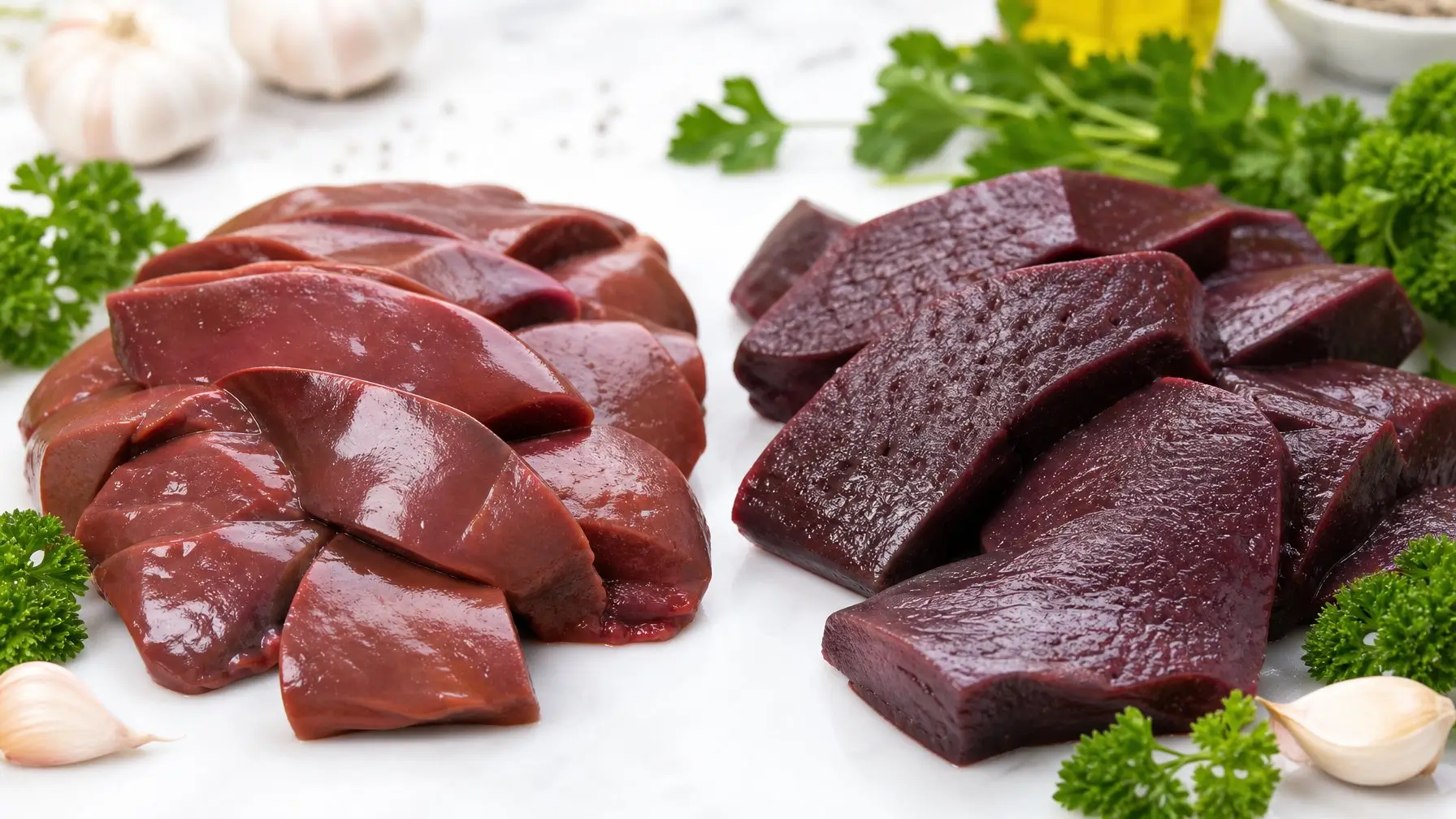
Pork liver nutrition and beef liver nutrition share a similar macro profile, but their micronutrient concentrations diverge significantly in areas like preformed vitamin A, vitamin B12, copper, and selenium. A comprehensive nutritional comparison shows how these profiles differ. The values below use raw liver records for a consistent comparison basis.
Nutrition Facts per 100 Grams
| Nutrient | Pork Liver (Raw) | Beef Liver (Raw) |
|---|---|---|
| Calories | ~134 kcal | ~135 kcal |
| Protein | ~21 g | ~20 g |
| Total fat | ~3.7 g | ~3.6 g |
| Cholesterol | ~301 mg | ~275 mg |
| Iron | ~17.9 mg | ~4.9 mg |
| Vitamin A (RAE) | ~4,968 mcg | ~9,442 mcg |
| Vitamin B12 | ~26 mcg | ~59.3 mcg |
| Riboflavin (B2) | ~3.0 mg | ~2.76 mg |
| Folate (B9) | ~212 mcg | ~290 mcg |
| Niacin (B3) | ~14.3 mg | ~13.2 mg |
| Choline | ~333 mg | ~333 mg |
| Copper | ~0.68 mg | ~9.76 mg |
| Zinc | ~6.7 mg | ~4.0 mg |
| Selenium | ~52.7 mcg | ~39.7 mcg |
| Vitamin C | ~25.3 mg | ~1.3 mg |
| Vitamin D | ~0.6 mcg | ~1.2 mcg |
Values are approximate and can vary by animal breed, diet, age, and analytical method. Use matched database entries when making sourcing decisions.
Protein, Calories, and Fat Profile
Both livers provide roughly 20 to 21 grams of complete protein per 100 grams, containing all essential amino acids. Calories sit close to 135 kcal for each, and total fat is comparably low at around 3.6 to 3.7 grams. While organ meats offer trace amounts of collagen, they are primarily prized for their density. Neither liver should be evaluated solely by its protein content because the micronutrient density is what sets organ meat apart from muscle meat.
Iron, Vitamin A, and Vitamin B12 Differences
The specific iron content and levels of fat-soluble vitamins drive most pork liver vs beef liver nutrition discussions.
Iron: The iron content in pork liver can be substantially higher per 100 grams in raw comparisons, though cooked values may narrow the gap. Both provide heme iron, the form with higher iron absorption compared to plant-based non-heme iron.
Vitamin A: Beef liver typically delivers roughly twice the preformed vitamin A (retinol and retinyl esters) of pork liver. Both sources provide retinol directly, not plant-derived beta-carotene.
Vitamin B12: Beef liver commonly provides more than double the cobalamin content of pork liver, making it one of the most concentrated dietary sources of vitamin B12 available.
Trace Minerals, Choline, and B Vitamins
Copper content is where the two diverge most dramatically. Beef liver contains roughly 14 times more copper than pork liver per 100 grams. Pork liver, in contrast, provides notably more zinc and selenium. Both deliver substantial choline at similar levels. Riboflavin and niacin content are comparable, while folate tends to be slightly higher in beef liver. Vitamin C content is notably higher in pork liver, though organ meats are rarely discussed as primary vitamin C sources. The overall iron content and mineral profile matter more than selecting a winner based on a single nutrient.
Benefits and Best-Fit Use Cases
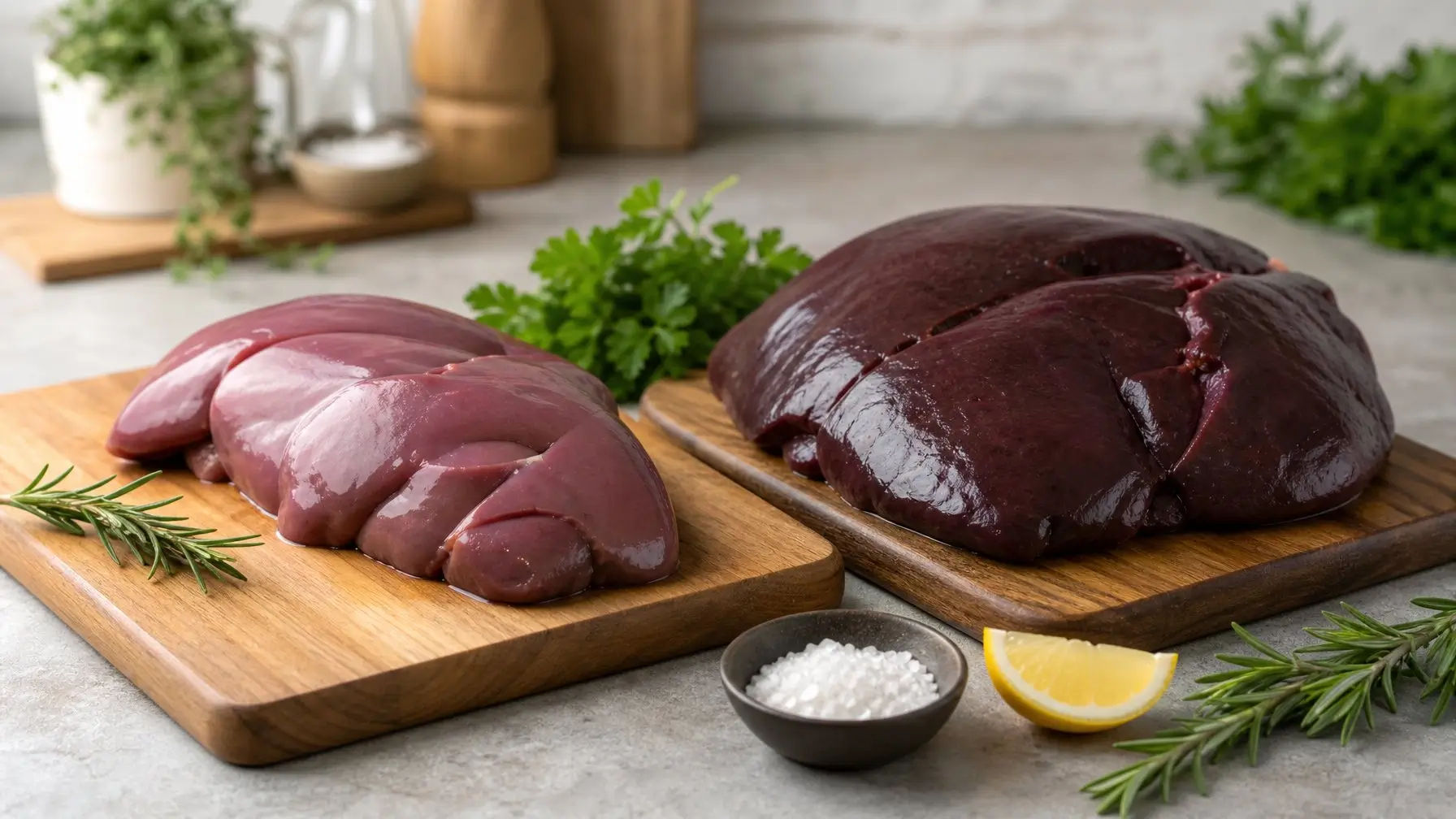
Both pork liver and beef liver provide concentrated dietary sources of nutrients involved in red blood cell formation, energy metabolism, immune support, and normal vision. The high iron content in these organ meats is particularly valuable for supporting these biological processes. The benefits you gain depend on which nutrients you need most and how you consume them.
Nutrient-Led Benefits Without Overclaiming
Liver is best understood as a nutrient-dense food, not a therapeutic agent. It provides heme iron, preformed vitamin A, vitamin B12, riboflavin, folate, choline, copper, selenium, and zinc. These nutrients contribute to normal physiological functions when consumed as part of a balanced diet.
Use compliant language when evaluating liver’s role: it provides, contains, and is a dietary source of these nutrients. It does not treat, cure, or prevent disease.
For Iron Intake, Energy Metabolism, and Red Blood Cell Formation
If your primary goal is increasing your dietary iron content, pork liver may offer a higher concentration per serving based on raw nutrient records. Both sources supply heme iron, which your body absorbs more efficiently than non-heme iron from plants. Vitamin B12 and folate in both livers contribute to normal red blood cell formation. Riboflavin and B vitamins support energy metabolism at the cellular level.
For General Diets, Ancestral Eating, and Organ Support Formulas
For consumers following nose-to-tail nutrition or ancestral eating patterns, beef liver carries stronger market recognition and is frequently featured in glandular supplements and organ complex supplements. Pork liver fits well into general nutrition products, multi-organ supplement formulations, and pet nutrition ingredients where porcine origin is acceptable. Whole-food supplement brands often favor grass-fed beef liver for positioning, while pork liver powder works effectively in formulations where cost efficiency and a milder flavor profile are priorities.
Taste, Texture, Culinary Uses, and Price
Pork liver vs beef liver taste is one of the most common deciding factors for consumers, while price and availability drive sourcing decisions at the commercial level.
Flavor and Mouthfeel Differences
Beef liver generally has a stronger, earthier, and more metallic flavor. Pork liver is often described as slightly sweeter and milder, making it more approachable if you are new to edible offal. Texture also differs: pork liver tends to be softer and more delicate, while beef liver is firmer and denser. Animal age, freshness, preparation method, and cooking time all substantially affect the final flavor. Overcooking either type results in a dry, tough, or bitter texture.
Popular Cooking Applications and Dishes
Both livers appear in a wide range of culinary applications:
- Pâté and liver mousse
- Liver sausage
- Stir-fried liver with vegetables
- Dumpling filling
- Pan-fried liver with onions
- Ground organ meat blends mixed into burgers or meatballs
Pork liver’s milder flavor makes it especially versatile in sausages, spreads, and various dishes within the Asian culinary tradition. Beef liver’s stronger character works well in classic pâté and pan-fried preparations. Soaking either type in milk before cooking can soften the flavor.
Availability, Market Positioning, and Cost Drivers
Pork liver is often less expensive, particularly in regions with established pork-processing industries. Beef liver typically commands a higher retail price and enjoys stronger positioning in premium supplement and ancestral-nutrition markets. For bulk powder, price depends on origin, processing method, specification, testing, packaging, and order volume, not species alone.
Safety, Serving Size, and Dietary Restrictions
Liver is one of the most nutrient-concentrated foods you can eat, which means safe liver consumption requires attention to portion size, frequency, and individual health conditions.
Vitamin A Intake, Frequency, and Portion Control
Both pork liver and beef liver are rich in preformed vitamin A and provide a source of vitamin d. The tolerable upper intake level for adults is 3,000 mcg RAE per day. A single 100-gram serving of beef liver can exceed that threshold, so moderate your frequency. Consuming liver once or twice per week in portions of roughly 85 to 100 grams is a commonly cited guideline. Supplement formulations should define clear serving sizes that keep vitamin A within safe daily limits.
Food Safety, Cooking, and Fresh Liver Handling
Fresh pork liver requires thorough cooking to an internal temperature of at least 160°F (71°C) to address potential parasites and pathogens. Store fresh liver refrigerated and use it within one to two days. Freezing extends storage safely. Always trim membranes and inspect for discoloration before cooking.
Cholesterol, Purines, Iron Overload, and Pregnancy Considerations
Liver is high in cholesterol and purines. If you manage gout, elevated uric acid levels, or hemochromatosis, consult your healthcare provider before adding liver to your diet regularly. Pregnant consumers should follow professional and local public-health guidance, as excessive preformed vitamin A intake during pregnancy can be harmful. If you already take vitamin A or iron supplements, account for liver’s contribution to avoid hypervitaminosis A or iron overload.
Halal, Kosher, and Porcine-Free Requirements
Porcine liver is unsuitable for halal and kosher products. Bovine liver is not automatically halal or kosher; the sourcing, slaughter method, manufacturing facility, and certification must meet applicable religious requirements. If you are formulating porcine-free ingredients for specific markets, species authentication via PCR testing and clear documentation are essential.
Fresh Liver vs Powder for Supplements and Bulk Sourcing
For supplement manufacturers, pet nutrition companies, and ingredient distributors, the comparison extends beyond fresh organ meat into processed powder formats. Species choice, processing method, and quality documentation all affect the commercial viability of your finished product.
Fresh Organ Meat Compared With Whole Liver Powder
Consumers and formulators use liver powder because it is more convenient than preparing fresh liver, easier to incorporate into capsules and blends, offers more consistent serving control, and has a longer shelf life when properly processed and packaged. Fresh-food nutrition values should not be applied directly to dried liver powder. A stated fresh-liver equivalence should be supported by a documented fresh-to-powder ratio and manufacturing yield.
Freeze-Dried, Desiccated, Spray-Dried, Extract, and Peptide Formats
These terms are not interchangeable:
- Whole liver powder: Dried and milled whole tissue
- Freeze-dried liver powder (lyophilized): Processed at low temperature, generally offering better nutrient retention
- Desiccated liver: A broader term for dried liver material
- Spray-dried liver extract: A soluble or concentrated fraction dried using heat
- Liver peptide powder: Enzymatically hydrolyzed material containing smaller peptides via enzymatic hydrolysis
Nutrient retention, solubility, flavor profile, bulk density, and particle size all vary by format. Select the format that matches your formulation and target application. You can review specifications for bovine liver peptide powder and pork liver peptide powder to understand how hydrolyzed formats differ from whole powders.
How Species Choice Affects Formulation and Market Access
Bovine liver powder has strong recognition in grass-fed liver supplements and ancestral-nutrition products. Porcine liver powder suits organ complex supplements, general nutrition products, and pet nutrition formulations where porcine origin is acceptable. Pork origin limits access to halal and kosher markets. Bovine material may require detailed BSE/TSE statements and cattle-origin documentation. Flavor, color, solubility, particle size, and bulk density affect capsule, tablet, and powder-blend performance.
What Bulk Buyers Should Verify Before Purchasing
Before committing to a supplier, verify these items:
- Animal species and tissue identity confirmed by PCR or DNA species authentication
- Country and slaughterhouse origin with batch traceability
- Cross-species contamination controls
- Fresh-to-powder ratio and drying or extraction method
- Protein, moisture, ash, and particle size specifications
- Heavy-metal testing and microbiological testing limits
- Veterinary-drug and antibiotic-residue controls
- BSE/TSE statement for bovine materials
- Halal, kosher, and porcine-free documentation where required
- Batch-specific Certificate of Analysis
- Shelf-life and stability data
- Nitrogen-flushed or moisture-resistant packaging
A reliable supplier like Unicorns Biotechnology provides these documents alongside bovine liver powder and porcine liver powder to support transparent sourcing.
Frequently Asked Questions
Which one tastes milder and less “livery” when cooked?
Pork liver is generally considered milder and slightly sweeter than beef liver. Beef liver has a stronger, earthier, more metallic taste. Soaking either type in milk before cooking can reduce the intensity.
How do the calories, protein, and fat compare per serving?
Both livers are very close in calories (around 134 to 135 kcal per 100 g raw), protein (20 to 21 g), and total fat (3.6 to 3.7 g). Pork liver is marginally leaner in some records, but the practical difference is minimal for most dietary purposes.
Which liver has a higher iron content and more vitamin A per 100 grams?
Based on raw USDA-comparable data, pork liver can contain substantially more iron (approximately 17.9 mg vs. 4.9 mg). Beef liver provides roughly twice the preformed vitamin A (approximately 9,442 mcg RAE vs. 4,968 mcg RAE). Always compare using the same preparation basis.
Is one better for weight loss or a high-protein diet?
Neither liver has a clear advantage for weight loss. Both are low in calories, low in fat, and high in complete protein with all essential amino acids. Pork liver is marginally lower in calories per serving in some records, but the difference is small enough that either fits a high-protein, calorie-controlled diet.
How does pork liver compare with beef and chicken liver nutritionally?
Pork liver tends to be higher in iron, selenium, and zinc than beef liver but lower in vitamin A, B12, and copper. Chicken liver generally falls between the two, offering moderate vitamin A and iron with a milder flavor. Each species has a distinct micronutrient emphasis.
Are there any health risks or disadvantages specific to eating pork liver regularly?
Pork liver is high in preformed vitamin A, cholesterol, and purines, so frequent large servings can contribute to vitamin A toxicity, elevated uric acid, or cholesterol concerns. Fresh pork liver must be cooked thoroughly to at least 160°F for food safety. Individuals with hemochromatosis or gout should consult a healthcare provider before consuming it regularly.
References
- Adenuga, B. M., & Montowska, M. (2023). A systematic review of DNA-based methods in authentication of game and less common meat species. Comprehensive Reviews in Food Science and Food Safety, 22(3), 2112–2160. https://doi.org/10.1111/1541-4337.13142
- Choi, H. K., Atkinson, K., Karlson, E. W., Willett, W., & Curhan, G. (2004). Purine-rich foods, dairy and protein intake, and the risk of gout in men. The New England Journal of Medicine, 350(11), 1093–1103. https://doi.org/10.1056/NEJMoa035700
- EFSA Panel on Nutrition, Novel Foods and Food Allergens (NDA). (2024). Scientific opinion on the tolerable upper intake level for preformed vitamin A and β-carotene. EFSA Journal, 22(6), e8814. https://doi.org/10.2903/j.efsa.2024.8814
- Fukagawa, N. K., McKillop, K., Pehrsson, P. R., Moshfegh, A., Harnly, J., & Finley, J. (2022). USDA’s FoodData Central: What is it and why is it needed today? The American Journal of Clinical Nutrition, 115(3), 619–624. https://doi.org/10.1093/ajcn/nqab397
- Penniston, K. L., & Tanumihardjo, S. A. (2006). The acute and chronic toxic effects of vitamin A. The American Journal of Clinical Nutrition, 83(2), 191–201. https://doi.org/10.1093/ajcn/83.2.191
- Ratti, C. (2001). Hot air and freeze-drying of high-value foods: A review. Journal of Food Engineering, 49(4), 311–319. https://doi.org/10.1016/S0260-8774(00)00228-4
- Toldrá, F., Aristoy, M.-C., Mora, L., & Reig, M. (2012). Innovations in value-addition of edible meat by-products. Meat Science, 92(3), 290–296. https://doi.org/10.1016/j.meatsci.2012.04.004
- West, A.-R., & Oates, P.-S. (2008). Mechanisms of heme iron absorption: Current questions and controversies. World Journal of Gastroenterology, 14(26), 4101–4110. https://doi.org/10.3748/wjg.14.4101