
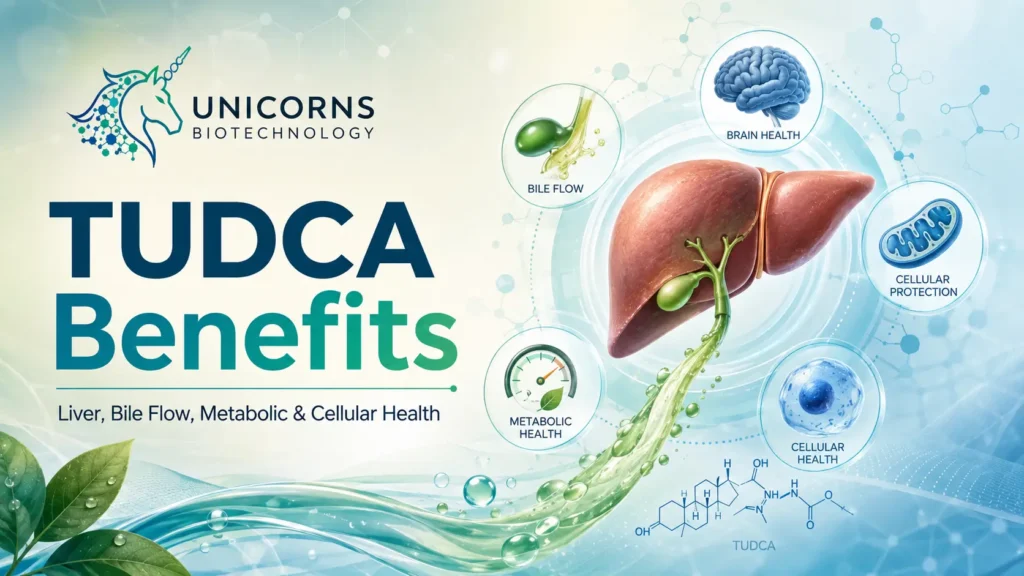
TUDCA, short for tauroursodeoxycholic acid, is a naturally occurring bile acid that has attracted attention far beyond digestion. Research has studied TUDCA Benefits for liver health, bile flow, insulin sensitivity, cellular stress, brain health, cardiovascular function, gut health, kidney protection, and retinal health.
Some TUDCA benefits have been studied in humans. Others are based mainly on animal or cell research. This difference matters.
The strongest human evidence relates to liver and bile health, with smaller clinical studies also reporting effects on insulin sensitivity and blood vessel function. TUDCA also has strong laboratory evidence as a chemical chaperone, meaning it can help cells manage poorly folded proteins and endoplasmic reticulum stress.
Claims about TUDCA for Alzheimer’s disease, Parkinson’s disease, kidney disease, eye disease, immune health, or weight loss are much less certain. These areas remain largely experimental.
This guide separates what is supported by human research from what is still promising but unproven.
TUDCA Benefits at a Glance
| Potential TUDCA Benefit | Evidence Level | What the Research Suggests |
|---|---|---|
| Liver health | Moderate human evidence | May improve selected liver enzymes and bile-related markers in specific liver conditions |
| Bile flow and bile composition | Human + physiological evidence | Can shift the bile acid pool toward more hydrophilic bile acids |
| Fat digestion and nutrient absorption | Strong bile physiology | Bile acids help with lipid and fat-soluble nutrient absorption |
| Insulin sensitivity | Small human trial | Improved liver and skeletal-muscle insulin sensitivity in obese adults |
| ER stress reduction | Strong mechanistic evidence | TUDCA acts as a chemical chaperone in many experimental models |
| Mitochondrial and cellular support | Strong preclinical evidence | May reduce mitochondrial stress and abnormal apoptosis |
| Brain and nervous system | Strong preclinical, mixed human evidence | Promising mechanisms, but large ALS Phase III trial was negative |
| Cardiovascular health | Limited human + preclinical evidence | Human study found protection against short-term glucose-induced endothelial dysfunction |
| Gut barrier and microbiome | Mainly preclinical | Animal studies show changes in barrier function and gut bacteria |
| Immune and inflammatory signaling | Mainly preclinical | May reduce inflammatory pathways in experimental models |
| Kidney health | Mainly preclinical | Protective effects reported in several kidney injury models |
| Eye and retinal health | Strong preclinical | Retinal protection reported in many animal and cell studies |
| DNA protection | Preclinical | Reduced apoptosis-related DNA damage in experimental models |
What Is TUDCA?
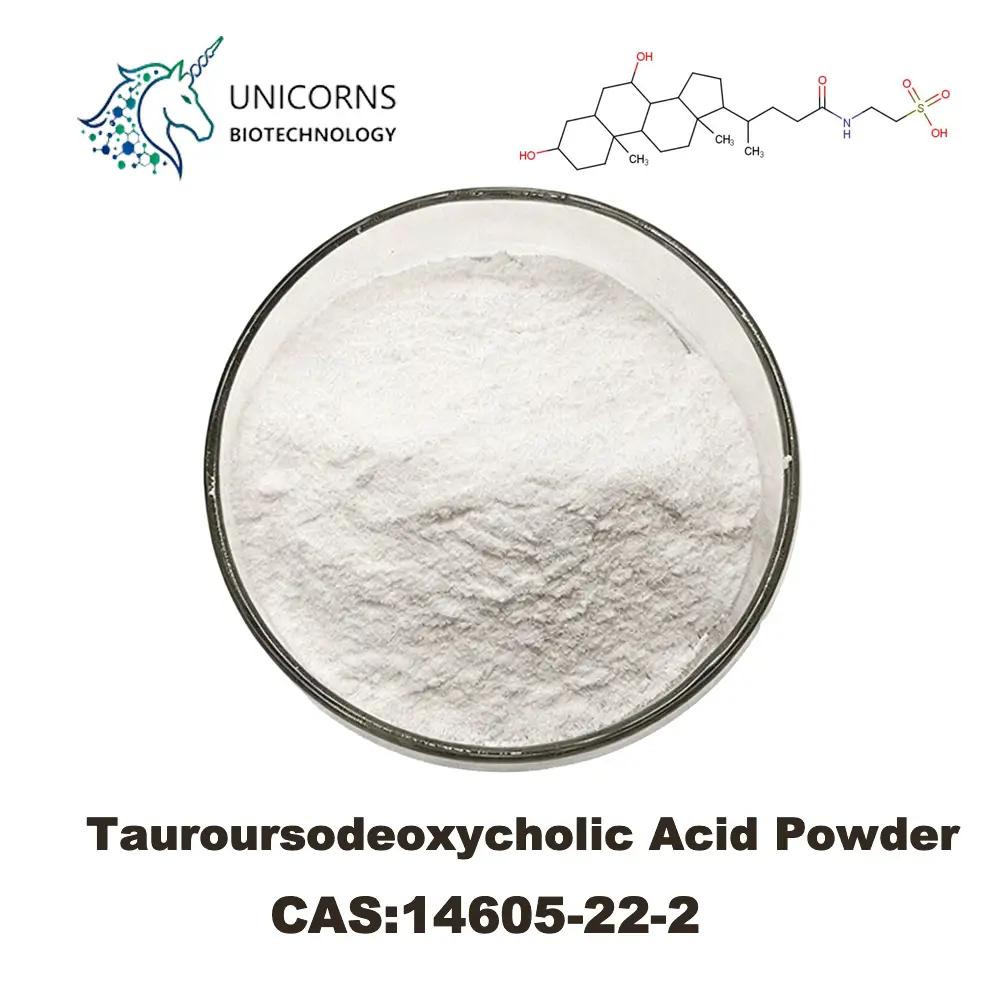
TUDCA stands for tauroursodeoxycholic acid. It is the taurine-conjugated form of ursodeoxycholic acid, or UDCA.
A simple way to understand the relationship is:
UDCA + taurine → TUDCA
TUDCA is considered a relatively hydrophilic bile acid, meaning it interacts more easily with water than many more hydrophobic bile acids.
Bile acids are made and recycled through the liver, bile ducts, intestine, and portal circulation. This process is called enterohepatic circulation.
TUDCA occurs naturally in the human bile acid pool, although only in small amounts. It can also be manufactured as a purified ingredient for research, pharmaceutical, and supplement applications.
For manufacturers sourcing a defined ingredient rather than a whole bile extract, Unicorns Biotechnology supplies bulk TUDCA Powder.
TUDCA vs UDCA: What Is the Difference?
TUDCA and UDCA are closely related, but they are not identical.
| TUDCA | UDCA |
|---|---|
| Tauroursodeoxycholic acid | Ursodeoxycholic acid |
| UDCA conjugated with taurine | Parent bile acid |
| More polar conjugated molecule | Unconjugated bile acid |
| Strong chemical-chaperone research | Longer clinical history in hepatobiliary medicine |
| Often studied for ER stress and cellular protection | Well established in selected cholestatic liver diseases |
One human study in primary biliary cholangitis directly compared TUDCA and UDCA. Patients received 250 mg three times daily for 24 weeks. Both groups showed similar improvements in alkaline phosphatase, AST, and total bilirubin.
That does not mean TUDCA and UDCA are interchangeable. Their chemistry, absorption, metabolism, and approved uses can differ.
How Does TUDCA Work?
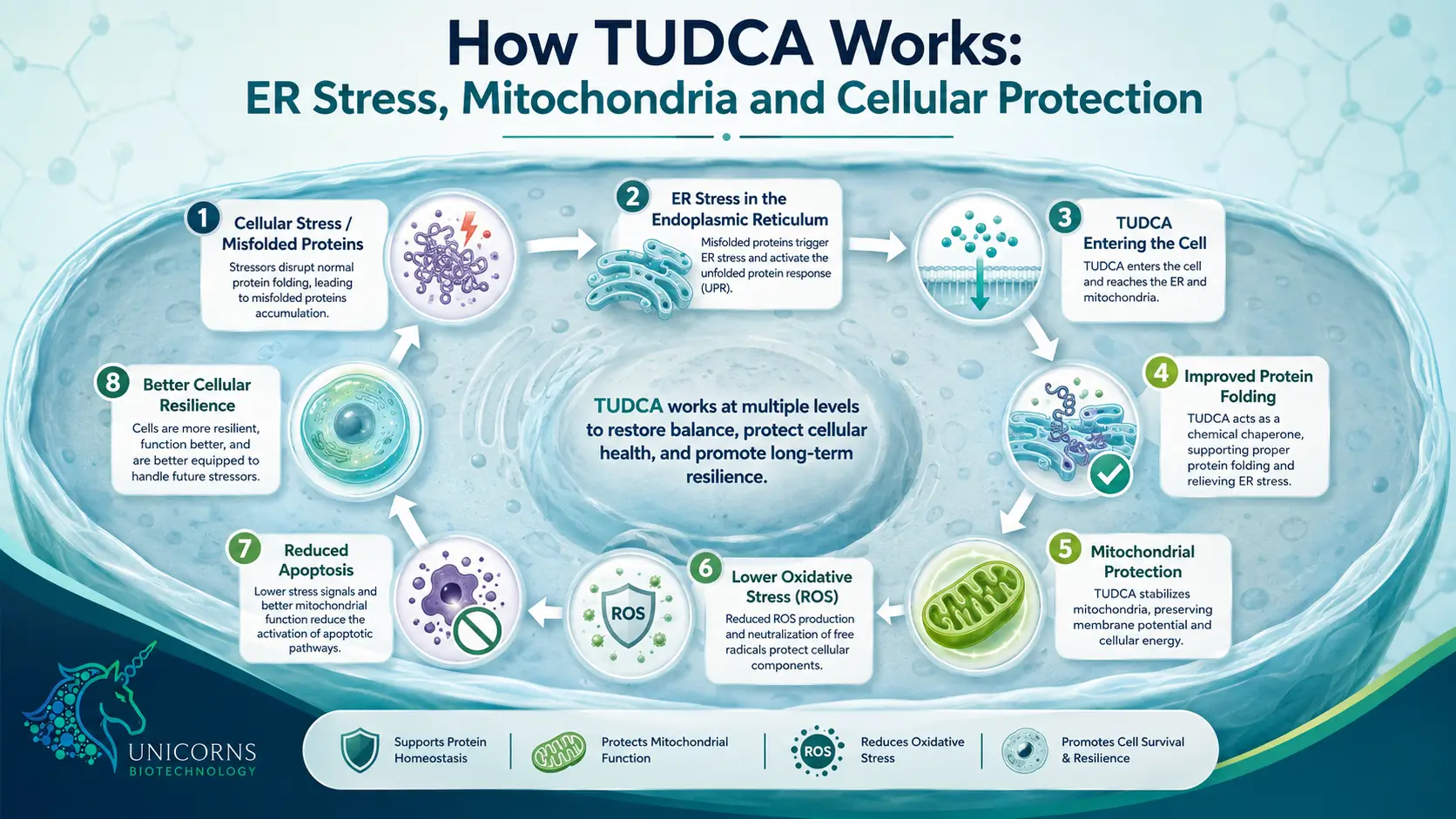
TUDCA appears in many areas of research because several of its effects act at the basic cellular level.
Instead of thinking of TUDCA as a compound that independently “helps the liver,” “helps the brain,” and “helps the kidneys,” it is more useful to understand a few common mechanisms.
TUDCA Acts as a Chemical Chaperone
Proteins must fold into the correct shape before they can work properly.
Much of this folding takes place in a cell structure called the endoplasmic reticulum, or ER. When too many damaged or unfolded proteins build up, the cell experiences ER stress.
TUDCA is widely studied as a chemical chaperone. In experimental systems, it can reduce protein aggregation and alter pathways involved in the unfolded protein response.
Common research markers include GRP78/BiP, CHOP, PERK, eIF2α, ATF4, and the unfolded protein response, or UPR.
This ER-stress effect helps explain why TUDCA is being studied in liver, metabolic, neurological, cardiovascular, kidney, and retinal disorders.
TUDCA and Mitochondrial Function
Mitochondria help cells make energy.
They also play a major role in oxidative stress and programmed cell death. Research suggests TUDCA can influence mitochondrial membrane stability, cytochrome c release, reactive oxygen species, and apoptosis-related pathways.
This is usually described as cytoprotection, meaning protection of cells under certain types of stress.
TUDCA and Apoptosis
Apoptosis is programmed cell death. It is a normal biological process, but too much apoptosis can contribute to tissue damage in some disease models.
TUDCA has shown anti-apoptotic effects in many laboratory studies. These effects involve pathways such as Bax, Bcl-2, caspases, mitochondrial signaling, and ER stress.
This does not mean preventing apoptosis is always beneficial. Apoptosis also helps remove damaged or abnormal cells.
1. TUDCA Benefits for Liver Health
Liver health is the area where TUDCA has some of its strongest direct human evidence.
Researchers have studied TUDCA in primary biliary cholangitis, cirrhosis, chronic hepatitis, cholestasis, and other hepatobiliary conditions.
“Hepatobiliary” simply means involving the liver and bile system.
TUDCA and Liver Enzymes
A multicenter randomized trial included 199 Chinese patients with primary biliary cholangitis.
After 24 weeks, both TUDCA and UDCA produced similar improvements in alkaline phosphatase, AST, and total bilirubin. About 76% of the TUDCA group achieved at least a 25% reduction in alkaline phosphatase.
A smaller randomized trial in liver cirrhosis used 750 mg of TUDCA per day for six months. ALT, AST, and ALP decreased significantly from baseline in the TUDCA group. However, serum markers of liver fibrosis did not improve significantly.
This difference is important.
A lower liver enzyme result does not necessarily mean damaged liver tissue has been completely repaired.
TUDCA and Cholestasis
Cholestasis occurs when normal bile formation or bile flow is reduced.
More hydrophobic bile acids can damage cell membranes when they build up at high levels. TUDCA is more hydrophilic, which is one reason it has been studied in cholestatic liver disease.
Oral TUDCA can also change the composition of the bile acid pool. In patients with primary biliary disease, doses of 500, 1,000, and 1,500 mg per day increased the proportion of ursodeoxycholate in bile while reducing some endogenous bile acids.
This supports the idea that TUDCA can make the bile acid pool more hydrophilic.
TUDCA and Liver Cell Protection
TUDCA’s liver effects may involve more than bile chemistry.
Experimental studies suggest it may help reduce:
ER stress, mitochondrial damage, oxidative stress, inflammatory signaling, and excessive apoptosis.
These mechanisms are often described as hepatoprotective effects.
Does TUDCA Help Fatty Liver?
TUDCA has produced promising results in animal models of fatty liver disease.
For example, experimental studies have linked TUDCA with changes in liver fat, inflammation, insulin resistance, intestinal barrier function, and bile acid metabolism.
Human evidence is much weaker.
TUDCA should therefore not be described as a proven treatment for MASLD, NAFLD, or NASH.
Does TUDCA Repair the Liver?
“Liver repair” is a popular phrase, but it is not a clear medical endpoint.
Studies may measure ALT, AST, ALP, bilirubin, albumin, fibrosis markers, imaging, or liver tissue. Improving one marker does not prove complete reversal of liver damage.
TUDCA has shown benefits for selected biochemical liver markers in human trials. Evidence that it can universally “repair” fibrosis, cirrhosis, or other structural liver damage is not established.
2. TUDCA Supports Bile Flow and Bile Acid Composition
TUDCA is itself a bile acid, so its relationship with the bile system is direct.
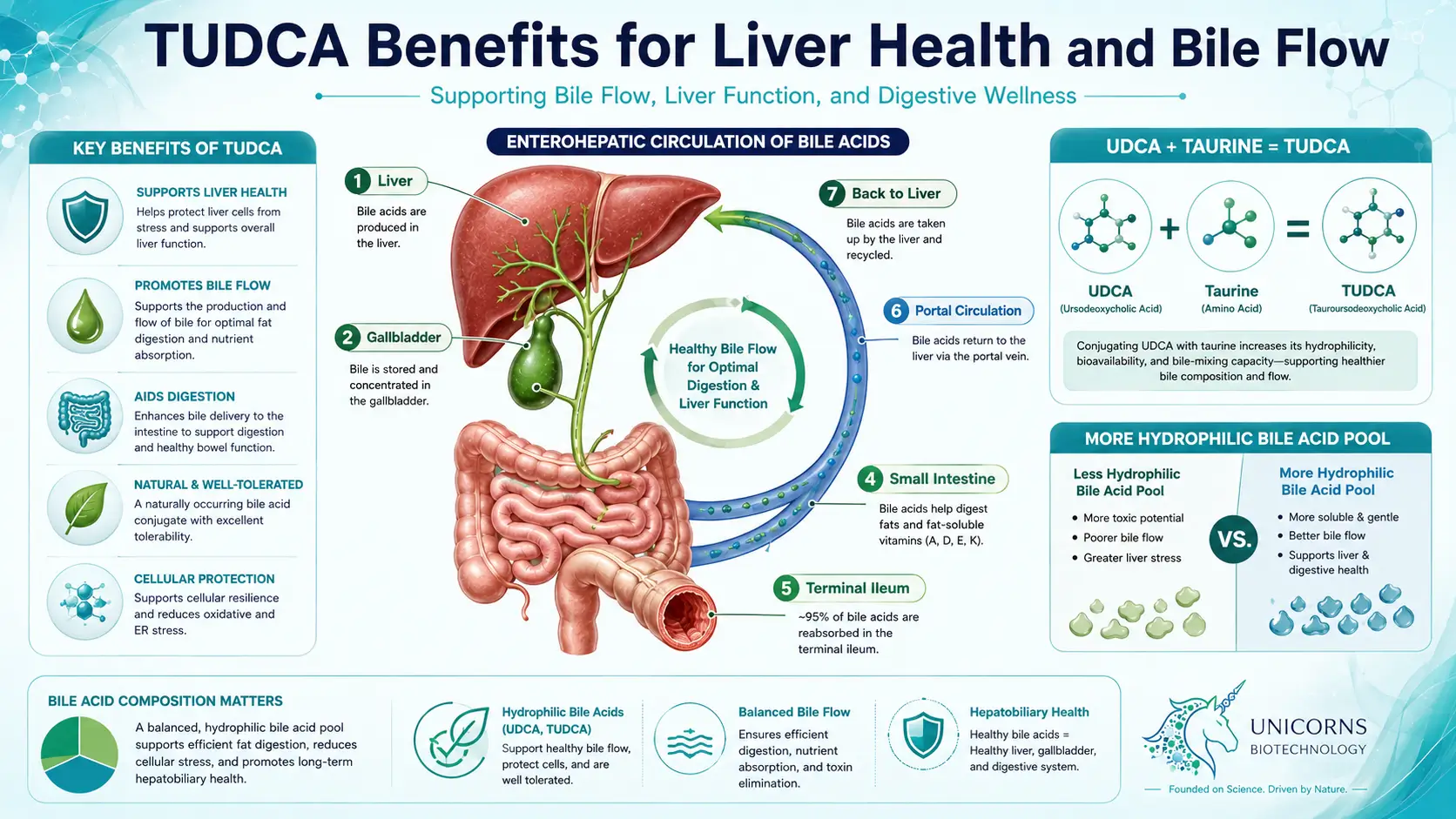
The liver makes bile. The gallbladder stores and concentrates it. Bile acids then enter the small intestine, where they take part in fat digestion before most are recycled back to the liver.
TUDCA can increase the hydrophilic portion of this bile acid pool.
Does TUDCA Thin Bile?
“Thinning bile” is common supplement language, but it can be misleading.
TUDCA does not simply dilute bile like adding water.
A better description is that TUDCA can change bile acid composition and increase the proportion of more hydrophilic bile acids.
TUDCA and Bile Sludge
Biliary sludge contains microscopic material that can form in bile.
Because UDCA and related hydrophilic bile acids influence bile composition, TUDCA is sometimes promoted for bile sludge. However, direct high-quality human evidence for TUDCA specifically is limited.
It should not be presented as a guaranteed way to remove sludge.
TUDCA and Gallstones
UDCA has a much longer clinical history in selected cholesterol gallstone cases.
TUDCA is related to UDCA, but evidence for one should not automatically be transferred to the other.
Animal research has explored TUDCA and gallstone formation, including possible links with the gut microbiome and bile acid composition. Human evidence for using standard TUDCA supplements to dissolve gallstones is not strong enough for a general claim.
TUDCA After Gallbladder Removal
Removing the gallbladder does not stop bile production. The liver continues making bile, but there is no gallbladder to store and concentrate it.
An older controlled study investigated TUDCA after cholecystectomy and reported earlier improvement in some post-surgery digestive symptoms.
This is interesting, but it does not show that everyone without a gallbladder needs TUDCA.
3. TUDCA, Fat Digestion and Nutrient Absorption
Bile acids are essential to normal fat digestion and absorption.
They help disperse dietary lipids and form mixed micelles. These tiny structures help carry fatty acids, monoglycerides, cholesterol, and fat-soluble nutrients through the watery environment of the small intestine.
This process also supports absorption of the fat-soluble vitamins A, D, E, and K.
For a detailed explanation of bile acid chemistry and micelle formation, see Bile Salts Explained.
Is TUDCA a Digestive Enzyme?
No.
TUDCA is a bile acid.
Lipase is an enzyme that breaks triglycerides into fatty acids and monoglycerides. Pancreatin contains several digestive enzyme activities.
TUDCA and digestive enzymes can therefore take part in the same digestive process, but they do different jobs.
Does TUDCA Help With Fatty Meals or Bloating?
It is biologically possible that bile acids may affect symptoms when fat digestion is impaired.
However, bloating and discomfort after eating can have many causes. TUDCA has not been proven as a general treatment for bloating.
For a broader comparison of natural bile supplementation and fat digestion, see Ox Bile Benefits.
4. TUDCA Benefits for Insulin Sensitivity and Glucose Metabolism
TUDCA has one especially interesting human study in metabolic health.
Researchers randomized 20 obese adults to TUDCA or placebo for four weeks. The TUDCA dose was 1,750 mg per day.
Treatment improved liver and skeletal-muscle insulin sensitivity by about 30%, although insulin sensitivity in adipose tissue did not improve significantly.
This was a small study, but it provides direct human evidence that TUDCA can affect insulin action under specific conditions.
Why Might TUDCA Affect Insulin Sensitivity?
ER stress has been linked with insulin resistance in experimental obesity models.
Because TUDCA acts as a chemical chaperone, researchers have studied whether reducing ER stress can improve insulin signaling.
Relevant pathways include:
IRS signaling, Akt, glucose uptake, hepatic glucose production, ER stress, and mitochondrial function.
TUDCA and Pancreatic Beta Cells
Animal research has also studied TUDCA in pancreatic beta cells.
One mouse study found changes in beta-cell mass and insulin degradation. This is interesting mechanistic research, but it does not prove that TUDCA treats diabetes in humans.
Does TUDCA Lower Blood Sugar?
The current evidence is not strong enough to call TUDCA a glucose-lowering treatment.
The human insulin-sensitivity study was small and short. It also did not establish TUDCA as a replacement for standard diabetes care.
TUDCA and Weight Loss
TUDCA is sometimes promoted for weight management because bile acids are involved in metabolism and energy signaling.
Animal studies have reported changes in obesity, insulin resistance, and liver fat. Human evidence for meaningful weight loss is lacking.
TUDCA is not an established weight-loss supplement.
5. TUDCA Reduces ER Stress and Supports Cellular Health
ER stress is one of the most important themes in TUDCA research.
When proteins fail to fold correctly, cells activate the unfolded protein response. This system tries to restore balance.
If stress becomes too severe or lasts too long, cells may become damaged or enter apoptosis.
TUDCA has repeatedly reduced markers of ER stress in cell and animal models. Research has also shown that it can reduce protein aggregation and protect cultured liver cells from several forms of cellular stress.
This chemical-chaperone effect may help explain why TUDCA appears in research on such different organs.
6. TUDCA Benefits for Mitochondria and Cellular Energy
Mitochondria produce much of the ATP used by cells.
When mitochondria become damaged, they can release signals that increase oxidative stress and activate apoptosis.
Experimental TUDCA research has reported effects on mitochondrial membrane stability, oxidative stress, cytochrome c release, and cell-survival pathways.
Does TUDCA Increase Cellular Energy?
It is more accurate to say that TUDCA may protect mitochondrial function under certain stress conditions.
That is not the same as showing that TUDCA boosts energy or ATP production in healthy people.
Claims such as “TUDCA gives you more energy” are not well supported by human trials.
7. TUDCA, Apoptosis, Cellular Resilience and DNA Protection
TUDCA is often described as anti-apoptotic.
In experimental models, it can influence proteins involved in programmed cell death, including Bax, Bcl-2, caspases, and mitochondrial signaling.
DNA fragmentation is one of the changes that can occur during apoptosis. TUDCA has reduced apoptosis-related cellular damage in several laboratory systems.
Does TUDCA Protect DNA?
There is some experimental support for reduced DNA fragmentation or cell damage under specific stress conditions.
However, this should not be turned into claims that TUDCA prevents genetic mutations, repairs DNA in healthy people, or prevents cancer.
“DNA protection” is best described as a preclinical cellular finding linked to reduced stress and apoptosis.
8. TUDCA Benefits for Brain Health and the Nervous System
TUDCA has attracted major interest as a possible neuroprotective bile acid.
Preclinical studies have explored TUDCA in models of:
Alzheimer’s disease, Parkinson’s disease, Huntington’s disease, ALS, cerebral ischemia, and other neurological injuries.
Proposed mechanisms include reduced apoptosis, mitochondrial protection, lower oxidative stress, less neuroinflammation, and improved protein homeostasis.
Does TUDCA Cross the Blood-Brain Barrier?
TUDCA can reach the nervous system, which is one reason it has been studied in neurological disease models.
However, reaching nervous tissue does not prove that a compound can successfully treat a neurodegenerative disease.
TUDCA and Alzheimer’s Disease
Animal and cell studies suggest TUDCA may influence amyloid-related stress, mitochondrial damage, inflammation, and neuronal apoptosis.
Recent mouse research has also explored the microbiota-gut-brain axis as a possible pathway.
Human clinical evidence remains inadequate.
TUDCA and Parkinson’s Disease
TUDCA has shown neuroprotective effects in animal models of Parkinson’s disease, including a chronic mouse model.
Again, this does not establish clinical benefit in people with Parkinson’s disease.
TUDCA and ALS: What Do Human Trials Show?
ALS provides a useful example of why early studies should not be treated as final proof.
A small randomized trial included 34 people with ALS. Patients received 1 gram of TUDCA twice daily as an add-on to riluzole. The study reported slower functional decline in the TUDCA group.
That result was encouraging.
A much larger European Phase III trial was then conducted. The study enrolled 336 participants across seven countries. In March 2024, the TUDCA-ALS consortium reported that the trial did not meet its primary endpoint, and there were no significant benefits in major secondary outcomes such as survival or biomarkers.
The Phase III study also found TUDCA generally well tolerated, with mainly mild gastrointestinal adverse events.
The current conclusion is therefore much more cautious:
TUDCA has strong experimental neuroprotective mechanisms, but clinical benefit for ALS was not confirmed in the larger Phase III trial.
The same caution should be used for Alzheimer’s, Parkinson’s, and other neurological diseases.
Suggested video: TUDCA and Brain Health: What Human vs Animal Studies Show
A 60 to 90 second original video could explain ER stress, mitochondria, the early ALS trial, and why the Phase III result changed the evidence. This would add useful video content without overstating benefits.
9. TUDCA Benefits for Heart and Cardiovascular Health
Cardiovascular health is another area where TUDCA research is growing.
Most evidence remains experimental, but there is some direct human research.
In one randomized crossover study, 12 healthy adults took 1,500 mg of TUDCA before an oral glucose challenge. The glucose load reduced flow-mediated dilation under placebo conditions, which reflects poorer short-term endothelial function. This decline was largely prevented after TUDCA.
Interestingly, TUDCA did not significantly change the glucose or insulin response in this acute study.
TUDCA and Endothelial Function
The endothelium is the thin layer of cells lining blood vessels.
ER stress can affect endothelial function. Because TUDCA reduces ER stress in experimental models, researchers are studying its possible role in vascular health.
Animal studies have also reported improvements in arterial stiffness and endothelial function in diabetic models.
Does TUDCA Lower Cholesterol?
TUDCA is part of bile acid metabolism, and bile acids are closely linked to cholesterol metabolism.
That does not mean TUDCA has been proven to lower LDL cholesterol in the general population.
At present, “supports cardiovascular function” is more defensible than “lowers cholesterol.”
10. TUDCA Benefits for Gut Health and the Microbiome
Bile acids and the gut microbiome constantly interact.
Gut bacteria can modify bile acids. Bile acids can also change the intestinal environment and affect microbial populations.
TUDCA has been studied for effects on the intestinal barrier, tight junctions, gut inflammation, and microbiota composition.
A 2022 study in weaned piglets found that TUDCA improved intestinal barrier measures and changed serum metabolites and gut bacteria.
Mouse research has also reported improved intestinal barrier function in experimental fatty liver and colitis models.
Does TUDCA Improve the Gut Microbiome?
The current answer is: possibly, but this is not proven in humans.
Most microbiome research has been done in animals.
It is safer to say that TUDCA can interact with bile acid-microbiome pathways than to say it always increases “good bacteria.”
TUDCA and the Gut-Liver Axis
The liver sends bile acids into the intestine. Gut microbes then transform many of those bile acids before they are recycled.
This two-way communication is known as part of the gut-liver axis.
TUDCA’s effects on bile acids, intestinal barrier function, inflammation, and microbes may therefore overlap, but human clinical research is still needed.
11. TUDCA, Immune Health and Inflammatory Signaling
TUDCA is sometimes described as an “immune booster.”
That phrase is too simple.
The immune system needs balance, not constant stimulation.
TUDCA has shown anti-inflammatory and immune-modulating effects in experimental studies. These effects may involve ER stress, cytokines, NF-κB-related pathways, cell survival, and interactions between bile acids and immune cells.
Animal studies have also explored TUDCA during severe inflammatory conditions such as experimental sepsis.
These findings do not prove that TUDCA prevents colds, flu, bacterial infections, or other infections in people.
Is TUDCA Anti-Inflammatory?
Preclinical evidence supports anti-inflammatory activity in several models.
Human evidence for using TUDCA as a general anti-inflammatory supplement is much more limited.
12. TUDCA Benefits for Kidney Health
TUDCA has shown kidney-protective effects in several experimental settings.
These studies focus on mechanisms such as:
ER stress, oxidative stress, inflammation, apoptosis, and fibrosis.
A 2024 Kidney International study found that TUDCA improved renal injury linked to COL4A3 mutation in experimental models.
Earlier animal research also reported that TUDCA reduced renal injury and inflammation caused by chronic high salt exposure.
Is TUDCA Hard on the Kidneys?
Current research does not suggest that TUDCA is inherently toxic to the kidneys at doses studied in clinical trials.
However, that does not mean people with kidney disease should self-treat with TUDCA.
Most claims about kidney protection still come from animal or laboratory research rather than large human trials.
13. TUDCA Benefits for Eye and Retinal Health
TUDCA has one of its strongest preclinical evidence bases in retinal research.
A systematic review examined 24 experimental studies. TUDCA showed protective effects across models involving retinitis pigmentosa, diabetic retinopathy, retinal degeneration, retinal ganglion-cell injury, retinal detachment, and other retinal disorders.
Possible mechanisms included:
reduced apoptosis, less oxidative stress, reduced ER stress, lower inflammation, and changes in abnormal blood-vessel growth.
Are TUDCA Eye Benefits Proven in Humans?
No.
The systematic review specifically noted the need for well-designed human clinical trials.
TUDCA may be a promising retinal research compound, but it should not be promoted as a proven treatment for eye disease.
How TUDCA May Produce So Many Different Effects
TUDCA seems to affect many organs, but much of the research can be linked back to a few core mechanisms.
| Core TUDCA Mechanism | Research Areas It May Affect |
|---|---|
| More hydrophilic bile acid pool | Liver, bile flow, hepatobiliary function |
| ER stress reduction | Liver, metabolism, brain, heart, kidney, retina |
| Chemical chaperone activity | Protein folding and cellular homeostasis |
| Mitochondrial stabilization | Brain, heart, retina, liver and cellular resilience |
| Anti-apoptotic signaling | Injury and neurodegeneration models |
| Reduced oxidative stress | Liver, cardiovascular, kidney, brain and retinal models |
| Inflammatory modulation | Gut, liver, nervous system and immune research |
| Metabolic signaling | Insulin sensitivity and glucose metabolism |
This explains why TUDCA appears in such a wide range of scientific papers.
It also shows why one positive cell study does not automatically prove a health benefit in people.
Which TUDCA Benefits Have Human Evidence?
The evidence becomes clearer when it is grouped by study type.
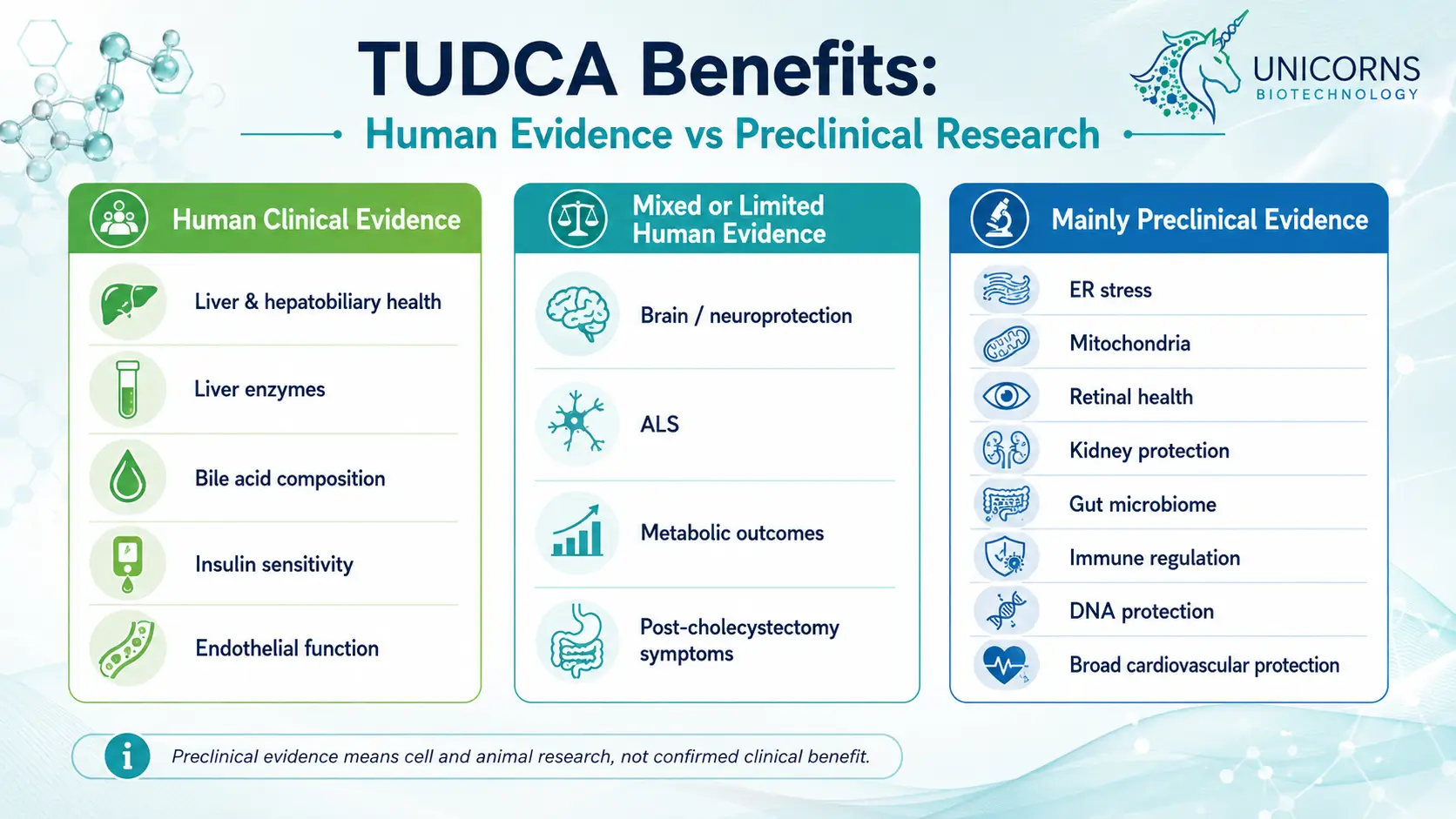
Better Human Evidence
TUDCA has direct human research in selected liver and hepatobiliary conditions. Studies have measured liver enzymes, bilirubin, bile acid composition, and clinical outcomes.
There is also a small randomized human trial showing improved liver and skeletal-muscle insulin sensitivity in obesity.
A small human cardiovascular study found protection against short-term glucose-induced endothelial dysfunction.
Human Evidence Exists but Remains Uncertain
Neuroprotection has human trial data, especially in ALS.
However, the encouraging Phase II findings were not confirmed by the larger Phase III TUDCA-ALS trial.
Mainly Preclinical Evidence
The strongest claims that remain mainly experimental include:
retinal protection, kidney protection, broad cardiovascular protection, microbiome changes, immune regulation, DNA protection, and many mitochondrial and anti-apoptotic effects.
This does not mean they are false. It means more human research is needed.
TUDCA Dosage, Timing and Duration
There is no single evidence-based TUDCA dosage for every goal.
Clinical studies have used very different amounts depending on the population and research question.
TUDCA Doses Used in Human Studies
| Study Area | TUDCA Dose Studied | Duration | Important Note |
|---|---|---|---|
| Primary biliary cholangitis | 250 mg, 3 times daily, 750 mg/day | 24 weeks | Compared with UDCA |
| Liver cirrhosis | 750 mg/day | 6 months | Very small study |
| Bile acid composition in PBC | 500, 1,000 or 1,500 mg/day | 6 months | Studied bile acid pool changes |
| Obesity and insulin sensitivity | 1,750 mg/day | 4 weeks | 20 participants |
| Acute endothelial-function study | 1,500 mg single dose | One test day | 12 participants |
| Phase II ALS | 1 g twice daily, 2 g/day | 54 weeks | Small positive trial |
| Phase III ALS | 1 g twice daily, 2 g/day | 18 months | Larger trial did not show overall benefit |
These are research doses, not a universal dosing guide.
What Is the Best TUDCA Dosage for Liver Repair?
There is no established “TUDCA dosage for liver repair.”
Liver repair is not one standard medical outcome.
For example, a liver study may measure ALT, AST, ALP, bilirubin, fibrosis, or tissue changes. A dose that changes one marker should not automatically be called a liver-repair dose.
Human liver trials have studied several TUDCA doses, including 500 to 1,500 mg per day, depending on the condition and trial design. These amounts should not be copied as self-treatment instructions.
When Is the Best Time to Take TUDCA?
There is no single clinically proven best time for all uses.
Finished supplements may recommend taking TUDCA with food or around meals, but timing depends on the formulation and intended use.
People using TUDCA in a medical context should follow professional instructions rather than a general internet schedule.
Can You Take TUDCA Every Day?
Clinical trials have used TUDCA daily for periods ranging from weeks to many months.
This shows that daily use has been studied in specific populations. It does not prove that indefinite daily use is appropriate for everyone.
TUDCA Side Effects and Safety
TUDCA has generally been well tolerated in human studies, but side effects can occur.
The most common concerns are digestive, including diarrhea, loose stools, nausea, and abdominal discomfort.
In the large TUDCA-ALS trial, adverse events were mainly mild gastrointestinal effects, and overall tolerability was considered acceptable.
Bile acids can affect intestinal fluid secretion and bowel movements, so gastrointestinal side effects are biologically plausible.
People with significant liver disease, bile duct disease, kidney disease, unexplained digestive symptoms, or major medication use should discuss TUDCA with an appropriate healthcare professional.
Evidence is also limited for pregnancy, breastfeeding, and children.
TUDCA Benefits for Men and Women
TUDCA benefits are not clearly divided into male and female categories.
The main mechanisms studied, such as bile acid metabolism, ER stress, mitochondrial function, insulin signaling, and apoptosis, occur in both sexes.
TUDCA Benefits for Men
Potential research areas include liver health, insulin sensitivity, cardiovascular function, and cellular health.
The human insulin-sensitivity trial included both obese men and women, so the result should not be treated as male-specific.
TUDCA Benefits for Women
The same major benefit areas apply to women.
There is not strong evidence for special female-only benefits from TUDCA.
Pregnancy and breastfeeding are different questions because safety evidence is limited.
TUDCA vs Milk Thistle
TUDCA and milk thistle are often compared because both are marketed for liver health.
They are very different ingredients.
| TUDCA | Milk Thistle |
|---|---|
| Bile acid | Botanical extract |
| Main compound is tauroursodeoxycholic acid | Common active fraction is silymarin |
| Strong link to bile acid and ER-stress biology | Studied mainly for antioxidant and hepatoprotective effects |
| Human research in selected hepatobiliary conditions | Human liver research exists but varies by condition and preparation |
| Defined molecule | Plant extract containing several compounds |
There is no good evidence showing that one is universally “better.”
There are also no strong head-to-head trials that establish TUDCA vs milk thistle for general liver health.
The better choice depends on why the ingredient is being used and what evidence applies to that situation.
Frequently Asked Questions About TUDCA Benefits
What are the main benefits of TUDCA?
The strongest human research relates to liver and bile health. TUDCA has also shown effects on insulin sensitivity and short-term endothelial function in small human trials. Cellular, brain, eye, kidney, gut, and immune benefits are promising but rely more heavily on preclinical evidence.
What does TUDCA do in the body?
TUDCA is a hydrophilic, taurine-conjugated bile acid. It can affect bile acid composition and is also studied as a chemical chaperone that helps cells manage ER stress. Research also links it with mitochondrial, apoptotic, oxidative, and inflammatory pathways.
What is TUDCA good for?
The clearest research areas are hepatobiliary health, bile acid metabolism, and cellular stress. Other possible uses remain under study.
What is TUDCA made from?
TUDCA is tauroursodeoxycholic acid, the taurine-conjugated form of UDCA.
Is TUDCA a bile acid or a bile salt?
TUDCA is a conjugated bile acid and can also be discussed within the broader bile salt family because it exists in ionized form under physiological conditions.
Is TUDCA good for the liver?
TUDCA has direct human liver research. Trials have reported improvements in selected biochemical markers such as ALP, AST, ALT, and bilirubin in specific liver conditions. It should not be described as a universal treatment for liver disease.
Can TUDCA lower liver enzymes?
Some human trials have reported reductions in liver enzymes, including ALT, AST, and ALP, in selected patient groups. Results depend on the condition and should not be generalized to every cause of abnormal liver enzymes.
Does TUDCA reverse liver damage?
There is not enough evidence to say TUDCA universally reverses liver damage. Some studies improved biochemical markers without clear improvement in fibrosis markers.
Can TUDCA repair the liver?
“Repair” is too broad. TUDCA has shown hepatoprotective effects and changes in liver biomarkers, but complete structural liver repair has not been established.
What is the best TUDCA dosage for liver repair?
There is no established universal TUDCA dosage for liver repair. Human liver studies have used different doses for specific diseases, commonly ranging from 500 to 1,500 mg per day. These study doses are not personal treatment recommendations.
How much TUDCA should you take for liver health?
There is no single evidence-based amount suitable for everyone. Dose depends on the purpose, product, medical context, and professional guidance.
Does TUDCA help fatty liver?
Animal studies are promising, but human evidence is not strong enough to consider TUDCA a proven treatment for MASLD or NAFLD.
Does TUDCA help liver fibrosis or cirrhosis?
A small cirrhosis trial improved some biochemical markers, but fibrosis markers did not change significantly after six months.
Does TUDCA improve bile flow?
TUDCA is linked to hepatobiliary function and can change bile acid composition toward a more hydrophilic profile. “Improving bile flow” should not be treated as a universal effect in every person.
Does TUDCA thin bile?
Not literally. A more accurate description is that TUDCA can change the composition and hydrophilicity of the bile acid pool.
Does TUDCA help bile sludge?
Direct high-quality human evidence is limited. It should not be promoted as a guaranteed bile-sludge treatment.
Does TUDCA dissolve gallstones?
TUDCA is related to UDCA, but UDCA has the stronger clinical history for selected cholesterol gallstones. TUDCA should not automatically be assumed to have the same clinical role.
Does TUDCA help after gallbladder removal?
An older controlled study reported some early improvement in post-cholecystectomy digestive symptoms. This does not mean everyone without a gallbladder needs TUDCA.
Is TUDCA good for digestion?
TUDCA is part of the bile acid system, which plays an important role in lipid digestion and absorption. It is not a digestive enzyme.
Does TUDCA help digest fat?
Bile acids help emulsify and solubilize fat. TUDCA can participate in bile acid physiology, although it is not the same as a broad natural bile mixture such as ox bile.
Does TUDCA help absorb vitamins A, D, E and K?
Normal bile acids support the absorption of fat-soluble vitamins A, D, E, and K. Direct trials showing that TUDCA raises these vitamins in healthy people are limited.
Is TUDCA a digestive enzyme?
No. TUDCA is a bile acid. Lipase, protease, and amylase are digestive enzymes.
Does TUDCA improve insulin sensitivity?
A small randomized human trial reported about a 30% improvement in liver and skeletal-muscle insulin sensitivity after four weeks of TUDCA.
Does TUDCA lower blood sugar?
There is not enough evidence to call TUDCA a blood-sugar-lowering treatment.
Does TUDCA help with insulin resistance?
The small human study provides promising evidence, but larger trials are needed.
Does TUDCA help with weight loss?
TUDCA has not been proven to cause meaningful weight loss in humans.
Does TUDCA reduce ER stress?
TUDCA has repeatedly reduced ER-stress pathways in experimental research and is widely studied as a chemical chaperone.
Is TUDCA a chemical chaperone?
Yes. This term is widely used in scientific literature to describe TUDCA’s ability to help stabilize proteins and reduce some forms of ER stress.
Does TUDCA support mitochondrial function?
Experimental studies suggest TUDCA can protect mitochondria under some types of cellular stress. Human evidence for a general mitochondrial-health benefit is limited.
Does TUDCA increase cellular energy?
This has not been established in healthy humans. Mitochondrial protection is not the same as acting as an energy booster.
Does TUDCA prevent apoptosis?
TUDCA has reduced excessive apoptosis in many experimental models. Apoptosis is also a normal biological process, so it is not accurate to say TUDCA should prevent all programmed cell death.
Does TUDCA protect DNA?
Preclinical studies suggest TUDCA can reduce apoptosis-related DNA fragmentation in some stress models. It has not been proven to repair DNA or prevent genetic mutations in people.
Is TUDCA good for the brain?
TUDCA has strong neuroprotective mechanisms in animal and cell research. Human clinical evidence is much more limited.
Does TUDCA cross the blood-brain barrier?
TUDCA can reach nervous-system tissues, which supports its study in neurological research. This does not prove clinical effectiveness.
Is TUDCA neuroprotective?
Preclinical evidence is strong. Clinical evidence remains uncertain, and the large Phase III ALS study did not show an overall benefit.
Does TUDCA help Alzheimer’s disease?
Promising effects have been reported in animal and cell models. TUDCA has not been established as a treatment for Alzheimer’s disease in humans.
Does TUDCA help Parkinson’s disease?
Animal studies are promising, but human clinical evidence remains inadequate.
Does TUDCA help ALS?
An early small trial was positive, but the larger European Phase III trial failed to meet its primary endpoint and showed no significant overall benefit.
Is TUDCA good for heart health?
TUDCA has cardiovascular research, including a small human study showing protection against short-term glucose-induced endothelial dysfunction. Broader cardiovascular benefits remain uncertain.
Does TUDCA lower cholesterol?
There is not enough human evidence to describe TUDCA as a proven cholesterol-lowering supplement.
Is TUDCA good for gut health?
Animal studies suggest possible benefits for intestinal barrier function, inflammation, and gut microbiota. Human evidence is still limited.
Does TUDCA improve the gut microbiome?
TUDCA changes gut microbiota in animal studies, but a predictable beneficial effect in humans has not been established.
Is TUDCA anti-inflammatory?
TUDCA has shown anti-inflammatory effects in many experimental models. Human evidence for general anti-inflammatory use remains limited.
Does TUDCA boost the immune system?
“Boost” is not the best description. Experimental research suggests TUDCA can influence inflammatory and immune signaling.
Does TUDCA fight viruses or bacteria?
There is no strong clinical evidence showing that TUDCA prevents or treats infections in people.
Is TUDCA good for kidney health?
Experimental studies show promising kidney-protective effects, but human clinical evidence remains limited.
Is TUDCA hard on the kidneys?
TUDCA has not shown clear kidney toxicity in the main human studies discussed here. People with kidney disease should still seek medical advice before using it.
Is TUDCA good for eye health?
TUDCA has strong preclinical retinal research. A systematic review found protective effects across several retinal disease models, but human trials are still needed.
What are TUDCA benefits for men?
There are no well-established male-only TUDCA benefits. Liver, metabolic, cardiovascular, and cellular effects may apply to both sexes.
What are TUDCA benefits for women?
There are no well-established female-only benefits. Pregnancy and breastfeeding require extra caution because safety evidence is limited.
What is the UDCA vs TUDCA difference?
UDCA is ursodeoxycholic acid. TUDCA is UDCA conjugated with taurine. TUDCA is a more polar conjugated molecule, while UDCA has a longer clinical history in several hepatobiliary conditions.
UDCA vs TUDCA: Which Has More Clinical Evidence?
UDCA has a broader and longer clinical evidence base. TUDCA has direct human studies but much of its broader interest comes from cellular and preclinical research.
TUDCA vs Milk Thistle: Which Is Better for Liver Health?
There is no strong head-to-head evidence proving one is better. TUDCA is a bile acid with hepatobiliary and ER-stress research. Milk thistle is a botanical extract mainly studied for antioxidant and hepatoprotective activity.
Can You Take TUDCA With Milk Thistle?
Products may combine them, but there is limited clinical research on the combination. Individual safety depends on health status, dose, medications, and product formulation.
What Are the Side Effects of TUDCA?
Possible effects include diarrhea, loose stools, nausea, and abdominal discomfort. Clinical studies generally report good tolerability.
Can TUDCA Cause Diarrhea?
Yes. Bile acids can affect intestinal fluid and bowel movements, so diarrhea is a plausible and reported side effect.
Can You Take TUDCA Every Day?
Daily use has been studied in clinical trials for weeks or months. This does not establish that indefinite daily supplementation is right for everyone.
When Is the Best Time to Take TUDCA?
There is no universally proven best time. Follow the finished product directions or medical instructions for the intended use.
How Long Does TUDCA Take to Work?
It depends on what is being measured. Digestive effects, liver enzymes, insulin sensitivity, and disease outcomes all have different time frames.
Are TUDCA Benefits Scientifically Proven?
Some have stronger evidence than others.
Liver and hepatobiliary effects have meaningful human clinical research. Insulin sensitivity and endothelial function have smaller human studies.
TUDCA’s effects on ER stress, mitochondria, apoptosis, brain health, retinal protection, gut health, immune signaling, and kidney health are supported mainly by preclinical research.
The negative Phase III ALS result is also an important reminder that strong laboratory evidence does not always become a real clinical benefit.
Conclusion: Which TUDCA Benefits Are Most Credible?
TUDCA is much more than a digestive bile acid, but not every claimed TUDCA benefit has the same level of proof.
The strongest human evidence centers on liver and bile health. Clinical trials have reported changes in liver enzymes, bilirubin, and bile acid composition in selected hepatobiliary conditions.
TUDCA also has promising human evidence for insulin sensitivity and short-term endothelial function.
Its best-known cellular mechanisms, including ER stress reduction, chemical chaperone activity, mitochondrial protection, and anti-apoptotic signaling, are supported by a large body of experimental research.
The evidence becomes less certain for brain disease, eye disease, kidney health, gut microbiome changes, immune health, DNA protection, and weight management.
This evidence hierarchy matters for both consumers and supplement formulators. TUDCA is one defined taurine-conjugated bile acid. It should not be confused with UDCA, general bile salts, or natural multi-component ox bile extract.
For supplement manufacturers and ingredient distributors, Unicorns Biotechnology supplies TUDCA Powder as a defined bile-derived ingredient, with bulk supply, quality documentation, testing, and customized sourcing support.
The next useful question is not simply whether TUDCA has benefits, but how it differs from a natural bovine bile ingredient. That distinction is the basis for comparing Ox Bile vs TUDCA.
References
- Ma, H., Zeng, M., Han, Y., et al. (2016). A multicenter, randomized, double-blind trial comparing the efficacy and safety of TUDCA and UDCA in Chinese patients with primary biliary cholangitis. Medicine, 95(47), e5391. https://doi.org/10.1097/MD.0000000000005391
- Pan, X. L., Zhao, L., Li, L., et al. (2013). Efficacy and safety of tauroursodeoxycholic acid in the treatment of liver cirrhosis: A double-blind randomized controlled trial. Journal of Huazhong University of Science and Technology [Medical Sciences], 33(2), 189-194. https://doi.org/10.1007/s11596-013-1095-x
- Kars, M., Yang, L., Gregor, M. F., et al. (2010). Tauroursodeoxycholic acid may improve liver and muscle but not adipose tissue insulin sensitivity in obese men and women. Diabetes, 59(8), 1899-1905. https://doi.org/10.2337/db10-0308
- Walsh, L. K., Restaino, R. M., Neuringer, M., Manrique, C., & Padilla, J. (2016). Administration of tauroursodeoxycholic acid prevents endothelial dysfunction caused by an oral glucose load. Clinical Science, 130(21), 1881-1888. https://doi.org/10.1042/CS20160501
- Kusaczuk, M. (2019). Tauroursodeoxycholate, bile acid with chaperoning activity: Molecular and cellular effects and therapeutic perspectives. Cells, 8(12), 1471. https://doi.org/10.3390/cells8121471
- Uppala, J. K., Gani, A. R., & Ramaiah, K. V. A. (2017). Chemical chaperone, TUDCA unlike PBA, mitigates protein aggregation efficiently and resists ER and non-ER stress induced HepG2 cell death. Scientific Reports, 7, 3831. https://doi.org/10.1038/s41598-017-03940-1
- Elia, A. E., Lalli, S., Monsurrò, M. R., et al. (2016). Tauroursodeoxycholic acid in the treatment of patients with amyotrophic lateral sclerosis. European Journal of Neurology, 23(1), 45-52. https://doi.org/10.1111/ene.12664
- Albanese, A., Ludolph, A. C., McDermott, C. J., et al. (2022). Tauroursodeoxycholic acid in patients with amyotrophic lateral sclerosis: The TUDCA-ALS trial protocol. Frontiers in Neurology, 13, 1009113. https://doi.org/10.3389/fneur.2022.1009113
- Daruich, A., Picard, E., Boatright, J. H., & Behar-Cohen, F. (2019). The bile acids urso- and tauroursodeoxycholic acid as neuroprotective therapies in retinal disease. Molecular Vision, 25, 610-624.
- Li, J., Huang, Z., Jin, Y., et al. (2024). Neuroprotective effect of tauroursodeoxycholic acid on in vitro and in vivo models of retinal disorders: A systematic review. Current Neuropharmacology, 22(8), 1374-1390. https://doi.org/10.2174/1570159X21666230907152207
- Wang, W., Zhao, J., Gui, W., et al. (2018). Tauroursodeoxycholic acid inhibits intestinal inflammation and barrier disruption in mice with non-alcoholic fatty liver disease. British Journal of Pharmacology, 175(3), 469-484. https://doi.org/10.1111/bph.14095
- Song, M., Zhang, F., Fu, Y., et al. (2022). Tauroursodeoxycholic acid improves intestinal barrier function associated with TGR5-MLCK pathway and the alteration of serum metabolites and gut bacteria in weaned piglets. Journal of Animal Science and Biotechnology, 13, 73. https://doi.org/10.1186/s40104-022-00713-3
- Yu, S., Gu, X., Zheng, Q., et al. (2024). Tauroursodeoxycholic acid ameliorates renal injury induced by COL4A3 mutation. Kidney International, 106(3), 433-449. https://doi.org/10.1016/j.kint.2024.04.015
- De Miguel, C., Sedaka, R., Kasztan, M., et al. (2019). Tauroursodeoxycholic acid abolishes chronic high salt-induced renal injury and inflammation. Acta Physiologica, 226(1), e13227. https://doi.org/10.1111/apha.13227
- Battson, M. L., Lee, D. M., Jarrell, D. K., et al. (2017). Tauroursodeoxycholic acid reduces arterial stiffness and improves endothelial dysfunction in type 2 diabetic mice. Journal of Vascular Research, 54(5), 280-287. https://doi.org/10.1159/000479967
- Huang, F., Pariante, C. M., & Borsini, A. (2022). From dried bear bile to molecular investigation: A systematic review of the effect of bile acids on cell apoptosis, oxidative stress and inflammation in the brain, across pre-clinical models of neurological, neurodegenerative and neuropsychiatric disorders. Brain, Behavior, and Immunity, 99, 132-146. https://doi.org/10.1016/j.bbi.2021.09.021