
Choosing a reliable glandular powder manufacturer requires more than comparing a product name, a typical Certificate of Analysis, and a price per kilogram. Glandular powders are made from animal glands and organ tissues, so their quality depends on species identity, anatomical source, veterinary status, raw-tissue handling, processing conditions, contaminant controls, packaging, and international import requirements.
Two powders described as bovine adrenal powder or porcine pancreas powder may look similar while differing considerably in composition, fat content, microbiological quality, particle size, heat exposure, and suitability for a finished formulation. Supplement manufacturers and ingredient distributors therefore need a structured supplier qualification process before approving a sample or placing a bulk order.
A reliable glandular powder manufacturer should be able to demonstrate traceable animal sourcing, verified species and tissue identity, batch-specific testing, controlled processing, recognized quality systems, consistent commercial supply, and documentation appropriate for the destination market. The following seven factors provide a practical framework for evaluating those capabilities.
Key Takeaways
- Confirm the animal species, exact tissue, country of origin, and veterinary status.
- Compare agreed specifications and test methods, not product names alone.
- Determine how microbiological hazards are reduced and controlled. Freeze-drying is not sterilization.
- Request batch-specific COAs, stability information, and packaging specifications.
- Qualify and periodically requalify the supplier before relying on its test results.
- Confirm import eligibility before production and shipment.
- Require written notification before changes to the source, process, specification, test method, or manufacturing site.
Glandular Powder Manufacturing and Product Scope
Before evaluating a manufacturer, buyers should define what they are actually purchasing. Whole-tissue powders, standardized extracts, enzyme preparations, and peptide materials are not interchangeable. Each requires different specifications, analytical methods, formulation decisions, and regulatory review.
What is a glandular powder manufacturer?
A direct glandular powder manufacturer receives or sources identified animal tissues and controls the steps that convert them into stable bulk ingredients. These operations may include tissue inspection, cleaning, trimming, freezing, drying, defatting, deodorizing, milling, sieving, blending, testing, batch release, and packaging.
A distributor may provide useful local inventory, credit terms, logistics, and technical support, but it does not necessarily control the original manufacturing process. A trading company may coordinate an order without owning either the factory or the stock. A contract supplement manufacturer normally converts raw materials into finished capsules, tablets, sachets, or powder blends.
Buyers should establish which party controls the source tissue, specification, laboratory testing, deviation handling, and final batch release. The company issuing the invoice is not always the company that made the powder.
Which products are considered glandular powders?
The term “glandular” is used broadly in the supplement ingredient trade. True glandular tissues include the adrenal, thyroid, pituitary, pineal, ovary, prostate, testes, and the endocrine portion of the pancreas. The thymus has immune and signaling functions, while the pancreas performs both endocrine and exocrine functions.
The commercial category also includes liver, heart, kidney, spleen, lung, brain, bone marrow, aorta, bladder, uterus, placenta, and other organ tissues that are not all glands anatomically. This distinction matters because an endocrine tissue such as thyroid requires different active-component and regulatory controls from a nutritional organ powder such as liver.
For a fuller explanation of this terminology and the different tissue categories, see what glandular supplements are. Buyers comparing species-specific materials can also review Unicorns Biotechnology’s ranges of bulk bovine glandular powders and porcine glandular powders.
How do glandular powders, extracts, and peptides differ?
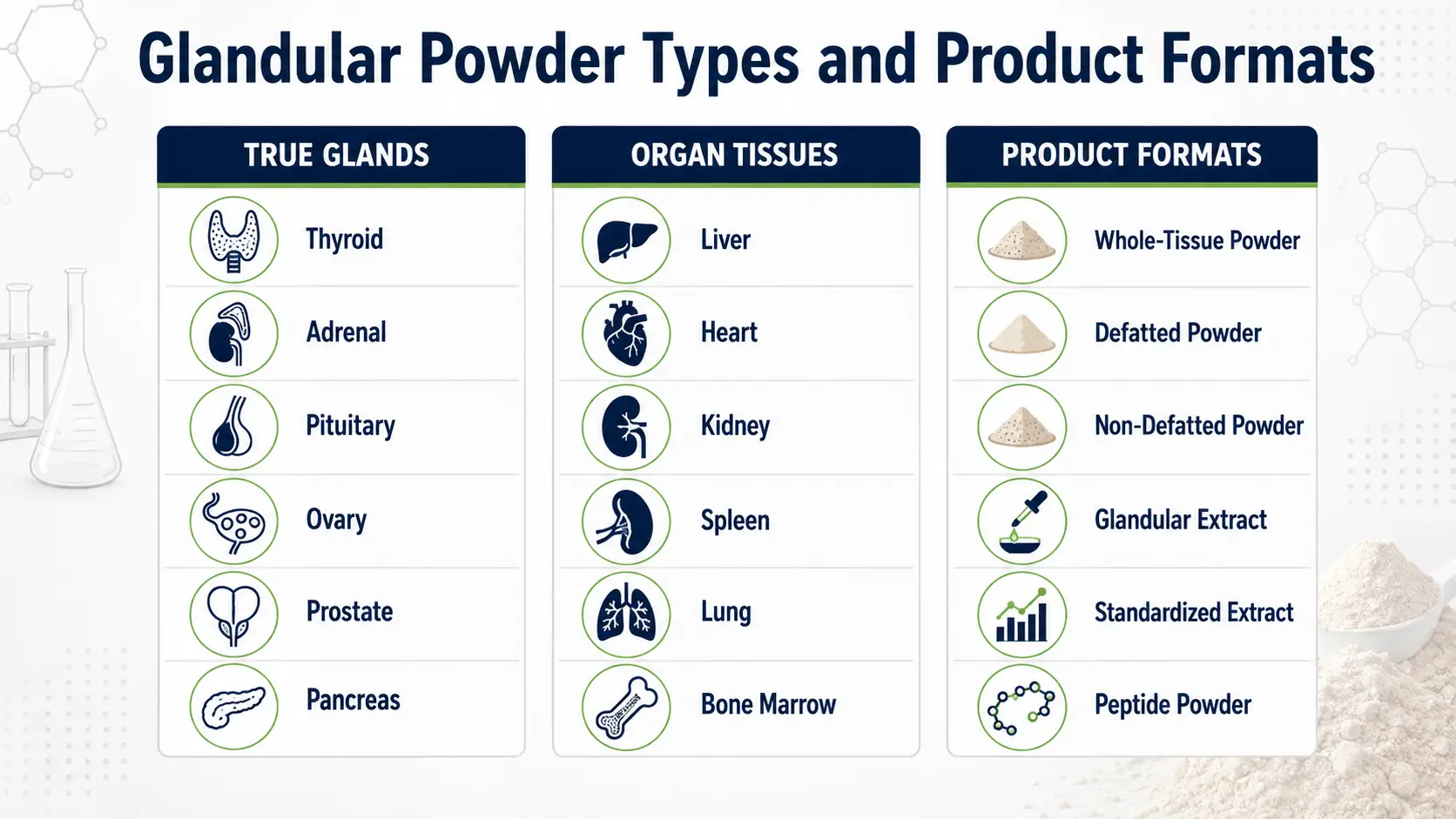
A whole-tissue glandular powder retains much of the natural tissue matrix, including proteins, fats, minerals, and other endogenous constituents. Defatted powder has part of its lipid fraction removed, while non-defatted powder retains more of the original fat. These formats can behave differently during encapsulation, tableting, storage, and sensory evaluation.
A glandular extract concentrates selected soluble or functional fractions. It may use aqueous, enzymatic, or other extraction steps and may contain a carrier. A standardized extract should identify the marker or activity used for standardization, the analytical method, and the acceptance range.
An enzymatically hydrolyzed organ peptide is produced by breaking larger proteins into smaller peptide fractions. It should not be described as the same ingredient as the starting organ powder. Buyers should request the hydrolysis process, molecular-weight distribution where relevant, peptide or protein specification, and information about carriers or processing aids.
Seven Manufacturer Selection Factors at a Glance
| Factor | Main purchasing question | Evidence to request |
|---|---|---|
| 1. Source and authenticity | Can the animal species, tissue, and origin be verified? | Traceability records, veterinary documents, species and tissue declarations |
| 2. Identity and specification | Does the material meet a mutually agreed specification? | Specification sheet, batch COA, test methods, independent verification |
| 3. Safety controls | Are microbiological, chemical, and physical hazards controlled? | Batch results, risk-based test reports, hazard-control records |
| 4. Processing and stability | Is the process controlled and the shelf life supported? | Manufacturing flow chart, process information, stability and packaging data |
| 5. Quality systems | Can the facility consistently control and release the product? | Certifications, audit evidence, quality procedures, change-control system |
| 6. Commercial supply | Can the manufacturer provide consistent batches at the required scale? | Multi-batch data, capacity, MOQ, lead time, safety-stock and supply terms |
| 7. Regulatory and export support | Can the material legally and practically enter the target market? | Intended-use review, veterinary and customs documents, shipment records |
Factor 1: Traceable Animal Sources and Species Authentication
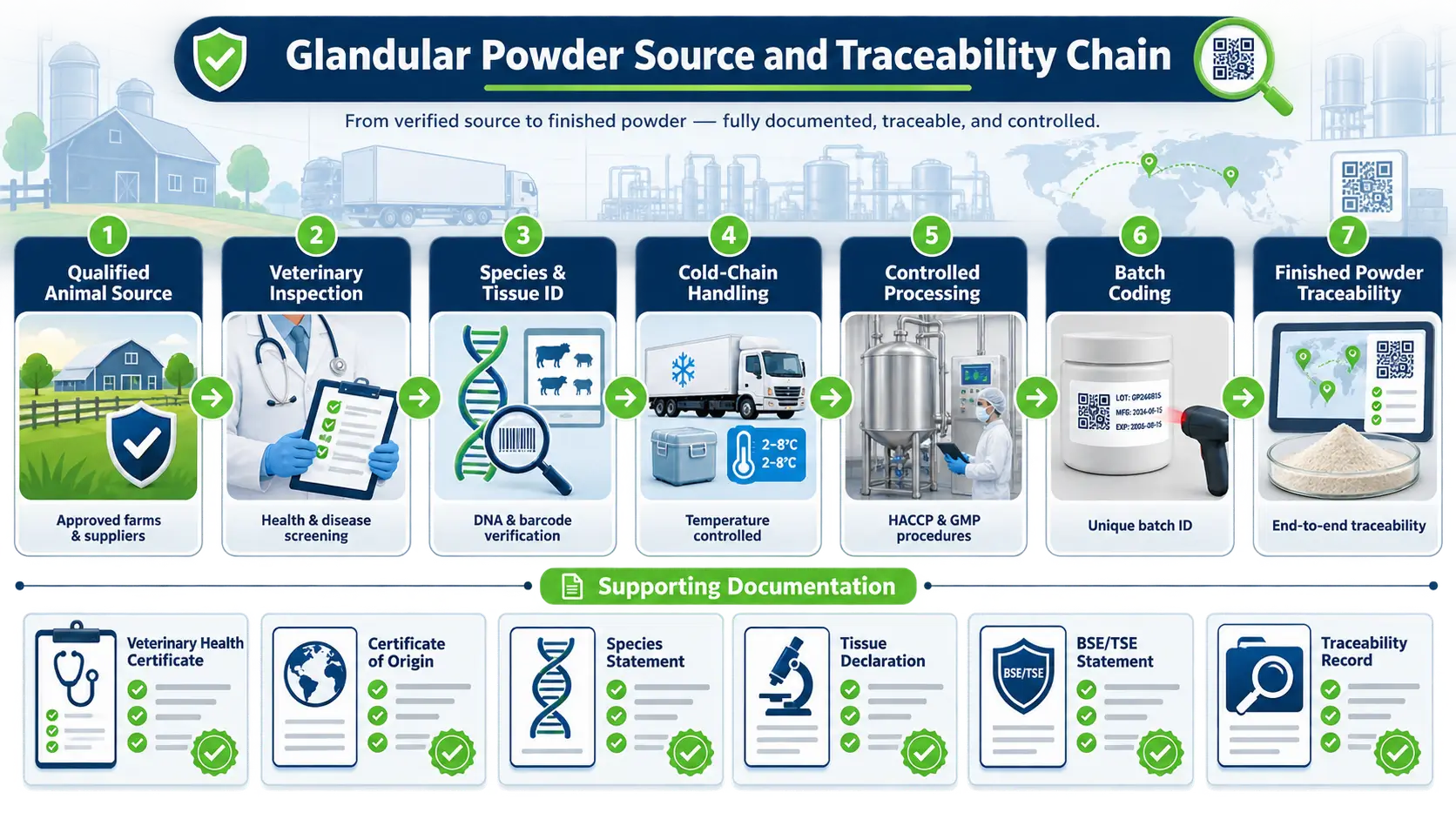
Reliable glandular powder sourcing begins before drying or milling. The manufacturer should know the animal species, exact tissue, country or region of origin, source establishment, and veterinary status. It should also be able to connect the finished lot to the relevant source and processing records.
Documentation requirements vary by species and market. For bovine materials, buyers may need a BSE/TSE statement, country-of-origin information, and confirmation that prohibited or specified-risk tissues are not used. Central nervous system and endocrine tissues may receive closer regulatory scrutiny than ordinary organ meat powders. Porcine and ovine ingredients present different animal-health, religious-certification, and import considerations.
The raw material should be collected from an eligible source under documented hygiene and veterinary controls. If a buyer requires human food-chain eligibility, grass-fed origin, antibiotic-free status, non-irradiation, Halal, Kosher, or a specific geographic origin, those requirements should appear in the purchasing specification rather than remain marketing assumptions.
How can buyers verify species and tissue identity?
Species-specific DNA testing can help confirm whether a material is bovine, porcine, ovine, or another declared species. However, DNA testing generally confirms the species, not the anatomical organ. Tissue identity still depends on documented collection procedures, trained identification, segregation, traceability, and suitable analytical evidence for the specific product.
For higher-risk or higher-value glandular ingredients, buyers should ask how the factory prevents species substitution and cross-contamination. Important controls include dedicated or validated-cleaning equipment, labeled storage, raw-material quarantine, line clearance, controlled rework, and traceable batch coding.
Which source documents should be requested?
The appropriate package may include:
- Veterinary Health Certificate
- Certificate of Origin
- Animal species statement
- Anatomical tissue declaration
- Source establishment or slaughterhouse information
- BSE/TSE statement where relevant
- Traceability statement
- Antibiotic or veterinary drug residue statement
- Hormone-use statement where relevant
- Non-irradiation statement
- Halal or Kosher certificate when required
The presence of a document is not enough. Check the issuing organization, facility name, product scope, lot or shipment reference, dates, and consistency with the commercial invoice and product label.
Factor 2: Identity, Composition, Assay, and Specification
A product name such as “bovine adrenal powder” does not define the quality of the material. A meaningful glandular powder specification should describe the source and process as well as measurable physical, chemical, microbiological, and functional attributes.
Common specification items include appearance, color, odor, moisture, ash, protein, fat, particle size, bulk density, and microbiological limits. Water activity can be useful for understanding microbial stability. Solubility or dispersibility may matter for powder drinks, while flow properties and bulk density affect capsule filling and tablet production.
Endocrine tissues and standardized enzyme products require more specific controls. Thyroid material may require appropriate T3 and T4 assessment and market-specific regulatory review. Pancreatic enzyme preparations may need protease, lipase, and amylase activity expressed in recognized activity units. Whole pancreas powder should not carry an enzyme-activity guarantee unless the activity is actually measured.
The broader guide to bovine glandular types, safety, processing, and formulation explains why ordinary organ powders, endocrine tissues, enzyme preparations, and peptide materials need different specifications.
What should a glandular powder COA contain?
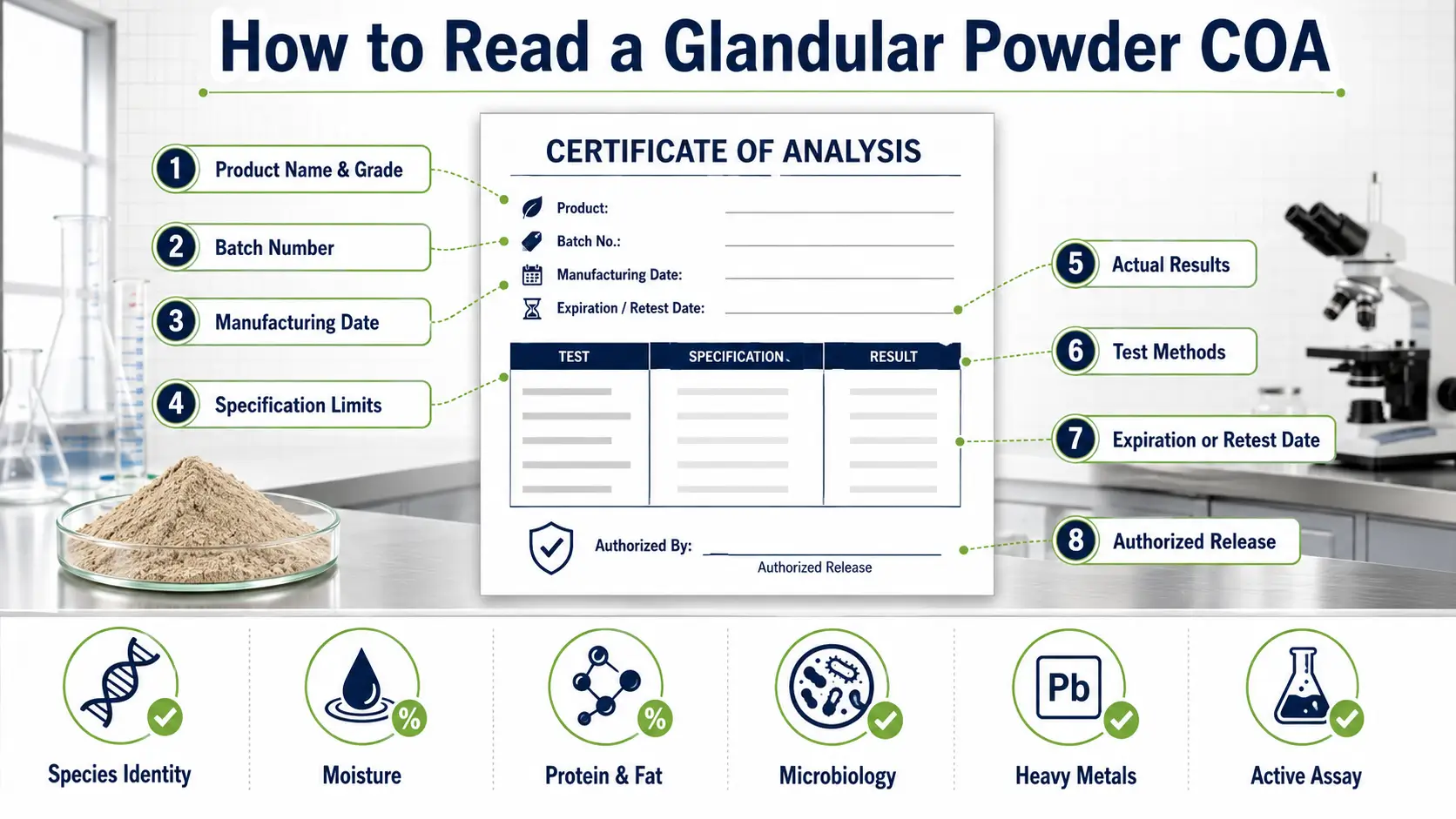
A batch-specific Certificate of Analysis should identify:
- Product name and grade
- Batch or lot number
- Manufacturing date
- Expiration or retest date
- Specification limits
- Actual results
- Test methods or method references
- Release status
- Authorized approval
A “typical COA” can help during an initial inquiry, but it does not prove that a commercial shipment meets the same values. Before shipment, buyers should obtain the actual COA for the released lot and compare it with the signed purchasing specification.
For U.S. dietary supplement manufacturing, FDA’s dietary supplement CGMP guidance emphasizes specifications for identity, purity, strength, composition, and contaminant limits. It also explains that a supplier’s COA should state the methods, limits, and actual results, and that a manufacturer relying on supplier results must establish and periodically reconfirm the supplier’s reliability. See the FDA Dietary Supplement CGMP compliance guide.
How should active components be evaluated?
The correct method depends on the ingredient. Options may include HPLC, enzymatic assay, spectrophotometry, protein analysis, activity testing, or another validated procedure. There is no universal glandular powder assay.
Not every whole-tissue powder has a scientifically established potency marker. In those cases, quality may be controlled through species and tissue identity, proximate composition, physical characteristics, contaminant limits, and process consistency. A manufacturer should not create an unsupported potency claim simply to make the specification look stronger.
“Pharmaceutical grade” also requires caution. Unless the product complies with an identified pharmacopeial monograph or other recognized pharmaceutical standard, the phrase is not a substitute for numerical specifications and verified methods.
When is third-party testing necessary?
Independent testing is particularly useful during initial supplier qualification, multi-batch comparison, investigation of an unexpected result, or periodic COA verification. An ISO/IEC 17025-accredited laboratory may be appropriate when the method is within its accredited scope.
The sampling process matters as much as the laboratory. A test report has limited value if the submitted sample was not representative of the commercial batch. Agree on sampling, sealing, chain of custody, and sample retention before relying on third-party results.
Factor 3: Biological Safety and Contaminant Control
Animal-derived ingredients require a risk-based safety program that addresses biological, chemical, and physical hazards. Finished-product testing is important, but it does not replace hygienic sourcing, validated processing controls, environmental monitoring, and prevention of post-process contamination.
Routine microbiological specifications commonly cover total aerobic microbial count, yeast and mold, coliforms, Escherichia coli, and Salmonella. Other organisms may be relevant based on the product, process, application, and destination market. Buyers should review the sample size and method as well as the “pass” or “absent” result.
Chemical testing may include lead, arsenic, cadmium, mercury, pesticide residues, veterinary drug residues, and hormone-related analysis where relevant. Residual solvent testing is normally more important for extracted products than for non-solvent whole-tissue powders. Risk assessment should determine whether a test belongs on every COA, is performed periodically, or is triggered by a source or process change.
Physical controls should cover foreign matter, equipment condition, sieving, magnets or metal detection where appropriate, packaging integrity, and cross-contamination. An allergen statement should reflect the actual facility and any carriers, excipients, or shared equipment used in production.
Which tests should be completed for every batch?
There is no single test panel suitable for every glandular powder. A sensible batch-release program normally combines:
- Identity or traceability confirmation
- Appearance and sensory checks
- Moisture or loss on drying
- Selected composition tests
- Defined microbiological tests
- Risk-appropriate contaminant tests
- Packaging and label verification
Broader surveillance panels can be scheduled based on supplier history, source geography, animal species, and previous results. Buyers should be cautious when a supplier claims to test “everything” without providing methods, frequencies, or actual reports.
Factor 4: Manufacturing Process, Microbial Reduction, and Product Stability
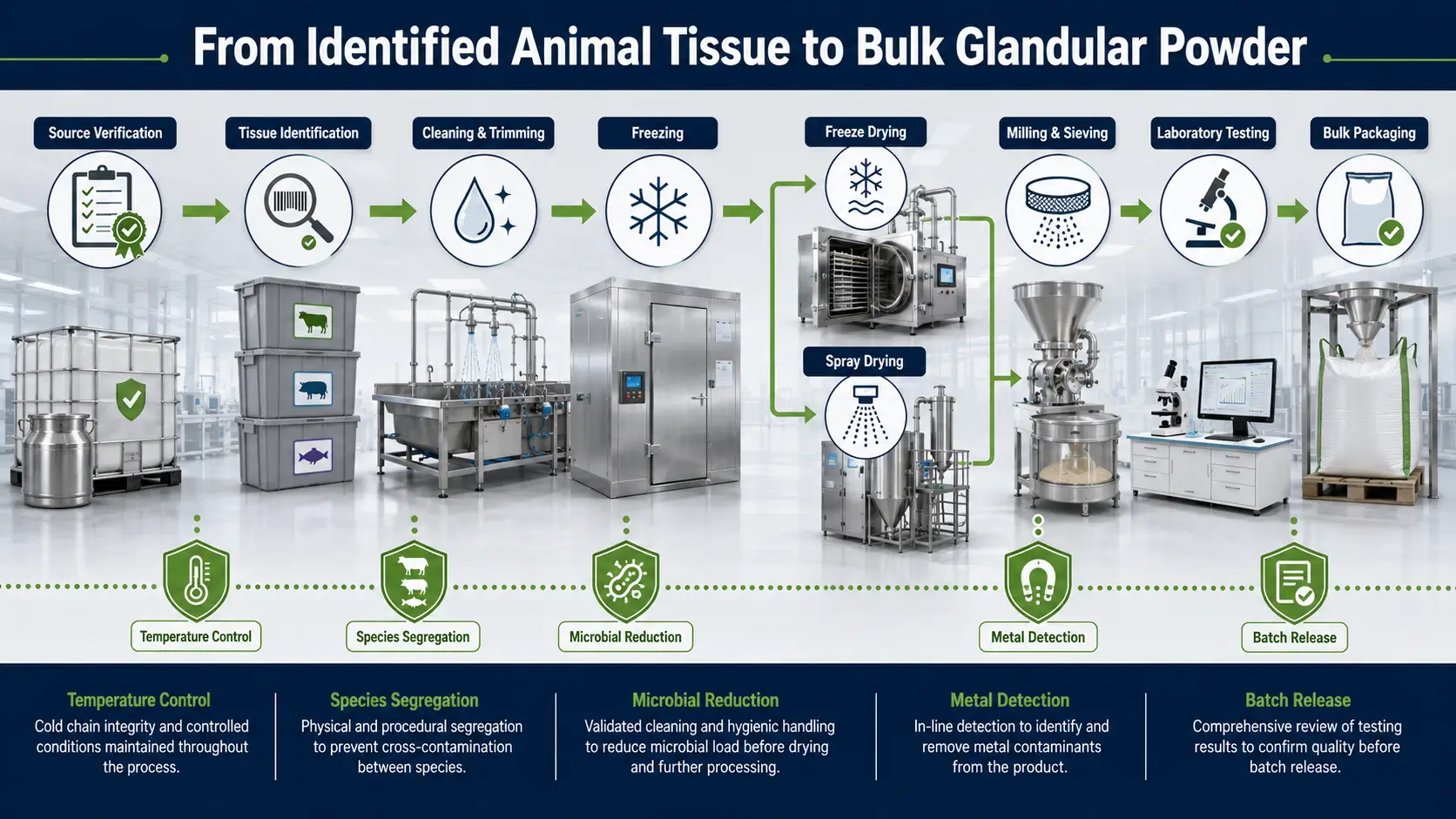
Processing begins with raw-tissue control. The manufacturer should define the time and temperature between tissue collection and freezing or further processing. Delays, temperature excursions, poor segregation, or repeated thawing can affect microbiological quality and composition before the drying stage begins.
A typical process may include:
Animal sourcing → Tissue identification → Trimming and cleaning → Freezing or controlled holding → Drying → Defatting or deodorizing → Milling → Sieving → Testing → Batch release → Packaging
The flow chart should identify outsourced steps and any addition of carriers, anti-caking agents, or processing aids. Buyers should also understand whether batches are blended for uniformity and how rework is controlled.
How are microbiological hazards reduced?
This question is often overlooked. Freeze-drying removes water under low temperature and vacuum, but it should not be treated as a sterilization process. Freezing and drying can limit growth and improve stability, yet viable microorganisms may survive.
Ask the glandular powder factory to identify its validated microbial-reduction step, critical time and temperature parameters, in-process controls, and measures that prevent recontamination after treatment. If the process does not include a conventional heat step, the manufacturer should explain how raw-material controls, hygienic handling, environmental monitoring, and finished-product release criteria work together to manage risk.
Is freeze-dried powder always better than spray-dried powder?
Freeze-dried glandular powder is often selected when the buyer wants to minimize thermal exposure and retain the character of a whole-tissue material. It can support premium organ supplement positioning, but it may cost more and does not automatically guarantee potency, sterility, or superior performance in every application.
Spray drying can provide efficient large-scale production, controlled particle formation, and competitive pricing. However, inlet and outlet temperatures, residence time, feed composition, and the possible use of carriers must be understood. Other controlled drying methods may also be appropriate when supported by validation and the agreed specification.
The best method depends on the tissue, critical components, microbial control strategy, stability, dosage form, target cost, and regulatory status. Buyers should compare actual data rather than rely on “low temperature” as a complete quality claim.
For a tissue-specific example of how source, assay, process, and regulatory questions intersect, review this guide to thyroid powder manufacturing and quality control.
Which customization options should be evaluated?
Common options include custom mesh size, bulk density, protein or fat range, defatted or non-defatted grade, deodorization, dispersibility, custom organ blends, and capsule- or tablet-grade processing. Any customization should lead to a revised specification, validated process parameters, and a representative pre-production sample.
If a supplier offers glandular extract, peptide powder, or a custom multi-organ glandular blend, obtain the quantitative formula, processing description, carrier declaration, and batch-testing plan. The name of the blend alone is not sufficient for incoming quality control.
What should stability data demonstrate?
Shelf life should be supported by data for the actual product and container-closure system. Important observations can include moisture, water activity, microbiological quality, oxidation or rancidity, color, odor, and active-component or enzyme stability where applicable.
High-fat, non-defatted organ powders may be more sensitive to oxidation than defatted grades. Pancreatic enzyme activity may be affected by heat and moisture. A light-sensitive or oxidation-sensitive product may need a higher-barrier package than a stable defatted powder.
Ask whether the stated date is an expiration date or a retest date, what storage conditions were used, and whether the study is real-time, accelerated, or both. Accelerated stability can support development decisions, but it should not be presented as identical to completed real-time shelf-life evidence.
How should glandular powders be packaged and stored?
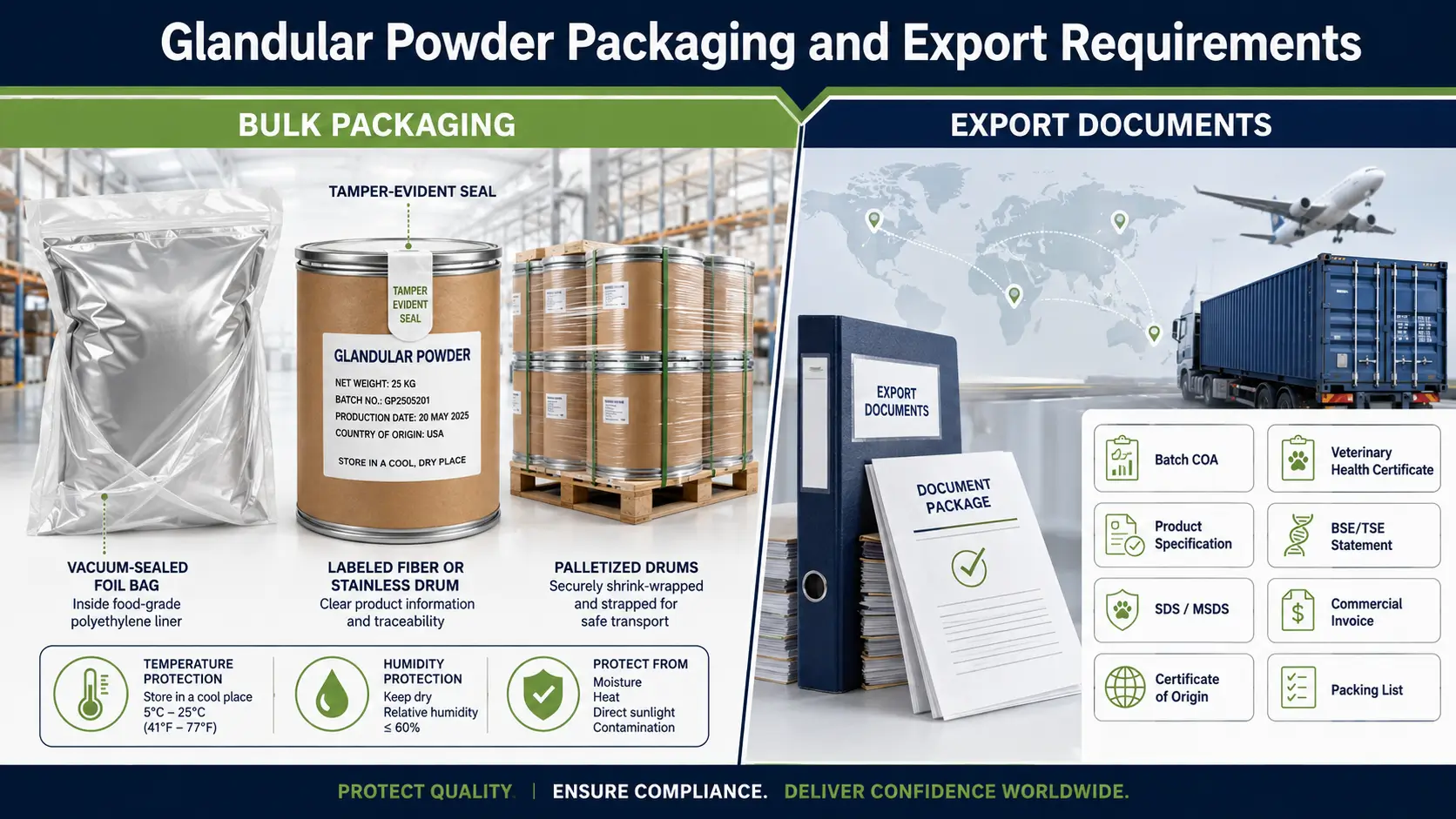
Bulk packaging should use food-grade product-contact materials and provide suitable protection from moisture, oxygen, contamination, and physical damage. Common formats include sealed foil bags, food-grade polyethylene liners inside cartons or drums, and other export-ready containers.
The label should show the product name, lot number, net weight, manufacturing date, storage conditions, and expiration or retest date. Tamper evidence, nitrogen flushing, desiccants, or oxygen absorbers may be appropriate for specific materials, but each measure should be technically justified.
The manufacturer should also provide instructions for opened-container handling. Repeated exposure to humid air during production can change powder flow, moisture, microbial risk, and stability even when the unopened shelf life is acceptable.
Factor 5: Quality Systems, Facility Controls, and Audit Readiness
Certifications are useful only when they apply to the actual manufacturing site, activity, and product scope. Buyers may request evidence of applicable GMP controls, HACCP, ISO 22000, FSSC 22000, Halal, Kosher, or other market-specific systems. Check the issuing body, certificate number, facility address, validity period, and scope rather than relying on a logo in a brochure.
The quality system should address approved suppliers, raw-material quarantine, batch records, equipment cleaning, calibration, environmental monitoring, deviations, out-of-specification investigations, corrective and preventive action, change control, complaints, recalls, and retained samples.
How should certifications be verified?
Compare the legal company name and manufacturing address on each certificate with the factory details, invoice, and product documentation. Confirm that the certificate is current and covers manufacturing rather than only warehousing, sales, or packaging. When possible, verify it through the certification body’s official database or by contacting the issuer.
Halal and Kosher review is especially important for animal-derived ingredients. The certificate should cover the species, source, process, facility, and product. A general facility statement may not establish that a specific porcine, bovine, or mixed-species product meets the buyer’s requirements.
Which questions should be asked during a factory audit?
A remote video audit can confirm the existence and general layout of a facility, but a deeper audit should follow material flow from receiving through release. Focus on:
- Raw-tissue receiving and temperature control
- Species and organ identification
- Segregation and line clearance
- Cleaning and sanitation
- Drying and microbial-reduction controls
- Milling, sieving, and foreign-material control
- Laboratory methods and reference standards
- Batch release and electronic or paper records
- Nonconforming material and rework
- Traceability and mock recall performance
- Warehouse temperature, humidity, and pest control
What should a quality agreement cover?
A quality agreement should define the approved specification, sampling and testing responsibilities, COA format, third-party testing, deviation handling, out-of-specification investigations, complaint response, recall duties, record retention, and subcontracting.
It should also require advance notice and approval, where appropriate, for changes to animal origin, source establishment, tissue, manufacturing site, process, critical equipment, test method, specification, carrier, packaging, or shelf life. Without change control, a previously approved sample may no longer represent future commercial lots.
Factor 6: Batch Consistency, Capacity, Pricing, and Supply Continuity
A supplier may produce an excellent sample but still fail to support recurring commercial demand. Supplement manufacturers and ingredient distributors should evaluate actual available capacity, raw-material access, seasonality, production scheduling, lead time, and business-continuity planning.
Ask for recent COAs from several representative lots. Compare appearance, odor, moisture, protein, fat, ash, particle size, bulk density, microbiological results, and ingredient-specific markers. Natural biological materials will show some variation, but the results should remain within an agreed range suitable for the formulation.
Capacity claims should be linked to the relevant product line. A factory’s total annual output does not necessarily equal available capacity for one species or organ. Confirm normal lead time, peak-season availability, minimum order quantity, sample policy, trial-order quantities, safety-stock options, and the manufacturer’s plan for a raw-material interruption.
How should batch consistency be evaluated?
Start with samples from more than one lot whenever possible. A single hand-selected sample cannot demonstrate routine batch consistency. During qualification, compare supplier results with internal or independent testing and record any differences in sensory properties or manufacturing performance.
A pilot run can reveal issues that a laboratory COA cannot, including poor powder flow, capsule weight variation, tablet compression problems, odor, dispersibility, and interactions with other ingredients. Retain samples of both the approved reference lot and the first commercial lot for comparison.
Why can glandular powder prices differ considerably?
Bulk price is influenced by species, tissue availability, country of origin, drying method, defatting, deodorization, testing, certification, packaging, order size, and current raw-material supply. A standardized extract with verified activity cannot be compared fairly with an unstandardized whole-tissue powder on price per kilogram alone.
Normalize quotations before choosing a supplier. Confirm whether the price includes packaging, palletization, testing, export documentation, inland freight, and the agreed Incoterm. An unusually low price should prompt questions about source identity, fillers, process, testing, and whether the quotation matches the requested grade.
Manufacturers developing finished products should also confirm whether the supplier can support custom blends and downstream production. Unicorns Biotechnology’s guide to private-label organ supplements explains the steps from bulk organ powders to capsules, tablets, packaging, and a market-ready product.
Factor 7: Intended Use, Regulatory Status, and International Import Support
A glandular powder that can be manufactured safely is not automatically permitted for every use or country. Regulatory classification depends on the species, tissue, processing method, composition, intended application, dosage form, product claims, country of origin, and destination market.
Dietary supplements, pet supplements, pet foods, conventional foods, and pharmaceutical materials operate under different regulatory frameworks. Endocrine tissues, central nervous system tissues, and materials with measurable hormone or enzyme activity may receive additional scrutiny. The buyer should complete a market-specific review before finalizing the specification or label claims.
Can glandular powders be imported into every country?
No. Animal-health controls can restrict a material based on species, tissue, origin, disease status, processing, or intended use. In the United States, USDA APHIS notes that materials derived from animals may require a Veterinary Services import permit and remain subject to agricultural inspection. Buyers should check the current USDA APHIS animal product import requirements for the specific material.
The European Union also applies animal-health and official-control requirements to products of animal origin entering the Union. The establishment, source, certificate, border-control process, and intended use may all matter. Consult the current European Commission rules for products of animal origin and obtain advice for the exact commodity before shipment.
The manufacturer can supply evidence and coordinate documentation, but the importer of record and customs broker should confirm final admissibility. Import eligibility should be resolved before production, not after the goods reach the port.
Which export documents may be required?
Depending on the market and shipment, the document package may include:
- Commercial invoice
- Packing list
- Batch-specific COA
- Product specification or TDS
- SDS or MSDS
- Manufacturing flow chart
- Certificate of Origin
- Veterinary Health Certificate
- Species and tissue declaration
- BSE/TSE statement
- Allergen statement
- GMO statement
- Halal or Kosher certificate
- Packaging declaration
- Bill of lading or air waybill
- Import permit information
- HS code guidance
The manufacturer may suggest an HS code based on previous shipments, but the importer and customs broker should confirm the final classification. Do not accept a blanket promise of “guaranteed customs clearance” without a review of the destination-country rules and shipment documents.
Practical Manufacturer Qualification Process
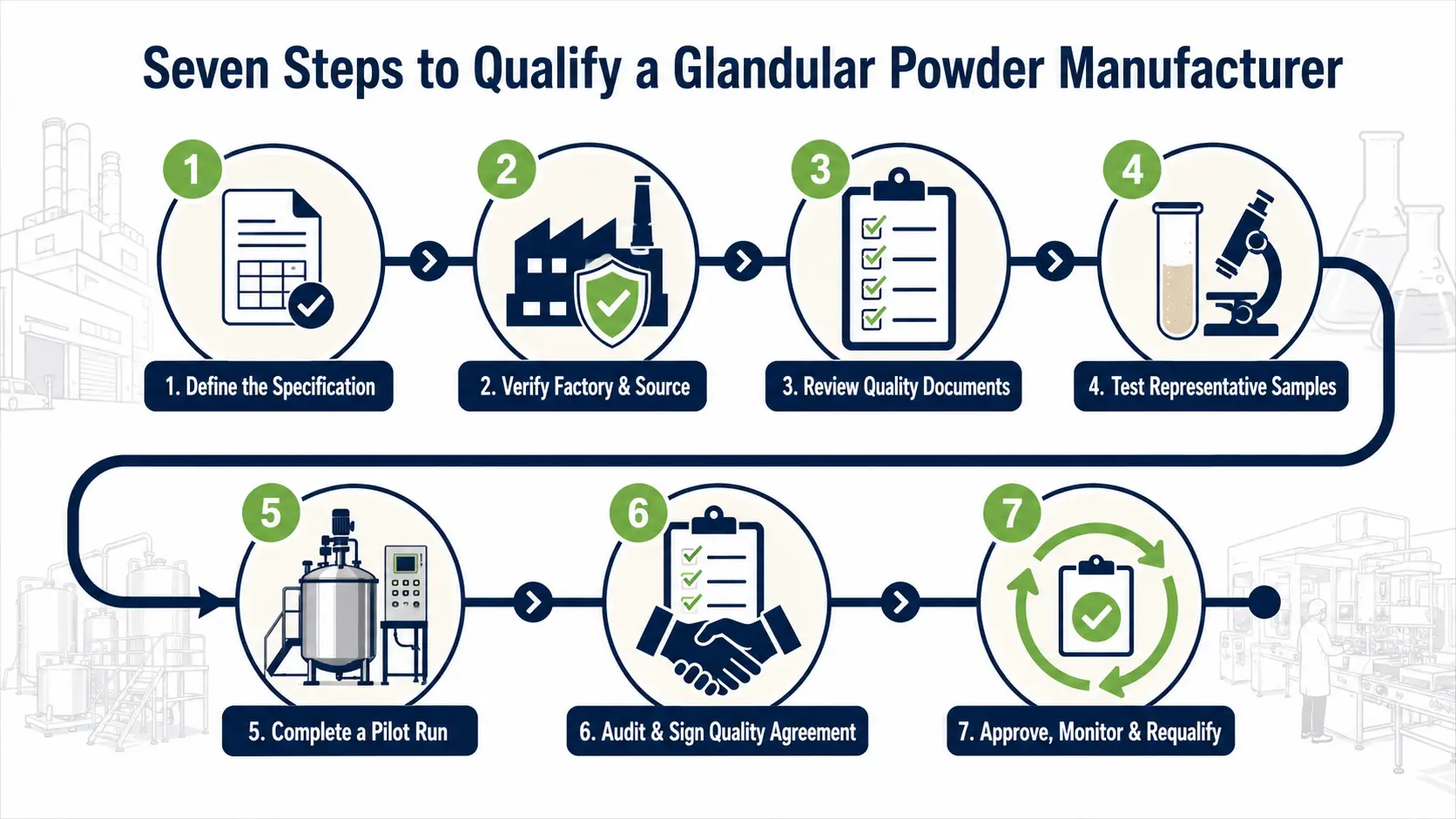
A disciplined supplier-approval workflow reduces technical, regulatory, and supply-chain surprises:
- Define the intended use. Identify the destination country, dosage form, target serving, claims direction, and whether the material is for human supplements, pet nutrition, food, or another regulated application.
- Write the purchasing specification. Define species, tissue, origin, process, composition, microbial limits, contaminants, particle size, packaging, and required documentation.
- Identify the actual factory. Confirm the legal manufacturer, production address, and any outsourced steps.
- Issue a supplier questionnaire. Collect information about quality systems, capacity, traceability, testing, change control, and business continuity.
- Review source and veterinary records. Confirm that species, tissue, origin, and animal-health documents are consistent.
- Review certificates and audit evidence. Check validity, scope, site address, and relevance to the product.
- Request representative samples. Prefer samples from multiple routine-production lots rather than one development batch.
- Complete identity and safety testing. Compare independent results with the supplier’s COA and agreed limits.
- Run a formulation or pilot trial. Evaluate flow, capsule filling, compression, dispersibility, odor, and finished-product stability.
- Audit the facility when risk justifies it. Use remote, third-party, or on-site review based on the product and order value.
- Sign a quality agreement. Define specifications, testing, deviations, complaints, recalls, and change notification.
- Approve the supplier and monitor performance. Review incoming lots, delivery performance, deviations, complaints, and COA reliability.
- Requalify periodically. Repeat selected testing and documentation review based on risk and supplier history.
Essential Documents to Request Before Ordering
| Document category | Documents and information |
|---|---|
| Company and factory | Business license, legal manufacturer, production address, contact details |
| Product | Specification, TDS, sample label, batch-specific COA |
| Source | Species, tissue, origin, traceability, veterinary and BSE/TSE documents |
| Process | Manufacturing flow chart, drying method, microbial-reduction information, carrier declaration |
| Safety | Microbiological, heavy-metal, residue, and risk-based third-party reports |
| Quality | GMP-related evidence, HACCP, ISO, Halal, Kosher, audit and change-control information |
| Stability | Shelf-life evidence, packaging specification, storage and opened-container guidance |
| Export | SDS, Certificate of Origin, veterinary documents, customs and shipping records |
| Commercial | MOQ, lead time, available capacity, price validity, payment terms, Incoterms |
Glandular Powder Manufacturer Evaluation Scorecard
| Evaluation category | Suggested weight |
|---|---|
| Source traceability and authenticity | 15 |
| Identity, specification, and assay | 15 |
| Safety and contaminant control | 20 |
| Processing, stability, and packaging | 15 |
| Quality systems and audit readiness | 15 |
| Consistency and supply reliability | 10 |
| Regulatory and export support | 10 |
| Total | 100 |
The scorecard should support judgment, not replace it. A serious failure in species identity, pathogen control, regulatory eligibility, or traceability should be treated as a disqualifying issue even if the supplier scores well in price and delivery.
Warning Signs When Evaluating a Manufacturer
Be cautious when:
- The supplier will not identify the actual factory.
- Only a generic or undated COA is available.
- Test methods, limits, or actual results are missing.
- Species, organ, or country of origin is unclear.
- Veterinary or traceability documents are unavailable.
- Certificates list a different company or facility.
- Freeze-drying is presented as proof of sterility.
- Potency claims have no suitable assay or method.
- “Pharmaceutical grade” is used without an identified standard.
- Shelf-life and storage claims have no supporting data.
- Samples are not traceable to routine production lots.
- The source or process can change without notification.
- There is no deviation, CAPA, complaint, or recall procedure.
- The supplier guarantees import clearance without reviewing the market and product.
- A very low price cannot be reconciled with the claimed source, process, and testing.
Why Supplement Manufacturers and Distributors Work With Unicorns Biotechnology
Unicorns Biotechnology manufactures and supplies bovine and porcine glandular powders for supplement brands, ingredient distributors, nutrition companies, private-label companies, contract manufacturers, and pet nutrition businesses. The available range includes liver, kidney, heart, spleen, thyroid, adrenal, pancreas, thymus, bone marrow, reproductive tissues, and other specialized animal organ powders.
Buyers can request product specifications, batch COAs, SDS or MSDS, source and compliance statements, samples, and third-party testing according to project requirements. Available manufacturing options depend on the ingredient and may include freeze-dried or spray-dried grades, custom particle size, defatted or non-defatted material, custom glandular blends, and export-ready bulk packaging.
For projects that extend beyond raw-material supply, Unicorns Biotechnology can also discuss OEM capsules, tablets, powder blends, custom formulations, and private-label packaging. Product-specific capacity, MOQ, lead time, documentation, certification support, and import requirements should be confirmed during quotation so that the selected material matches the formulation and destination market.
Frequently Asked Questions
What is a glandular powder manufacturer?
A glandular powder manufacturer processes identified animal glands or organ tissues into stable bulk powders. A direct manufacturer controls key operations such as tissue preparation, drying, milling, testing, batch release, and packaging. Buyers should distinguish the direct factory from a distributor, trader, or finished supplement contract manufacturer.
Are organ powders and glandular powders the same?
The categories overlap commercially but are not anatomically identical. Adrenal and thyroid are glands, while liver, heart, kidney, and spleen are organs. The supplement industry often groups both under “glandular powders,” so the specification should always identify the exact tissue.
How can I confirm that a supplier operates the factory?
Request the legal manufacturer name, production address, business license, applicable certificates, manufacturing flow chart, and batch documents. A live video audit, third-party audit, or on-site visit can help verify the facility and show whether critical operations are performed there or outsourced.
Which documents should accompany a glandular powder shipment?
At minimum, buyers commonly request a batch-specific COA, specification, commercial invoice, packing list, SDS or MSDS, and product label. Animal-derived imports may also require a Certificate of Origin, Veterinary Health Certificate, species and tissue declarations, BSE/TSE documentation, import permits, or other destination-specific records.
How can animal species and tissue identity be verified?
Species may be verified through traceability and, where appropriate, DNA testing. DNA testing does not normally prove the anatomical organ, so tissue identity also depends on collection procedures, source records, segregation, and manufacturing controls.
What should appear on a batch-specific COA?
The COA should show the product and grade, batch number, manufacturing date, expiration or retest date, specification limits, actual numerical or qualitative results, test methods, and authorized release. A typical COA should not be substituted for the actual commercial-lot COA.
Does freeze-drying eliminate bacteria?
No. Freeze-drying removes water and can help stabilize sensitive materials, but it is not automatically a sterilization or validated pathogen-kill process. Buyers should review the complete microbial-control strategy, including raw-material hygiene, any lethality step, environmental control, and finished-product testing.
What is the difference between freeze-dried and spray-dried glandular powder?
Freeze-drying generally uses lower temperature and is often chosen for premium whole-tissue powders. Spray drying supports efficient commercial production and controlled powder formation but may involve more heat and sometimes a carrier. The better option depends on the tissue, target specification, stability, microbial controls, formulation, and budget.
What is the difference between glandular powder, extract, and peptide powder?
Whole-tissue powder retains much of the original tissue matrix. An extract concentrates selected fractions and may be standardized to a marker or activity. Peptide powder is produced through protein hydrolysis and should have its own process and molecular or peptide specifications. The three formats should not be treated as equivalent.
How long is the typical shelf life of glandular powder?
Shelf life depends on the tissue, fat level, drying method, moisture, packaging, and storage. The supplier should provide a product-specific expiration or retest period supported by stability information. High-fat organ powders may need stronger oxygen and moisture protection than defatted grades.
What is the typical MOQ for bulk glandular powders?
MOQ varies by organ, species, specification, packaging, and whether the product is a standard grade or custom production. Request both sample quantities and commercial MOQ, then confirm whether a pilot order is possible before a larger contract.
Can a manufacturer produce custom multi-organ blends?
Many manufacturers can blend liver, heart, kidney, spleen, adrenal, pancreas, or other organ powders to a specified ratio. The buyer should approve the quantitative formula, component specifications, blending controls, finished-blend COA, and homogeneity plan.
Can glandular powders be used in pet supplements?
Many organ and glandular powders are used in pet nutrition and pet supplement formulations, but the permitted ingredients, claims, facility requirements, and labeling rules differ from those for human dietary supplements. Confirm the intended use and market before ordering.
Are glandular powders subject to import restrictions?
They can be. Restrictions may depend on the animal species, tissue, country of origin, disease status, processing method, and intended use. The importer should confirm permit, veterinary certificate, establishment, border inspection, and customs requirements before shipment.
Can a manufacturer provide OEM and private-label supplements?
Some glandular powder manufacturers also provide custom formulation, capsule filling, tablet production, blending, bottling, labeling, and export packaging. Confirm whether these operations occur at the same facility or through approved partners, and qualify every facility involved in the finished product.
Conclusion
The right glandular powder manufacturer should be able to prove quality rather than rely on broad marketing claims. Traceable animal sources, verified species and tissue identity, appropriate specifications, risk-based safety testing, controlled processing, stability evidence, recognized quality systems, consistent supply, and complete export documentation form the basis of a reliable commercial relationship.
Before placing a bulk order, define the intended use and destination market, request representative samples and batch documents, verify the supplier’s COA, complete a pilot run, and establish a written quality agreement. These steps protect the finished formulation, reduce import and production risks, and make future batches easier to manage.
Contact Unicorns Biotechnology to request a glandular powder catalogue, product specification, sample COA, free sample, custom blend consultation, bulk quotation, or OEM and private-label solution.