
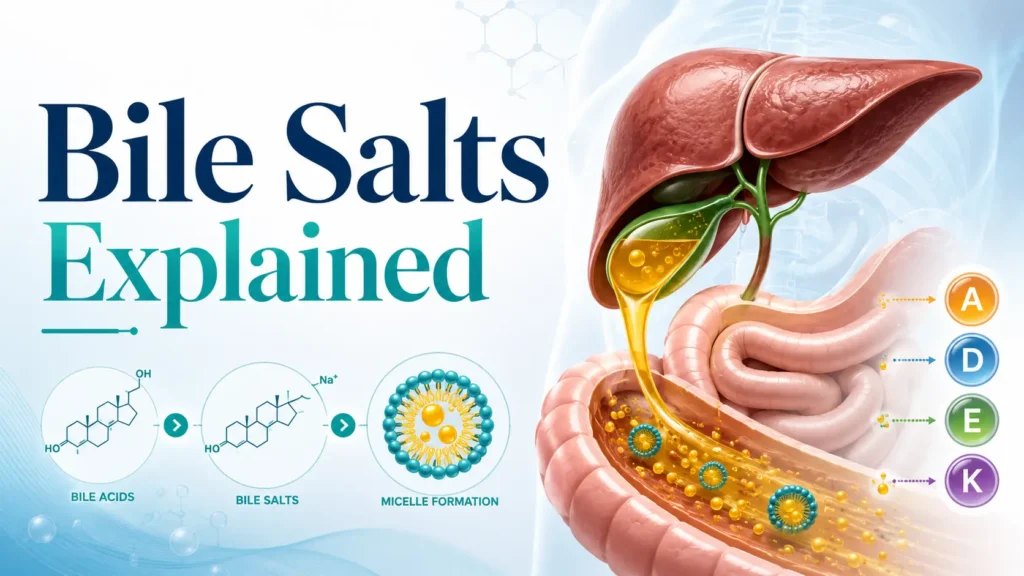
Bile salts are the water-soluble, detergent-like compounds your body uses to emulsify dietary fat throughout the digestive tract. They form when bile acids, which your liver synthesizes from cholesterol, are conjugated with glycine or taurine.
Those conjugated bile salts travel in bile, concentrate in the gallbladder between meals, and enter the small intestine when fat arrives. Their primary role is helping digest fats and facilitate fat absorption, including the uptake of fat-soluble vitamins.
Within the human digestive system and the larger digestive tract, these compounds are indispensable for liver health. Maintaining the proper balance of these salts is critical. Conditions like cirrhosis or chronic cholestasis can significantly impair their production. These issues often compromise overall liver function and the health of the bile ducts.
The terminology trips people up constantly. Bile is the whole fluid. Bile acids are the steroid acids made from cholesterol. Bile salts are generally the conjugated, ionized forms of those acids.
Ox bile is bovine bile material sold as a supplement or bulk ingredient. It contains a mixture of bile constituents rather than a single purified compound.
If you formulate digestive supplements or source bile-derived raw materials in bulk, the distinction matters commercially as well as biologically. Unicorns Biotechnology manufactures ox bile extract, porcine bile extract, and bile acids in Henan under GMP-compliant conditions.
Essential Facts at a Glance
Six facts explain nearly everything that follows: the origin of cholesterol, glycine and taurine conjugation, emulsification, mixed micelle formation, vitamin absorption, and enterohepatic recycling. The vocabulary around bile, bile acids, bile salts, and ox bile overlaps, but each carries distinct technical meanings.
Key Takeaways
- Bile salts are formed from bile acids, which your liver derives from cholesterol.
- Glycine and taurine conjugation lowers the pKa of bile acids and makes them far more water-soluble at intestinal pH.
- Bile salts emulsify fat droplets and help assemble mixed micelles; they do not hydrolyze triglycerides.
- They assist absorption of dietary lipids and vitamins A, D, E, and K.
- Roughly 90 to 95 percent of bile salts are recycled through enterohepatic circulation to maintain efficient bile acid synthesis.
- Chronic conditions like cirrhosis, cholestasis, or Primary Biliary Cirrhosis can disrupt this delicate balance. These issues cause significant digestive issues and nutrient deficiencies. These liver-related complications often necessitate a closer look at bile acid metabolism.
- Bile, bile acids, bile salts, and ox bile are related terms, not interchangeable ones.
Related Terms at a Glance
| Term | What It Actually Means |
|---|---|
| Bile | The full digestive fluid: water, bile salts, phospholipids, cholesterol, bilirubin, electrolytes |
| Bile acid | A steroid acid synthesized from cholesterol in hepatocytes |
| Bile salt | Generally the conjugated, ionized form of a bile acid |
| Ox bile | Bovine bile material containing a mixture of bile constituents |
| Ox bile extract | A processed, often standardized bovine bile ingredient |
| Bile salt supplements | Finished products using bile-derived or purified bile materials |
| Bile salts vs digestive enzymes | Bile salts solubilize; enzymes such as lipase catalyze chemical breakdown |
Definition, Sources, and Terminology
Bile acids become bile salts through conjugation with glycine or taurine, then travel from hepatocytes through bile canaliculi and the common bile duct into the duodenum. Bile itself is a mixed fluid containing phospholipids, cholesterol, and bilirubin.
From Bile Acids to Conjugated Forms
The chain is straightforward once you see it written out:
Cholesterol → primary bile acids → glycine or taurine conjugation → conjugated bile acids, commonly called bile salts
Scientific literature generally treats conjugated bile acids as conjugated bile salts, which is why the two words appear interchangeably. Strictly speaking, they are not exact synonyms. An unconjugated bile acid such as free cholic acid is still a bile acid.
In practice, you will see “bile acids” used as an umbrella term in gastroenterology and “bile salts” used when the emphasis falls on their detergent behavior. These compounds are vital for avoiding digestive issues within the digestive tract.
The distinction is key when managing conditions like Primary Biliary Cirrhosis, cirrhosis, or chronic cholestasis. In these states, the liver’s capacity to produce and transport bile salts is often severely compromised. When bile flow is impaired by cholestasis, the body’s ability to process fats is significantly diminished. This disruption often leads to a buildup of bile components in the liver, further complicating cholestasis and harming liver health.
Where These Compounds Are Found
Hepatocytes produce them as part of liver function. In a diseased liver, such as one affected by cirrhosis, the synthesis of primary bile acids often decreases, leading to a significantly smaller bile acid pool.
This reduction in bile production is a hallmark of advanced cirrhosis and impacts overall digestion. In patients with Primary Biliary Cirrhosis, the progressive destruction of bile ducts leads to severe cholestasis and impaired bile acid metabolism. Bile canaliculi collect the secretion, bile ducts carry it, and the common bile duct delivers it to the duodenum.
Between meals, the gallbladder stores and concentrates bile, sometimes tenfold. Outside the human body, bile salts are recovered from animal bile. Bovine sources yield ox bile extract while porcine bile extract comes from pigs.
How Bile Differs From Its Individual Components
Bile is roughly 95 percent water. Dissolved in it are bile salts, phospholipids such as lecithin and phosphatidylcholine, cholesterol, bilirubin, and electrolytes.
The salts are the dominant organic solute and drive the osmotic flow of bile, but the fluid is a mixture. When the chemical balance of bile is disrupted, cholesterol gallstones may form. This can lead to symptomatic gallstones that block the ducts, potentially causing acute cholestasis.
Chemistry, Synthesis, and Major Forms
Bile salt structure explains bile salt function: hydroxyl groups sit on one face of a rigid steroid nucleus, making the molecule amphipathic. Bile acid synthesis begins with cholesterol 7α-hydroxylase in hepatocytes and ends with glycine or taurine conjugation.
Amphipathic Structure and Water Solubility
A bile salt functions as a biological surfactant. The steroid backbone is flat and rigid, with hydroxyl groups clustered on the α face and methyl groups on the β face. One side is hydrophilic, the other hydrophobic.
That planar polarity is what lets bile salts sit at the boundary between water and oil. Above the critical micelle concentration, they aggregate into micelles rather than dissolving as monomers.
Conjugation with glycine or taurine adds a strongly acidic group and lowers the pKa. Water-soluble bile salts work; poorly ionized hydrophobic bile acids are more likely to precipitate or irritate tissue. In patients with cholestasis, the stagnation of these salts can contribute to localized liver damage.
Cholesterol Conversion in Hepatocytes
The liver is the only organ that completes bile acid biosynthesis. The neutral pathway starts with cholesterol 7α-hydroxylase, the rate-limiting enzyme. Reduced activity here is often seen in advanced cirrhosis or during prolonged cholestasis. An alternative acidic pathway contributes to the production of chenodeoxycholic acid.
In conditions like cirrhosis, these enzymatic pathways may be impaired, affecting the overall pool. Adults synthesize roughly 600 mg of bile acids daily, replacing what is lost in feces. This is the main route of cholesterol catabolism in mammals.
Primary and Secondary Acid Families
Primary bile acids are made in the liver:
- Cholic acid (CA)
- Chenodeoxycholic acid (CDCA)
Secondary bile acids are produced by intestinal bacteria acting on the primaries:
- Deoxycholic acid, from bacterial 7α-dehydroxylation of cholic acid
- Lithocholic acid, from chenodeoxycholic acid
- Ursodeoxycholic acid (UDCA), formed by epimerization of chenodeoxycholic acid
UDCA and its taurine conjugate (TUDCA) are unusually hydrophilic, which is why they attract clinical interest. These compounds are frequently studied for their ability to improve bile flow in patients with Primary Biliary Cirrhosis. Managing cirrhosis or cholestasis often involves supporting these pathways to ensure proper bile acid synthesis. Patients diagnosed with Primary Biliary Cirrhosis may require specific interventions to manage the bile acid pool.
Glycine and Taurine Conjugation Examples
In humans, glycine conjugates typically outnumber taurine conjugates roughly three to one, though diet and taurine availability shift the ratio.
| Bile Acid | Conjugation | Resulting Bile Salt |
|---|---|---|
| Cholic acid | Glycine | Glycocholate |
| Cholic acid | Taurine | Taurocholate |
| Chenodeoxycholic acid | Glycine | Glycochenodeoxycholate |
| Chenodeoxycholic acid | Taurine | Taurochenodeoxycholate |
| Deoxycholic acid | Glycine | Glycodeoxycholate |
| Deoxycholic acid | Taurine | Taurodeoxycholate |
| Ursodeoxycholic acid | Taurine | Tauroursodeoxycholate (TUDCA) |
The negatively charged conjugate pairs with counterions such as sodium in solution, which is where the “salt” in bile salt literally comes from.
The Digestive Process and Nutrient Uptake
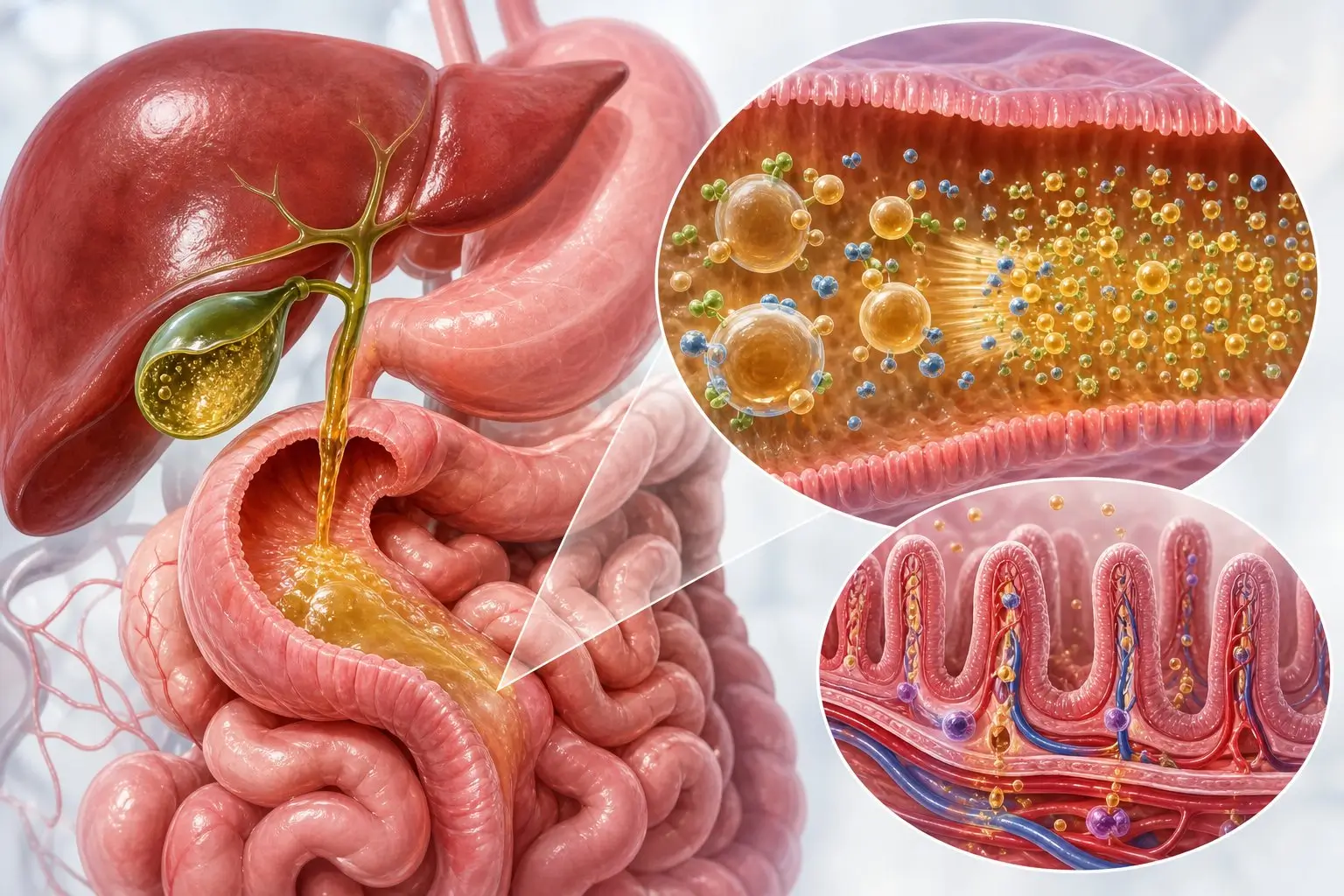
Fat digestion runs in a sequence: emulsification, hydrolysis by pancreatic lipase, then packaging into mixed micelles. Bile salts carry vitamins A, D, E, and K through the watery intestinal lumen without acting as enzymes.
Emulsification Before Enzyme Action
Dietary triglycerides arrive in the duodenum as large oil droplets. Cholecystokinin triggers gallbladder contraction and bile release. This is a critical aspect of gallbladder function during fat digestion.
Issues like cholestasis can interfere with this delivery, leading to discomfort. Bile salts coat fat droplets, reducing surface tension and breaking them into far smaller particles through emulsification.
Why it matters: lipase works only at the oil-water interface. Emulsification multiplies that interface enormously. Skip it and lipase has almost nothing to grip.
Mixed Micelles and Intestinal Transport
Once lipase cleaves triglycerides into free fatty acids and monoglycerides, these products remain poorly water-soluble. Bile salts assemble them into mixed micelles, aggregates roughly 4 to 8 nm across.
Micelles ferry their cargo to the brush border, where lipids diffuse into the enterocyte. The bile salts themselves largely stay behind in the lumen and continue downstream.
Below the critical micelle concentration, this transport collapses. That threshold is why bile salt concentration in the intestine determines how well fat is absorbed.
Absorption of Dietary Lipids and Vitamins
Vitamin A, vitamin D, vitamin E, and vitamin K depend on the same micellar transport. Before these reach the intestine, stomach acid must be properly neutralized to ensure bile salts work effectively.
When bile flow decreases due to cholestasis or cirrhosis, fat-soluble nutrient absorption declines accordingly. Chronic conditions like Primary Biliary Cirrhosis can make it difficult for the body to maintain adequate levels of vitamins A, D, E, and K. Over time, chronic bile salt deficiency can lead to significant nutrient deficiencies. This may even result in unexplained weight loss.
These vitamin deficiencies can impact energy levels and immune function. Clinicians look for these patterns when bile delivery is impaired, often monitoring levels of other nutrients, such as iron.
How Lipase, Pancreatin, and Other Enzymes Differ
| Bile Salts | Digestive Enzymes |
|---|---|
| Not enzymes; surface-active molecules | Proteins acting as catalysts |
| Emulsify and solubilize lipids | Chemically cleave nutrient bonds |
| Derived from bile acids in the liver | Secreted by pancreas, stomach, intestine |
| Enable micelle formation | Include lipase, protease, amylase |
| Reused many times per day | Consumed and degraded in the gut |
Pancreatin is a mixed enzyme preparation containing lipase, protease, and amylase. Ox bile is not an enzyme source at all. Digestive formulas often pair them because they perform different jobs.
Recycling, Microbial Transformation, and Physiological Roles
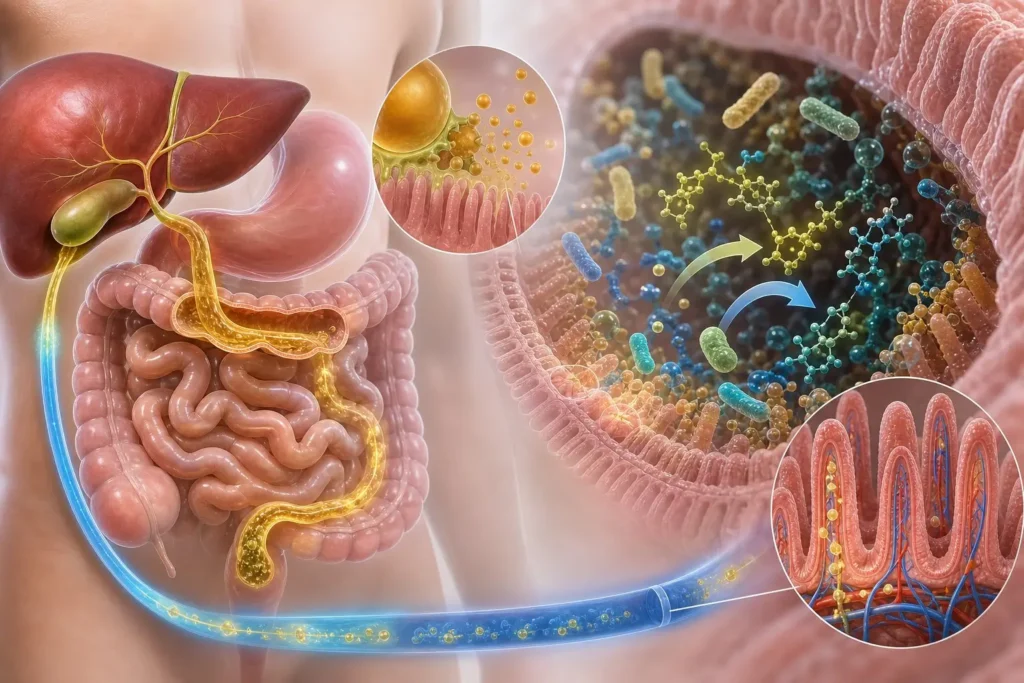
Around 90 to 95 percent of secreted bile salts are recovered in the terminal ileum and returned to the liver. Along the way, gut bacteria deconjugate them and strip hydroxyl groups.
The Enterohepatic Circulation
The loop runs: liver → bile → gallbladder → duodenum → small intestine → terminal ileum → portal vein → liver.
Hepatocytes reclaim returning bile salts and pump them back into canaliculi via the bile salt export pump. In primary biliary cirrhosis, damage to these pathways can impede this process. That export step remains the primary driver of bile flow.
The practical consequence: the amount of bile salt passing through the liver each day far exceeds what is newly synthesized. Recycling does the heavy lifting.
Ileal Reabsorption and the Bile Acid Pool
The total bile acid pool in an adult is only about 3 to 5 grams, yet 20 to 30 grams may be secreted daily. The pool simply circulates six to ten times.
Only about 5 percent escapes into feces, and daily synthesis replaces that loss. Damage the terminal ileum, and this arithmetic breaks down fast: the pool shrinks while unabsorbed bile acids spill into the colon.
Gut Microbiome Interactions
Bacterial bile salt hydrolase (BSH) enzymes deconjugate glycine and taurine, freeing the parent bile acid. Anaerobes then perform 7α-dehydroxylation, producing secondary bile acids.
The gut microbiota also plays a role in transforming these salts. If the balance of intestinal bacteria shifts, bad bacteria can disrupt the normal recycling process.
Beyond digestion, bile acids act as ligands for nuclear receptors like FXR. These have documented influence on bile acid homeostasis, glucose metabolism, and energy metabolism.
Supplement Ingredients, Clinical Contexts, and Responsible Sourcing
Supplement labels use “bile salts” and “ox bile” loosely. Reduced bile delivery and impaired ileal reabsorption cause opposite problems, ranging from steatorrhea to bile acid diarrhea.
Purified Materials Compared With Ox Bile Extract
Ox bile extract is a processed bovine bile material carrying a natural mixture of conjugated bile acids. Purified preparations may contain a single bile salt or a selected group standardized to a defined content.
| Attribute | Ox Bile Extract | Purified Bile Salts |
|---|---|---|
| Composition | Natural mixture | Defined or narrowed |
| Standardization | Often to total bile acids | Often to a named compound |
| Typical assay | Total bile acids, cholic acid | HPLC purity of the target salt |
| Common use | Digestive formulas | Pharma, biochemical, research |
Supplement Formulation and Quality Considerations
For a formulator, the animal-source and total bile acid assays by HPLC are critical. One must also consider particle size, heavy metals, and full BSE/TSE documentation with traceable animal origin.
Common blends pair ox bile with lipase, pancreatin, betaine HCl, or pepsin. Unicorns Biotechnology supplies bulk ox bile extract powder, porcine bile extract, and bile acids from a GMP-compliant facility.
Low Bile Delivery and Fat Malabsorption
Cholestasis, biliary obstruction, and chronic conditions like cirrhosis or Primary Biliary Cirrhosis reduce bile availability. In cases of cholestasis, bile flow is slowed or stopped. This is often due to a physical blockage or cellular dysfunction within the liver. This stagnation can lead to a significant bile acid deficiency.
These issues hinder the release of gall secretions into the small intestine. In Primary Biliary Cirrhosis, the small bile ducts in the liver are slowly destroyed. This leads to chronic cholestasis. When bile flow is obstructed by cholestasis, bile accumulation can cause irritation and pruritus.
Patients with cirrhosis often experience reduced bile salt synthesis because of damaged liver cells. This often results in a systemic bile acid deficiency. Conditions involving cholestasis often present with jaundice due to high bilirubin levels.
The downstream picture is fat malabsorption: pale or greasy stools, steatorrhea, bloating, gas, and stomach pain. In some cases, patients may experience vomiting, nausea, pruritus, or erythema.
Bile Acid Malabsorption and Diarrhea
Bile acid malabsorption is a different problem. When the terminal ileum cannot reabsorb bile acids, whether through inflammatory bowel disease or ileal resection, excess bile acids reach the large intestine.
In the colon, they stimulate water secretion, producing watery diarrhea and gas. This irritation throughout the lower digestive tract may shrink the bile acid pool. Bile acid sequestrants are the usual treatment.
Changes After Gallbladder Removal
Cholecystectomy does not stop bile production. The liver continuously synthesizes and secretes bile.
What is lost is storage and concentration. Bile trickles into the duodenum more continuously instead of arriving in a meal-triggered surge. Many people adapt with no lasting trouble.
Some report difficulty with large fatty meals. While this is rarely as severe as the malabsorption seen in cirrhosis or chronic cholestasis, it can still impact comfort. A subset develops post-cholecystectomy diarrhea driven by bile acids reaching the colon. The assumption that everyone without a gallbladder needs bile salt supplements is not supported.
Safety, Side Effects, and Medical Boundaries
Reported effects of bile salt supplements include diarrhea, loose stools, stomach cramps, and nausea. The mechanism is predictable: unabsorbed bile salts in the colon stimulate secretion.
Dietary bile salt supplements are not the same as prescription bile acid medicines such as ursodiol. Anyone with biliary obstruction, cholestasis, or advanced cirrhosis should speak with a physician first. This is especially true for those with active liver disease or unexplained chronic diarrhea.
Frequently Asked Questions
What do bile salts do for your body?
They support fat digestion by acting as a natural surfactant in the digestive system. They also form mixed micelles that carry fatty acids and vitamins A, D, E, and K to the intestinal lining.
How do you tell if you need bile salts?
You cannot tell reliably on your own. Persistent pale or greasy stools warrant testing for bile acid malabsorption, pancreatic insufficiency, or biliary disease rather than a trial of supplements.
What are the symptoms of a lack of bile salts?
A bile salt deficiency typically presents with steatorrhea, pale stools, bloating, and gas. These digestive issues occur over time and may indicate an underlying bile acid deficiency, especially if jaundice is present due to blocked bile flow.
How can you increase bile salts naturally?
Your liver synthesizes bile acids continuously, and dietary fat is the strongest natural trigger for gallbladder contraction. Adequate intake of taurine and glycine supports conjugation.
What foods contain bile salts or support bile production?
No common food contains human bile salts; they come from animal bile. Foods containing healthy fats stimulate bile release, while animal proteins supply conjugation substrates.
What are the side effects of bile salt supplements?
The most common are loose stools, diarrhea, cramping, and nausea. Some users may even experience vomiting, all driven by unabsorbed bile salts stimulating colonic secretion.
What are bile salts made from?
They begin as cholesterol, which hepatocytes convert into primary bile acids. Those bile acids are then conjugated with glycine or taurine, and the resulting molecules pair with counterions such as sodium.
Are bile salts and bile acids the same?
A bile acid is the steroid acid itself; a bile salt is generally the conjugated, ionized form that dominates healthy bile and functions as a detergent in the intestine.
Where are bile salts stored?
Between meals, they are stored in the gallbladder. Proper gallbladder function ensures they are released only when fat enters the duodenum. If bile becomes too concentrated, cholesterol gallstones can develop.
Are bile salts digestive enzymes?
No. Enzymes are protein catalysts that cleave chemical bonds; bile salts are surface-active steroid compounds that emulsify and solubilize lipids without breaking bonds.
What happens if you have too little bile reaching the intestine?
Fat emulsification and micelle formation suffer, so dietary lipids and fat-soluble vitamins pass through poorly. This often happens in cases of cholestasis or cirrhosis.
Autoimmune conditions like primary biliary cirrhosis can also lead to this deficiency. Without enough bile, the body cannot absorb essential nutrients efficiently.
Damage to the liver from cirrhosis or the bile ducts from Primary Biliary Cirrhosis interferes with the normal delivery of these salts. Chronic cholestasis can also halt this flow entirely. The result is steatorrhea, pale greasy stools, and vitamin deficiencies.
What is bile acid malabsorption?
It is failure of the terminal ileum to reabsorb bile acids efficiently. Excess bile acids then reach the colon and drive secretory diarrhea and gas throughout the digestive tract.
References
Authoritative material on this topic sits in sources such as NCBI Bookshelf and StatPearls physiology chapters on bile secretion and bile acid metabolism. The Merck Manual entries on bile production and malabsorption syndromes provide clinically framed summaries.
PubMed-indexed reviews on bile acid physiology cover amphipathic structure and micelle formation. For microbial transformation, look to gastroenterology and hepatology reviews on bile salt hydrolase activity. This article is educational and does not replace individualized medical advice.