
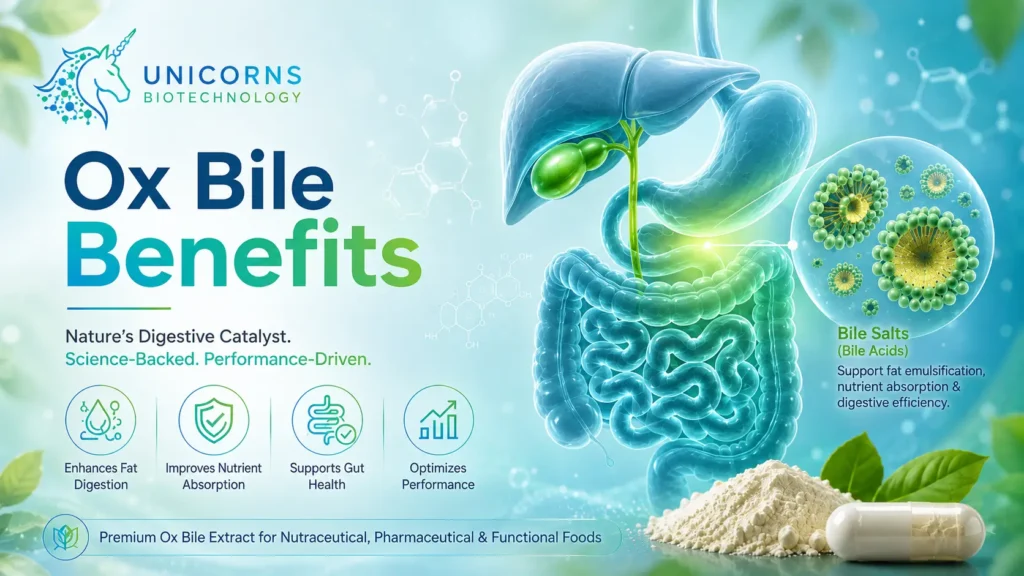
Ox bile supplements are best known for one practical reason: they provide bovine-derived bile acids and bile salts that can support the normal digestion and absorption of dietary fats.
That statement has a strong physiological basis. Bile acids emulsify dietary lipids, help create mixed micelles, and make fatty acids, monoglycerides, cholesterol, and fat-soluble nutrients easier to absorb in the small intestine. Human case studies also show that natural ox bile or conjugated bile acids derived from ox bile can improve severe fat malabsorption in selected patients whose bile acid pool has been depleted. (PubMed)
The evidence becomes less direct when ox bile is promoted for weight loss, fatty liver, blood sugar control, thyroid function, neurological health, eye health, or “detox.” Bile acids certainly participate in metabolic signaling through receptors such as FXR and TGR5, but much of this research involves endogenous bile acids or specific compounds such as ursodeoxycholic acid (UDCA) and tauroursodeoxycholic acid (TUDCA) rather than ordinary ox bile extract. (Physiology Journals)
This distinction matters. A scientifically useful discussion of ox bile benefits should explain what is well established, what has actually been studied using ox bile, what remains biologically plausible, and which popular claims are not yet proven.
Key Takeaways
- The best-supported role of ox bile is related to fat digestion, fat absorption, mixed micelle formation, and absorption of fat-soluble nutrients.
- Direct human evidence for ox bile exists, but it is limited mainly to small studies and case reports involving severe bile acid depletion, short bowel syndrome, ileal resection, or steatorrhea.
- Ox bile is not a digestive enzyme. Bile salts emulsify and solubilize fat, while pancreatic lipase chemically hydrolyzes triglycerides.
- Bile acids influence the gut microbiome, glucose metabolism, cholesterol metabolism, FXR, TGR5, GLP-1, FGF19, and energy metabolism, but these mechanisms do not prove that a standard ox bile supplement produces every associated effect.
- Neurological, retinal, cellular-resilience, and many metabolic claims are based mainly on TUDCA or UDCA research, not whole ox bile extract.
- More bile is not always better. Excess bile acids reaching the colon can contribute to diarrhea, urgency, and abdominal discomfort. (Wiley Online Library)
Ox Bile Benefits at a Glance: What Does the Evidence Show?
| Potential Benefit | Evidence Level | What the Evidence Actually Supports |
|---|---|---|
| Supports dietary fat digestion | Strong physiological basis | Bile acids and bile salts emulsify and solubilize dietary fats |
| Supports fat absorption | Strong physiology, limited direct ox bile human evidence | Direct benefit demonstrated in selected bile-acid-depleted patients |
| Supports absorption of vitamins A, D, E and K | Strong physiological basis | Bile acids are important for normal absorption of fat-soluble nutrients |
| May reduce steatorrhea in bile acid depletion | Limited direct human evidence | Ox bile improved severe fat malabsorption in case reports and small studies |
| Digestive support after gallbladder removal | Physiologically plausible | Routine ox bile supplementation after cholecystectomy has not been proven necessary |
| Helps with high-fat meals | Plausible, limited direct trials | May be relevant when bile availability is limiting fat digestion |
| Gut microbiome effects | Strong bile-acid biology | Direct microbiome benefits from ox bile supplementation are not established |
| Glucose and GLP-1 effects | Emerging human evidence for targeted conjugated bile acids | Not equivalent to evidence for ordinary ox bile capsules |
| Cholesterol metabolism | Strong physiological relationship | Ox bile is not proven to lower blood cholesterol |
| Liver support | Indirect | Most therapeutic evidence concerns specific bile acids, not whole ox bile |
| Gallbladder support | Limited | Normal bile physiology is relevant, but general supplement benefits remain uncertain |
| Gallstone dissolution | Not established for ox bile | Evidence applies mainly to specific bile acids such as UDCA |
| Neurological protection | Mainly TUDCA/UDCA evidence | Should not be presented as a proven ox bile benefit |
| Eye and retinal protection | Mainly TUDCA/UDCA evidence | Preclinical and specialized evidence, not whole ox bile |
| Cellular resilience and ER stress | Mainly TUDCA research | Not established for standard ox bile extract |
| Thyroid hormone activation | Mechanistic/preclinical bile-acid research | Not proven as an ox bile supplement effect |
| Weight loss | Insufficient evidence | Ox bile is not an established weight-loss supplement |
| Fatty liver | Insufficient direct ox bile evidence | Bile-acid signaling is relevant to MASLD/NAFLD biology |
| SIBO | Insufficient evidence | Ox bile is not an established SIBO treatment |
| Constipation | Insufficient evidence | Excess bile acids may actually promote diarrhea |
What Is Ox Bile?
Ox bile is bile obtained from cattle. It may also be called bovine bile, cow bile, ox gall, oxgall, bovine bile extract, desiccated ox bile, or ox bile extract powder.
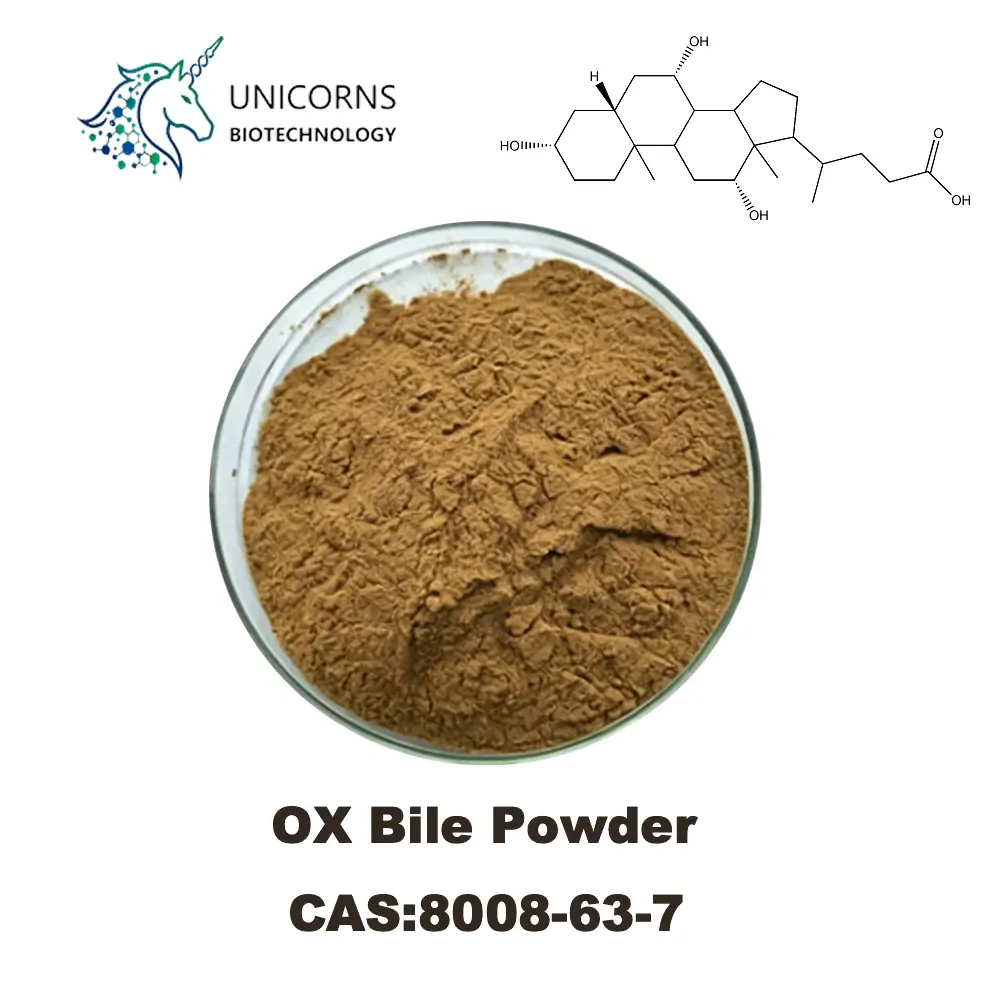
Natural bile is a complex digestive fluid rather than one single chemical compound. It contains bile acids, conjugated bile salts, phospholipids, cholesterol, pigments such as bilirubin, electrolytes, and other minor constituents.
Commercial Ox Bile Extract Powder is produced by processing bovine bile into a more stable ingredient suitable for capsules, tablets, powders, and digestive formulations. Unicorns Biotechnology’s standard commercial grade is standardized to cholic acid, with the exact bile-acid profile depending on the raw material and processing specification. (Henan Unicorns Biotechnology Co., Ltd.)
What is ox bile made of?
The bile acid fraction is the most relevant part when discussing ox bile benefits.
Bovine bile can contain compounds related to cholic acid, chenodeoxycholic acid, deoxycholic acid, glycocholic acid, taurocholic acid, and other free or conjugated bile acids. Glycine-conjugated and taurine-conjugated bile acids are especially important because conjugation improves their behavior in the aqueous environment of the intestinal tract.
Different commercial ox bile extracts are not chemically identical. Their total bile acid content, cholic acid assay, conjugated bile acid profile, purification level, water solubility, and concentration can vary.
This is one reason that results from one bile-acid preparation should not automatically be applied to every product labeled “ox bile.”
Ox bile vs bile acids vs bile salts
The terms overlap, but they are not synonyms.
Bile acids are steroid-derived molecules made from cholesterol. Bile salts generally refers to bile acids conjugated with glycine or taurine and present in ionized form. Ox bile is the broader bovine bile material containing multiple bile-derived compounds.
For a deeper explanation of primary bile acids, secondary bile acids, glycine and taurine conjugation, micelle formation, and enterohepatic circulation, see our guide to Bile Salts Explained.
How Does Ox Bile Work?
The main digestive function of ox bile comes from its bile acids and bile salts.
Dietary fat does not mix readily with the watery contents of the small intestine. Bile salts are amphipathic molecules, meaning different parts of the molecule interact with water and lipids.
This property allows them to surround and disperse dietary fat droplets, increasing the surface area where digestive enzymes can work.
The basic sequence is:
Dietary fat → bile-mediated emulsification → pancreatic lipase activity → fatty acids and monoglycerides → mixed micelles → intestinal absorption
Bile salts also help solubilize cholesterol and other hydrophobic molecules in mixed micelles. This is central to normal lipid absorption. (Annual Reviews)
Is ox bile a digestive enzyme?
No.
This distinction is important because many digestive supplements combine ox bile with enzymes, but the ingredients perform different jobs.
Bile salts help emulsify and solubilize fat. Pancreatic lipase hydrolyzes triglycerides.
Protease acts primarily on proteins, while amylase acts on carbohydrates. Ox bile does not replace these enzyme activities.
Ox bile vs pancreatic lipase
Ox bile and lipase work at different stages of the same digestive process.
Bile salts help create a favorable interface between dietary fat and the intestinal environment. Pancreatic lipase then chemically breaks triglycerides into fatty acids and monoglycerides.
For this reason, digestive formulas frequently combine ox bile with lipase or pancreatin rather than choosing one as a direct substitute for the other.
Proven and Best-Supported Ox Bile Benefits
1. Ox bile supports dietary fat digestion
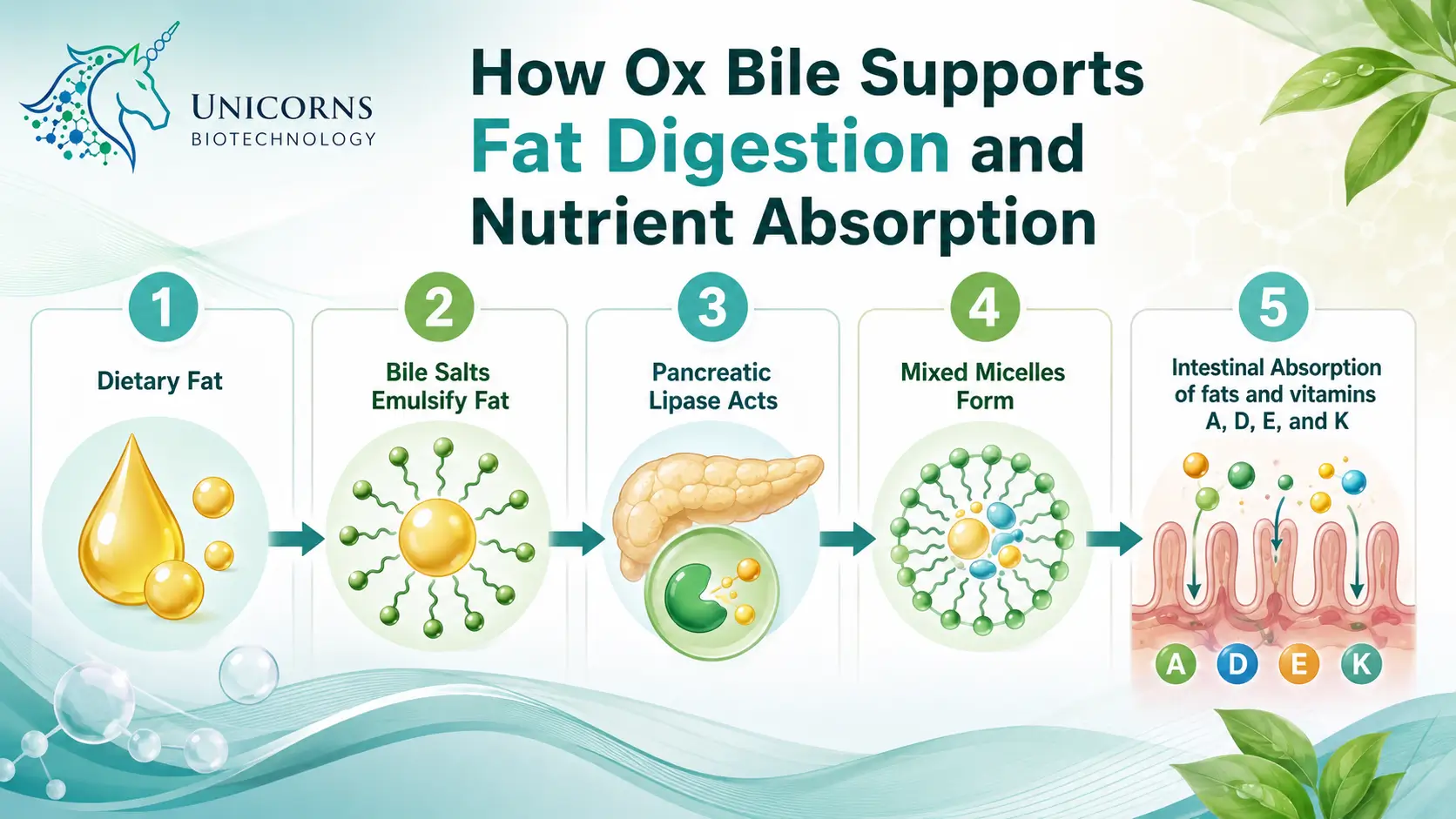
The most defensible ox bile benefit is support for normal fat digestion.
Fats naturally aggregate into large droplets in an aqueous environment. Bile acids act as biological surfactants, helping disperse these droplets and increasing the available surface area for pancreatic lipase.
This process is commonly called fat emulsification.
Bile therefore does not digest fat in the same chemical sense that lipase does. Instead, bile makes dietary lipids more accessible to enzymatic digestion and subsequent absorption. Bile acids are considered essential components of normal dietary lipid handling. (Annual Reviews)
This mechanism explains why ox bile for fat digestion, ox bile with digestive enzymes, and bile salts for high-fat meals are common formulation concepts.
2. Ox bile supports fat absorption
Digestion and absorption are related but different processes.
After triglycerides are hydrolyzed, fatty acids, monoglycerides, cholesterol, and other lipid-soluble compounds still need to move through the aqueous intestinal environment to reach the enterocyte surface.
Bile salts help form mixed micelles, microscopic structures that keep these hydrophobic digestion products suspended and transportable.
Direct human evidence also exists in severe bile-acid-deficiency states.
A 1992 case report described an ileectomy patient with severe steatorrhea caused by bile acid depletion. Ox bile treatment improved fat absorption. (PubMed)
An earlier 1982 report similarly described correction of severe steatorrhea and malnutrition with ox bile in an ileectomy and ileostomy patient. (ScienceDirect)
These observations support a real physiological effect, but they involved highly selected patients with severe bile acid depletion. They do not prove that every healthy person will absorb more fat by taking supplemental ox bile.
3. Ox bile may improve fat absorption in severe bile acid depletion
The clearest direct ox bile evidence comes from situations where the body’s effective bile acid pool has become abnormally small.
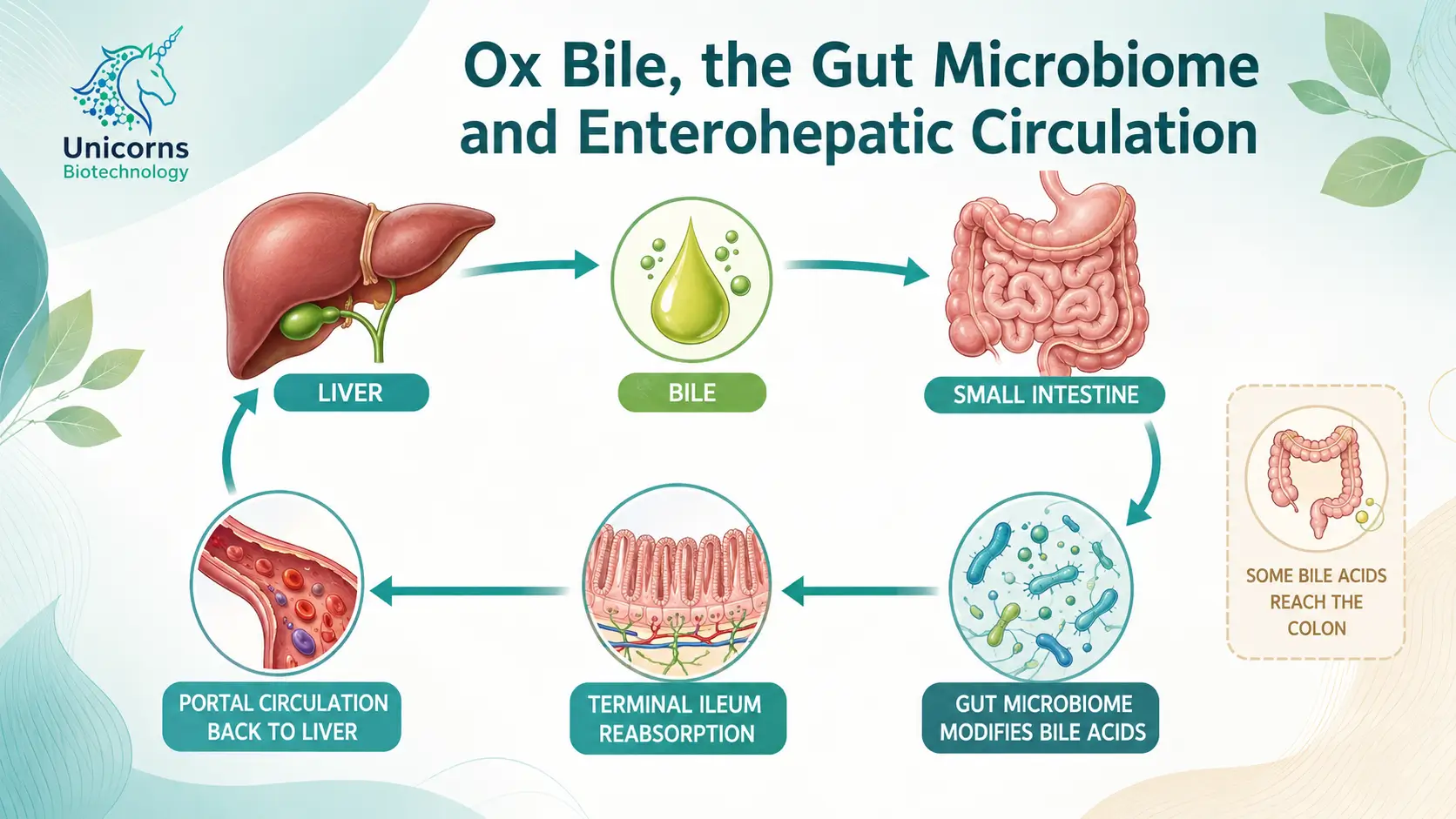
The terminal ileum is responsible for reabsorbing a large proportion of bile acids and returning them to the liver through enterohepatic circulation.
When a substantial length of ileum is removed or severely diseased, bile acids may be lost in stool faster than the liver can replace them. The resulting reduction in intraluminal bile acids can impair micelle formation and lead to significant fat malabsorption.
A 1999 report compared a natural conjugated bile acid mixture derived from ox bile with the synthetic conjugated bile acid cholylsarcosine in a patient with short bowel syndrome. Conjugated bile acid replacement increased fat absorption by about 40 g per day in metabolic balance studies, and calcium absorption also increased. (ScienceDirect)
This is meaningful direct evidence, but it remains case-level evidence in a specialized clinical population.
4. Ox bile may reduce steatorrhea in selected patients
Steatorrhea means excess fat in the stool. Stools may appear oily, greasy, bulky, or difficult to flush when fat absorption is substantially impaired.
When steatorrhea results specifically from depletion of the bile acid pool, bile acid replacement can theoretically restore the concentration required for adequate micelle formation.
A small 2004 study evaluated conjugated bile acid replacement in four patients with short bowel syndrome and a residual colon. In two patients who received natural conjugated bile acids from ox bile, steatorrhea improved, but diarrhea increased substantially.
This finding illustrates an important point about ox bile benefits and side effects at the same time.
Improving fat absorption does not mean that more bile is always beneficial.
Bile acids that reach the colon in excessive amounts can stimulate secretion and worsen diarrhea.
5. Ox bile supports absorption of vitamins A, D, E and K
The fat-soluble vitamins A, D, E and K depend on normal lipid digestion and micellar solubilization for efficient intestinal absorption.
Bile acids help incorporate fat-soluble compounds into mixed micelles, allowing them to travel through the watery intestinal environment toward the absorptive surface.
This physiological role is well established. Bile acids are essential not only for dietary lipid handling but also for the absorption of lipophilic nutrients. (Annual Reviews)
However, an important distinction should be made.
The fact that bile acids are necessary for normal vitamin absorption does not mean clinical studies have shown that ordinary ox bile supplements raise vitamins A, D, E, or K in healthy adults.
The strongest rationale applies when bile delivery, bile acid availability, or fat absorption is actually impaired.
6. Ox bile supports absorption of cholesterol and other dietary lipids
Mixed micelles also help solubilize cholesterol, phospholipids, fatty acids, and other lipid-soluble components.
For this reason, normal bile physiology supports absorption of a broad range of dietary lipids rather than only triglyceride-derived fatty acids.
This should not be confused with a claim that ox bile improves cardiovascular health. In fact, improved intestinal cholesterol solubilization and blood cholesterol lowering are entirely different questions.
Bile acids are involved in cholesterol homeostasis because the liver converts cholesterol into bile acids and replaces bile acids that are lost through fecal excretion. (PubMed)
Potential Digestive Benefits of Ox Bile
7. Ox bile after gallbladder removal
One of the most common questions is whether ox bile after gallbladder removal is beneficial.
The gallbladder stores and concentrates bile, but it does not produce it. The liver continues making bile after a cholecystectomy.
After the gallbladder is removed, bile flows from the liver through the bile ducts directly into the duodenum instead of being stored for a concentrated meal-triggered release. Most people can live and digest food normally without a gallbladder, although some develop softer stools, diarrhea, or difficulty tolerating large fatty meals. (NIDDK)
This creates a plausible reason why some consumers explore bile salt or ox bile supplements after gallbladder removal.
However, there is not strong evidence showing that everyone without a gallbladder needs supplemental ox bile.
Persistent digestive symptoms after cholecystectomy can have multiple causes. Adding bile acids is not automatically appropriate, particularly when diarrhea may already be related to excessive bile acids entering the colon.
8. Ox bile may help when fatty meals are difficult to digest
People frequently search for ox bile because they experience bloating, fullness, loose stools, greasy stools, or discomfort after high-fat meals.
If inadequate bile acid availability is genuinely contributing to poor lipid digestion, supplemental bile acids could theoretically improve the process.
But these symptoms are not specific to low bile.
Similar symptoms can result from pancreatic insufficiency, celiac disease, inflammatory bowel disorders, altered intestinal motility, infection, bile acid diarrhea, food intolerances, and numerous other conditions.
That is why ox bile for bloating or ox bile for indigestion should be described as a possible context-dependent use, not a universally proven remedy.
9. Ox bile complements digestive enzyme formulas
Ox bile is commonly combined with digestive enzymes because bile and enzymes provide complementary functions.
A formulation may combine ox bile with lipase, pancreatin, protease, amylase, pepsin, or betaine HCl.
Pancreatin generally provides lipase, protease, and amylase activity. Ox bile supplies bile-derived compounds that support the physical emulsification and solubilization of fat.
For manufacturers developing this type of formula, Unicorns Biotechnology also supplies Bovine Pancreas Powder as a separate animal-derived ingredient category. (Henan Unicorns Biotechnology Co., Ltd.)
The key formulation principle is that bile acids and digestive enzymes are complementary, not interchangeable.
Ox Bile and the Gut Microbiome
10. Bile acids influence gut bacteria
Bile acids do much more than assist fat digestion.
They also interact closely with the gut microbiome.
Different bile acids have different hydrophobicity, detergent properties, and antimicrobial effects. The composition and concentration of the intestinal bile acid pool can therefore influence which microorganisms thrive in the gastrointestinal environment.
Reviews of the bile acid and microbiome relationship describe bile acids as important regulators of microbial ecology and host-microbiome communication. (PubMed Central (PMC))
However, saying that bile acids influence the gut microbiome is not the same as proving that an ox bile supplement “increases microbiome diversity” or corrects dysbiosis.
Those specific supplement claims require direct clinical evidence.
11. Gut bacteria also modify bile acids
The interaction works in both directions.
Gut bacteria express enzymes such as bile salt hydrolase (BSH), which can remove glycine or taurine from conjugated bile acids.
Microorganisms also transform primary bile acids into secondary bile acids through additional reactions. For example, microbial metabolism contributes to the formation of deoxycholic acid and lithocholic acid.
As a result, the intestinal bile acid pool is shaped by both host metabolism and microbial activity. (PubMed Central (PMC))
This bile acid-microbiome relationship is an important part of the gut-liver axis, but direct evidence that standard ox bile supplementation creates a predictable beneficial microbiome profile remains limited.
Ox Bile and Metabolic Health: Possible Benefits and Emerging Evidence
12. Ox bile, glucose metabolism and GLP-1
Bile acids function as signaling molecules as well as digestive compounds.
A particularly interesting human study examined ileo-colonic delivery of conjugated bile acids in people with obesity and type 2 diabetes.
In a randomized, double-blind, placebo-controlled 28-day trial, targeted conjugated bile acid delivery reduced several glucose-related measures and increased postprandial GLP-1. Researchers also observed effects on insulin, C-peptide, fructosamine, LDL cholesterol, and FGF19. (ScienceDirect)
This is meaningful human evidence for bile-acid signaling.
It is not, however, equivalent to taking a conventional ox bile capsule.
The study used a specialized ileocolonic delivery system designed to expose the distal intestine and colon to conjugated bile acids. The participant population also had obesity and diabetes.
The appropriate conclusion is therefore:
Conjugated bile acids can influence glucose and incretin signaling in humans, but ordinary ox bile supplements have not been established as a treatment for high blood sugar or diabetes.
13. Ox bile and cholesterol metabolism
Bile acids are made from cholesterol, so cholesterol and bile acid metabolism are tightly connected.
The conversion of cholesterol to bile acids represents an important pathway of cholesterol catabolism. Bile acids are then largely recycled, while a smaller fraction is lost in stool and must be replaced through new synthesis. (Annual Reviews)
This biological connection sometimes leads to claims that ox bile “lowers cholesterol.”
The evidence does not justify such a broad statement.
The targeted conjugated bile acid trial mentioned above did report a reduction in fasting LDL relative to placebo, but the intervention was specialized and cannot simply be generalized to standard oral ox bile products. (ScienceDirect)
Therefore, ox bile should not be marketed as a proven cholesterol-lowering supplement.
14. Bile acids and energy metabolism
Bile acid receptors participate in broader metabolic regulation.
Two of the most studied receptors are:
FXR, or farnesoid X receptor
and
TGR5, also called GPBAR1
These receptors contribute to signaling pathways involving glucose metabolism, lipid metabolism, bile acid homeostasis, intestinal hormones, and energy expenditure. (Physiology Journals)
This is scientifically important, but it does not mean a standard ox bile dose reliably activates these pathways enough to produce weight loss or metabolic treatment effects.
The biological pathway and the supplement claim should remain separate.
15. Ox bile and thyroid hormone activation
A frequently cited 2006 Nature study found that bile-acid signaling through TGR5 increased activity of type 2 iodothyronine deiodinase, an enzyme involved in local conversion of thyroxine (T4) toward active triiodothyronine (T3).
The experiments showed increased energy expenditure in mice and effects in cultured human skeletal muscle cells. (PubMed)
This work is important for understanding bile acids as metabolic signaling molecules.
It does not establish that taking an ox bile supplement improves hypothyroidism, corrects thyroid hormone imbalance, or reliably increases circulating T3 in humans.
For SEO purposes, the accurate answer to “does ox bile support thyroid function?” is therefore: there is an interesting bile-acid signaling mechanism, but clinical benefit from ox bile supplementation has not been established.
Ox Bile Benefits for Liver Health
16. Bile is part of normal liver function and excretion
The liver synthesizes bile acids from cholesterol and continuously secretes bile.
Bile provides a route for the elimination of cholesterol, bilirubin, and other substances. Bile acids also participate in feedback mechanisms that regulate their own synthesis through pathways involving FXR and FGF19.
This makes normal bile acid metabolism an important aspect of liver physiology. (Physiology Journals)
But “supports normal bile physiology” and “detoxifies the liver” are not equivalent claims.
Does ox bile detox the liver?
“Detox” is often used so broadly that it becomes scientifically unclear.
Bile is genuinely involved in the excretion of bilirubin, cholesterol, and certain metabolites. That is normal physiology.
There is much less evidence that taking ox bile broadly removes environmental toxins, heavy metals, mold toxins, or unspecified “toxins” from the body.
An authoritative article should therefore avoid presenting liver detoxification as a proven ox bile benefit.
17. Does ox bile help fatty liver?
Bile-acid signaling is relevant to metabolic dysfunction-associated steatotic liver disease, historically called NAFLD.
FXR, TGR5, gut microbiota, lipid metabolism, insulin sensitivity, and bile acid transport are all active areas of liver research. Reviews have described bile-acid pathways as potential therapeutic targets in fatty liver disease. (PubMed)
But this is not direct evidence for ox bile.
There is currently no sound basis for claiming that ordinary ox bile supplements treat fatty liver disease.
The better conclusion is that bile acid biology is closely connected to liver metabolism, while therapeutic effects depend on the specific bile acid, receptor target, dose, formulation, and disease context.
Ox Bile Benefits for Gallbladder Health
18. Does ox bile support the gallbladder?
Bile is stored and concentrated in the gallbladder, so bile acids are naturally central to gallbladder physiology.
However, the phrase “supports gallbladder health” is too broad if it implies that taking ox bile can prevent or treat gallbladder disease.
Gallbladder function depends on many factors, including bile composition, cholesterol saturation, gallbladder emptying, biliary anatomy, inflammation, and metabolic status.
Ox bile supplies additional bile-derived compounds to the intestine. It does not restore a diseased gallbladder to normal function.
19. Does ox bile increase bile flow?
Taking bile acids adds bile-derived compounds to the gastrointestinal tract, but this should not automatically be described as increasing the liver’s own bile production or treating poor bile flow.
True impairment of bile flow, such as cholestasis or biliary obstruction, is a medical condition that requires diagnosis.
The terms “bile flow,” “bile production,” and “bile acid supplementation” should therefore not be used interchangeably.
20. Does ox bile dissolve gallstones?
This is one of the most important claims to clarify.
Specific bile acids have been used medically for selected cholesterol gallstones. Ursodeoxycholic acid, or UDCA, is the best-known example.
A 2023 systematic review found that UDCA has been studied for symptomatic gallstone disease, although the evidence remains heterogeneous and stronger trials are still needed. (PubMed)
This does not establish ox bile as a gallstone-dissolving treatment.
Ox bile is a multi-component bovine extract, whereas UDCA is a specific bile acid used under defined clinical circumstances.
Ox bile supplements should not be marketed as proven gallstone treatments.
Ox Bile vs TUDCA Benefits: Do Not Confuse the Evidence
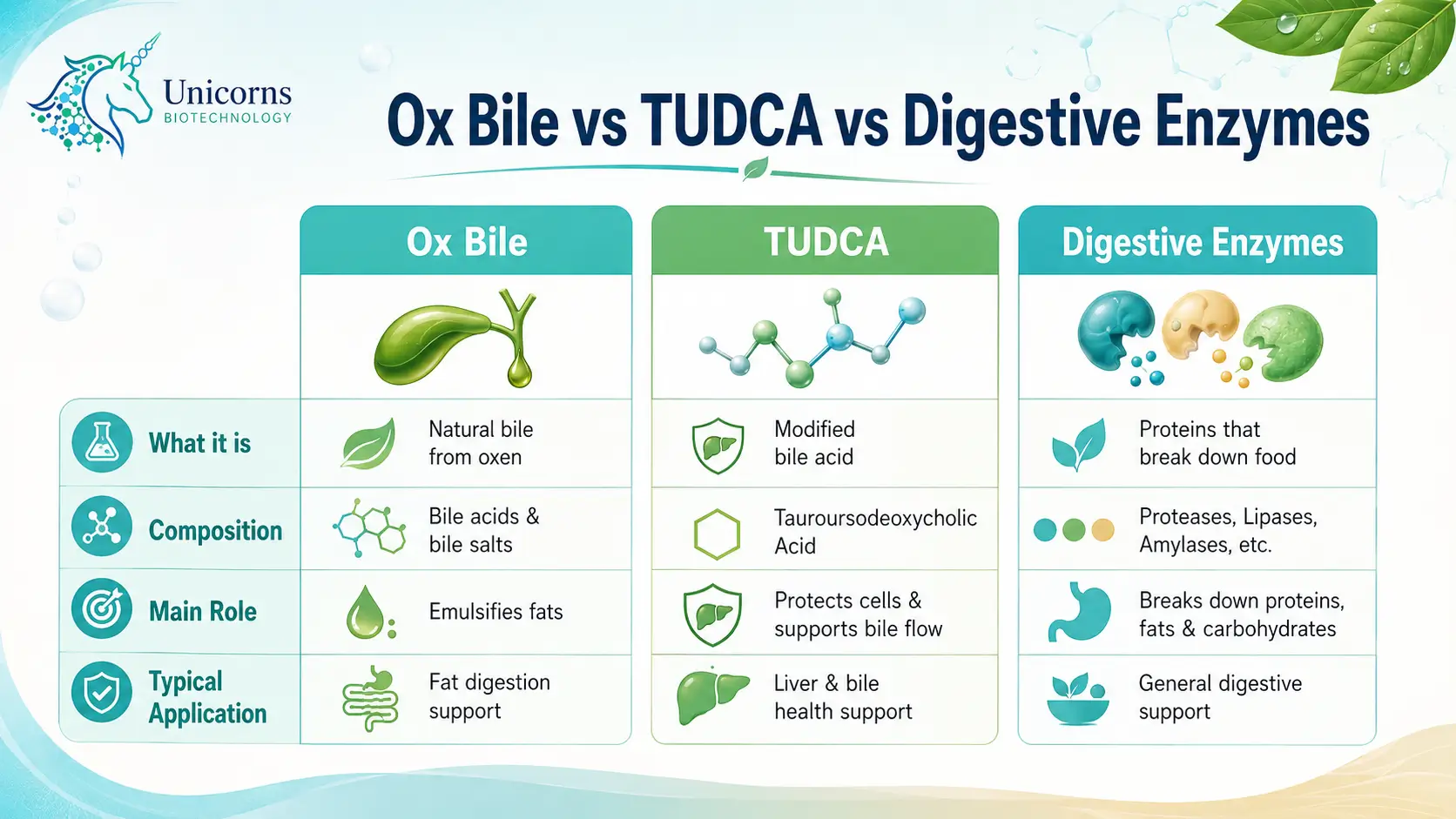
One of the biggest problems in online articles about ox bile benefits is that research on TUDCA is often presented as though it directly proves benefits of ox bile.
It does not.
TUDCA, or tauroursodeoxycholic acid, is one defined taurine-conjugated bile acid.
Ox bile extract is a complex bovine-derived mixture containing multiple bile acids, bile salts, and other components.
Unicorns Biotechnology supplies both bulk Ox Bile Extract Powder and TUDCA Powder, but they are chemically and functionally different ingredients.
21. Neurological and neuroprotective effects
TUDCA and UDCA have been extensively investigated for cytoprotective and neuroprotective mechanisms.
Research has explored effects involving apoptosis, endoplasmic reticulum stress, mitochondrial function, inflammation, and oxidative stress.
These findings are scientifically interesting but should be described as TUDCA or UDCA evidence, not established benefits of whole ox bile.
22. Eye and retinal health
TUDCA and UDCA have also been investigated in retinal disease models.
A 2019 review summarized antiapoptotic, anti-inflammatory, and antioxidant effects observed in experimental retinal research, while also noting that translation into clinical therapy remains limited. (PubMed)
This provides a biological basis for studying those specific bile acids.
It does not prove that a general ox bile supplement supports vision or prevents retinal disease.
23. Cellular resilience, ER stress and mitochondrial function
TUDCA is frequently studied as a chemical chaperone in research involving endoplasmic reticulum stress, protein folding, apoptosis, and cellular resilience.
Again, these mechanisms belong primarily to research on the defined TUDCA molecule.
They should not be turned into a broad marketing claim that all bovine bile extracts improve cellular resilience.
24. Insulin and pancreatic beta-cell effects
Your source research includes a 2019 study in which TUDCA improved beta-cell mass and reduced insulin degradation in mice with early-stage type 1 diabetes.
The study is real, but it was an animal study using TUDCA. (PubMed)
It should therefore not be summarized as:
“Ox bile improves diabetes.”
The more accurate interpretation is that specific bile acids are being studied for metabolic and cellular signaling effects, while direct evidence for ordinary ox bile supplements remains much narrower.
Popular Ox Bile Benefits That Are Not Yet Proven
25. Does ox bile cause weight loss?
There is no convincing clinical evidence showing that standard ox bile supplements produce meaningful weight loss.
Bile acids are involved in lipid digestion and metabolic signaling, but digesting dietary fat is not the same as burning stored body fat.
The 2006 TGR5 research showed that bile acids can influence energy expenditure under experimental conditions. (PubMed)
That does not establish ox bile as a weight-loss supplement.
26. Does ox bile burn fat?
No evidence shows that ox bile directly “burns” body fat.
Ox bile can participate in digestion of dietary fat by supplying bile-derived surfactants. This happens inside the intestinal lumen.
Body-fat loss depends primarily on whole-body energy balance and metabolic regulation.
These are entirely different processes.
27. Does ox bile help with SIBO?
Bile acids have antimicrobial properties and interact strongly with intestinal microbes, and low intestinal bile acid availability may alter microbial ecology. (PubMed Central (PMC))
This makes the relationship between bile and small intestinal bacterial overgrowth biologically interesting.
However, direct clinical evidence supporting ox bile supplements as a reliable treatment for SIBO is insufficient.
SIBO has multiple potential causes, including motility disorders, anatomical changes, medications, and underlying gastrointestinal disease.
Ox bile should not be presented as a proven SIBO therapy.
28. Does ox bile help constipation?
There is no strong evidence supporting ox bile as a general constipation treatment.
In fact, bile acids entering the colon can stimulate secretion and motility. Excessive colonic bile acids are associated with bile acid diarrhea, urgency, and loose stools. (Wiley Online Library)
Using ox bile simply to stimulate bowel movements is therefore not an evidence-based general recommendation.
29. Does ox bile increase stomach acid?
No.
Stomach acid and bile are separate digestive secretions.
Hydrochloric acid is produced by gastric parietal cells and functions in the stomach.
Bile is produced by the liver and acts primarily in the small intestine.
This is also why betaine HCl and ox bile are sometimes combined in digestive products. They target different digestive environments and are not substitutes for each other.
30. Does ox bile improve thyroid disease?
No clinical evidence currently establishes ox bile as a treatment for hypothyroidism or other thyroid disease.
The TGR5 and deiodinase pathway described earlier is mechanistically interesting, but it should not be translated into a claim that ox bile corrects thyroid hormone levels. (PubMed)
31. Does ox bile treat fatty liver?
No.
Bile acid receptors are actively studied in fatty liver disease, but ox bile itself has not been established as a clinical treatment for MASLD, NAFLD, or NASH. (PubMed)
What Ox Bile Does Not Do
Understanding what ox bile does not do is just as useful as listing potential benefits.
Ox bile is not a pancreatic enzyme and does not replace lipase. It does not increase gastric hydrochloric acid. It is not chemically identical to TUDCA or UDCA.
It has not been proven to cause weight loss, treat fatty liver, cure SIBO, correct thyroid disease, or dissolve gallstones.
It also should not be described as a universal “detox” ingredient.
These distinctions help separate established digestive physiology from marketing claims that extend beyond current evidence.
When Might Ox Bile Be Relevant?
Ox bile is most logically considered in contexts involving bile acids and fat digestion.
Interest often arises in people with impaired fat digestion, medically documented bile acid depletion, selected short bowel conditions, digestive changes after gallbladder removal, or intolerance of fatty meals.
However, symptoms such as greasy stools, diarrhea, bloating, abdominal discomfort, and unexplained weight loss should not automatically be interpreted as “low bile.”
Those symptoms can also indicate pancreatic disease, bile acid diarrhea, intestinal disease, biliary obstruction, or other conditions.
The direct human ox bile studies are useful precisely because they involved patients in whom bile acid depletion was a known part of the problem. (PubMed)
Ox Bile vs Pancreatic Insufficiency
Poor fat digestion can occur for very different reasons.
If there are not enough effective bile acids in the intestine, emulsification and micellar solubilization can become inadequate.
If pancreatic lipase secretion is insufficient, triglycerides cannot be hydrolyzed efficiently even when bile acids are present.
| Factor | Bile Acid Problem | Pancreatic Enzyme Problem |
|---|---|---|
| Main issue | Inadequate emulsification or micellar solubilization | Inadequate enzymatic hydrolysis |
| Relevant ingredient | Ox bile / bile salts | Pancreatin / lipase |
| Main digestive role | Disperses and solubilizes fat | Chemically digests triglycerides |
| Symptoms may include | Fat malabsorption, greasy stools | Fat malabsorption, greasy stools |
| Interchangeable? | No | No |
This explains why symptoms alone cannot reliably determine whether someone needs bile acids, pancreatic enzymes, or neither.
Ox Bile Dosage and Timing
How much ox bile should you take?
There is no single scientifically established dose of ox bile that is appropriate for everyone.
Commercial products can differ substantially in:
total bile acid content, cholic acid assay, concentration, capsule size, purification, and formulation.
A label stating “500 mg ox bile” therefore does not necessarily tell you the amount of active bile acids present unless the product is standardized.
The clinical studies discussed earlier also used specialized patient populations and doses that should not be copied as general supplement recommendations.
For consumers, the appropriate approach is to follow the finished product directions and seek professional advice when digestive symptoms are persistent or related to a medical condition.
When should ox bile be taken?
Ox bile supplements are commonly formulated for use around meals because endogenous bile normally participates in digestion after food, especially dietary fat, enters the small intestine.
That does not mean there is one universal timing rule for every formulation.
The appropriate timing depends on the product, concentration, dose, and intended use.
Does more ox bile mean better fat digestion?
No.
Once adequate bile acid concentrations are present for normal fat digestion, simply adding more does not guarantee additional benefit.
Excess bile acids reaching the colon can cause the opposite of what a user wants, including diarrhea and urgency.
Ox Bile Side Effects and Safety
Ox bile is biologically active, and side effects are possible.
The most relevant adverse effects are gastrointestinal. These may include diarrhea, loose stools, abdominal cramping, stomach discomfort, nausea, urgency, or changes in bowel habits.
One of the clearest demonstrations comes from the small 2004 short bowel study. Natural conjugated bile acids from ox bile reduced steatorrhea in two patients but substantially increased diarrhea. (PubMed)
Why can ox bile cause diarrhea?
Bile acids that are not adequately absorbed in the small intestine can enter the colon.
High colonic bile acid concentrations stimulate secretion and alter motility, which can produce watery diarrhea and urgency. This phenomenon is central to bile acid diarrhea. (PubMed Central (PMC))
This is why the idea that “more bile is always better” is incorrect.
Who should be cautious with ox bile?
People with unexplained persistent diarrhea, known liver or biliary disease, suspected bile duct obstruction, inflammatory gastrointestinal disease, recent gastrointestinal surgery, pregnancy, breastfeeding, or significant medication use should seek appropriate medical advice before self-treating with bile-derived supplements.
Persistent steatorrhea, pale stools, jaundice, significant abdominal pain, unexplained weight loss, or nutritional deficiency also warrants medical evaluation.
Ox Bile vs TUDCA
Ox bile and TUDCA belong to the same broad bile-acid world, but they are not the same ingredient.
| Feature | Ox Bile | TUDCA |
|---|---|---|
| Ingredient type | Natural bovine bile extract | Defined bile acid |
| Chemical identity | Multi-component mixture | Tauroursodeoxycholic acid |
| Composition | Multiple bile acids, bile salts and minor bile components | One defined molecule |
| Main established rationale | Fat emulsification and digestive formulation | Specialized bile-acid research and formulations |
| Research base | Limited direct human ox bile studies | Broader mechanistic and disease-specific research |
| Typical supplement positioning | Digestive support | Specialized bile-acid products |
Manufacturers should not treat whole ox bile and TUDCA as interchangeable raw materials.
For defined TUDCA specifications, see Tauroursodeoxycholic Acid Powder.
Ox Bile vs Digestive Enzymes
Ox bile is often grouped with digestive enzymes because the ingredients appear in the same formulas.
Chemically, however, they are different.
Ox bile provides bile-derived surfactants.
Lipase digests triglycerides.
Protease hydrolyzes proteins.
Amylase hydrolyzes starch.
Pepsin participates in protein digestion in the acidic stomach.
Betaine HCl is used in formulas designed around gastric acidity.
Pancreatin supplies several pancreatic enzyme activities.
A well-designed formula may combine these ingredients because they work at different stages of digestion.
Ox Bile vs Porcine Bile
Bovine bile and porcine bile are both animal-derived bile materials, but species differences influence bile acid composition.
Porcine bile has characteristic bile acid profiles that differ from bovine bile. Ingredient buyers should therefore avoid treating porcine bile extract and ox bile extract as interchangeable materials simply because both come from animal bile.
Unicorns Biotechnology supplies both Porcine Bile Extract and bovine ox bile extract for different ingredient and formulation requirements. (Henan Unicorns Biotechnology Co., Ltd.)
For applications requiring a concentrated commercial bile-acid mixture rather than whole bile extract, see Bile Acids Powder.
What to Look for in an Ox Bile Supplement or Bulk Ox Bile Ingredient
For supplement manufacturers and ingredient distributors, “ox bile” alone is not a sufficient raw-material specification.
The bovine source and manufacturing process should be clearly documented. Buyers should also review the assay used to standardize the ingredient.
Cholic acid content is one common marker, while more detailed projects may require chromatographic analysis of the overall bile acid profile.
A useful Certificate of Analysis should address relevant identity and quality parameters such as assay, appearance, moisture, particle size, heavy metals, and microbiological limits. Depending on the production process and destination market, residual solvent testing may also be requested.
Animal-derived materials require additional sourcing controls. Raw-material traceability, animal-origin statements, and BSE/TSE documentation may be particularly important for international buyers.
Unicorns Biotechnology’s bulk Ox Bile Extract Powder is supplied in standardized grades, with cholic acid assay, quality documentation, bulk packaging, custom particle size, third-party testing options, and OEM support for manufacturers. (Henan Unicorns Biotechnology Co., Ltd.)
For companies sourcing a broader animal-derived ingredient portfolio, Unicorns also supplies bulk glandular extracts and bile-derived ingredients. (Henan Unicorns Biotechnology Co., Ltd.)
Frequently Asked Questions About Ox Bile Benefits
What are the main benefits of ox bile?
The strongest evidence-based rationale is support for dietary fat digestion and absorption. Bile acids emulsify fats, support mixed micelle formation, and help absorb fatty acids, cholesterol, and fat-soluble vitamins. Direct ox bile studies also show improved fat absorption in selected patients with severe bile acid depletion. (PubMed)
What is ox bile good for?
Ox bile is mainly used in digestive formulations designed around bile acids, fat digestion, and lipid absorption. Broader claims involving weight loss, thyroid function, fatty liver, or neurological health are much less directly supported.
What does ox bile do in the body?
Its bile acids and bile salts behave as biological surfactants in the intestine. They help disperse fats, support pancreatic lipase activity indirectly by increasing the lipid-water interface, and participate in mixed micelle formation.
What is ox bile made of?
Ox bile contains a mixture of bile acids, conjugated bile salts, phospholipids, cholesterol, bile pigments, electrolytes, and other naturally occurring bile constituents.
What is cow bile?
Cow bile and ox bile refer to bovine bile. Commercial ox bile supplements usually contain dried or processed bovine bile extract rather than fresh liquid bile.
Is ox bile the same as bile salts?
No. Ox bile contains bile salts, but it is a broader natural mixture. A commercial bile salts product may contain a narrower or more purified group of compounds.
Is ox bile the same as bile acids?
No. Bile acids are individual chemical molecules or a chemical class. Ox bile is a bovine bile material containing multiple bile acids and other constituents.
Is ox bile a digestive enzyme?
No. Ox bile helps emulsify and solubilize dietary fat. Digestive enzymes such as lipase chemically hydrolyze nutrients.
How does ox bile help digest fats?
Bile salts surround and disperse dietary fat droplets, increasing surface area and supporting the formation of mixed micelles. This helps pancreatic lipase act efficiently and helps lipid digestion products reach the intestinal absorptive surface.
Does ox bile improve fat absorption?
It can in specific circumstances. Human case reports and small studies show that natural ox bile or conjugated bile acids can improve fat absorption when the bile acid pool is severely depleted. (PubMed)
Does ox bile help absorb vitamins A, D, E and K?
Normal bile acid activity is important for absorption of the fat-soluble vitamins A, D, E, and K. Direct evidence that routine ox bile supplementation improves vitamin status in healthy adults is much more limited.
Does ox bile help absorb omega-3 fats?
Bile acids participate generally in intestinal lipid digestion and absorption, which includes dietary fatty acids. However, clinical trials have not established ox bile supplementation as a specific method for improving omega-3 status.
Can ox bile help digest a high-fat meal?
It is physiologically plausible when bile acid availability is limiting fat digestion. It should not be assumed that everyone experiences a benefit from taking additional bile with a fatty meal.
Does ox bile help bloating?
Possibly in some people whose symptoms relate to impaired fat digestion, but bloating has many potential causes. Ox bile is not an established general treatment for bloating.
Does ox bile help steatorrhea?
Direct studies suggest it can help selected patients when steatorrhea is caused by severe bile acid depletion. It may also worsen diarrhea if excessive bile acids reach the colon. (PubMed)
Does ox bile help after gallbladder removal?
Some people investigate ox bile for digestive symptoms after gallbladder removal, but not everyone needs it. The liver continues to produce bile after cholecystectomy. (NIDDK)
Do you need ox bile without a gallbladder?
Not automatically. Many people digest food normally without a gallbladder. Persistent symptoms should be assessed rather than assumed to indicate a need for bile supplements.
Does ox bile support gallbladder health?
Bile acids are part of normal gallbladder physiology, but taking ox bile has not been proven to prevent or treat gallbladder disease.
Does ox bile increase bile flow?
Taking ox bile supplies bile-derived compounds to the intestinal tract. It should not be equated with increasing hepatic bile production or treating impaired bile flow.
Does ox bile dissolve gallstones?
Ox bile has not been established as a gallstone-dissolving treatment. Evidence for oral dissolution therapy applies mainly to specific bile acids such as UDCA in selected circumstances. (PubMed)
Does ox bile support liver health?
Normal bile acid metabolism is integral to liver physiology, cholesterol handling, and biliary excretion. Direct evidence that general ox bile supplementation improves liver disease is insufficient.
Does ox bile detox the liver?
Bile is involved in normal excretion of bilirubin, cholesterol, and certain metabolites. Broad “detox” claims for supplemental ox bile are not supported by strong direct clinical evidence.
Does ox bile help fatty liver?
Bile-acid signaling is relevant to fatty liver biology, but ordinary ox bile has not been established as a treatment for MASLD, NAFLD, or NASH. (PubMed)
Does ox bile lower cholesterol?
There is no good evidence that ordinary ox bile supplements consistently lower blood cholesterol. Bile acids are closely involved in cholesterol metabolism, but that relationship should not be converted into a general cholesterol-lowering claim.
Does ox bile improve blood sugar?
A specialized human study of ileocolonic conjugated bile acid delivery improved several glucose-related parameters, but this intervention was not equivalent to a standard ox bile capsule. (ScienceDirect)
Does ox bile increase GLP-1?
Targeted conjugated bile acid delivery increased postprandial GLP-1 in a human trial. Whether ordinary oral ox bile supplements produce a clinically meaningful GLP-1 effect has not been established. (PubMed)
Does ox bile improve insulin sensitivity?
Bile-acid signaling is related to insulin and glucose metabolism, but direct evidence supporting ordinary ox bile supplements for improving insulin sensitivity remains insufficient.
Does ox bile help with weight loss?
Ox bile is not an established weight-loss supplement. Metabolic signaling research involving bile acids does not prove that ordinary ox bile causes clinically meaningful weight loss.
Does ox bile burn body fat?
No. Helping digest dietary fat in the intestine is not the same as increasing loss of stored body fat.
Does ox bile increase metabolism?
Bile acids can affect metabolic signaling through TGR5 and other pathways, but this does not establish a reliable metabolism-boosting effect from standard ox bile supplements. (PubMed)
Does ox bile support thyroid function?
Bile acids can influence local thyroid hormone activation through a TGR5-related pathway under experimental conditions. Clinical benefit from ox bile supplementation for thyroid disease has not been demonstrated. (PubMed)
Does ox bile increase T3?
There is no good clinical evidence showing that ordinary ox bile supplements reliably increase circulating T3 in humans.
Does ox bile affect the gut microbiome?
Bile acids and the microbiome strongly influence each other. However, the specific effects of routine ox bile supplementation on microbiome diversity and clinical outcomes are not well established. (PubMed Central (PMC))
Does ox bile kill bad bacteria?
Bile acids have antimicrobial properties, but the gut ecosystem is more complex than “good” and “bad” bacteria. Ox bile should not be marketed as an antimicrobial treatment.
Does ox bile help with SIBO?
There is not enough direct clinical evidence to consider ox bile a proven treatment for SIBO.
Does ox bile help constipation?
There is insufficient evidence to recommend ox bile as a general constipation treatment. Excess bile acids can actually cause loose stools and diarrhea.
Can ox bile cause diarrhea?
Yes. Excess bile acids reaching the colon can stimulate fluid secretion and motility, contributing to diarrhea and urgency. (Wiley Online Library)
Can ox bile cause stomach pain?
Some users may experience abdominal discomfort or cramping. Persistent or severe abdominal pain should not be attributed automatically to a supplement and warrants appropriate evaluation.
Can ox bile cause nausea?
Nausea and gastrointestinal discomfort are possible with bile-derived supplements, particularly when the amount or formulation is poorly tolerated.
What are the side effects of ox bile?
The most relevant potential side effects include diarrhea, loose stools, urgency, abdominal discomfort, cramping, nausea, and changes in bowel habits.
Is ox bile safe?
Safety depends on the individual, dose, formulation, underlying health conditions, and product quality. Direct clinical evidence is limited, and people with significant gastrointestinal, liver, or biliary conditions should seek appropriate medical guidance.
Who should not take ox bile?
There is no simple universal list appropriate for every product. People with unexplained diarrhea, biliary obstruction, significant liver or intestinal disease, recent gastrointestinal surgery, pregnancy, breastfeeding, or relevant medications should discuss supplementation with a qualified healthcare professional.
Can you take ox bile every day?
There is no universal evidence-based recommendation that daily ox bile is appropriate for everyone. Long-term use should depend on the reason for taking it, the standardized bile acid content, tolerance, and professional advice where appropriate.
When should ox bile be taken?
Commercial digestive formulas commonly position ox bile around meals because bile physiologically participates in post-meal fat digestion. Users should follow the directions for the specific finished product.
Should ox bile be taken with meals?
Many products are designed for meal-associated use, particularly meals containing dietary fat. This does not establish one universal timing rule for all formulations.
How much ox bile should you take?
There is no universal dose. Ox bile products differ in total bile acid content and standardization, so milligram amounts cannot be compared reliably without understanding the assay.
How long does ox bile take to work?
There is no established universal onset time. Bile acids act within the digestive tract, so any digestive effect would be related to the meal and formulation, but clinical responses vary.
What happens when you start taking ox bile?
Some people may notice changes in digestion or bowel movements. Excess intake can cause loose stools or diarrhea, while people with documented bile-acid depletion may experience improved fat absorption.
Can too much ox bile be harmful?
Excessive bile acids can irritate the gastrointestinal tract and contribute to diarrhea. More is not automatically better.
Is more ox bile better for digestion?
No. Normal digestion requires adequate bile acid concentrations, not unlimited amounts.
What is the difference between ox bile and TUDCA?
Ox bile is a natural multi-component bovine bile extract. TUDCA is one specific taurine-conjugated bile acid. Research on TUDCA should not automatically be attributed to ox bile.
What is the difference between ox bile and UDCA?
UDCA, or ursodeoxycholic acid, is a specific bile acid used in defined medical and research contexts. Ox bile contains a broader bovine bile mixture and is not an equivalent substitute.
Which is better, ox bile or digestive enzymes?
Neither is universally “better.” They perform different functions. Ox bile supports fat emulsification and micelle formation, while enzymes chemically digest nutrients.
Can ox bile be taken with lipase?
Many commercial digestive formulations combine bile-derived ingredients and lipase because their mechanisms complement each other. Individual suitability should be assessed from the specific finished formula.
Can ox bile be taken with pancreatin?
Ox bile and pancreatin commonly appear together in digestive formulations. Pancreatin supplies enzymes, while ox bile supplies bile-derived compounds.
Can ox bile be taken with betaine HCl?
Some digestive formulas contain both, but they act in different parts of digestion. Betaine HCl is stomach-focused, while bile acids act primarily in the small intestine.
What is the difference between ox bile and porcine bile?
Ox bile is bovine in origin. Porcine bile comes from pigs and has a different species-specific bile acid profile. Ingredient buyers should compare source, assay, and bile acid composition rather than treating them as interchangeable.
Are all ox bile supplements the same?
No. Products can differ in bovine source, cholic acid assay, total bile acid concentration, conjugated bile acid profile, purification level, particle size, and quality controls.
Are ox bile benefits scientifically proven?
Some are better supported than others.
The role of bile acids in fat emulsification, mixed micelle formation, lipid absorption, and absorption of fat-soluble nutrients is firmly established. Small human studies and case reports also show that ox bile can improve fat absorption in selected patients with severe bile acid depletion. (PubMed)
Broader claims involving the brain, retina, thyroid, fatty liver, weight loss, glucose metabolism, or cellular resilience are much less direct. Many arise from research on endogenous bile-acid signaling or specific molecules such as TUDCA and UDCA.
That evidence should not be presented as proof that ordinary ox bile supplements produce the same effects.
Conclusion: What Are the Most Credible Ox Bile Benefits?
The strongest case for ox bile is straightforward: bile acids are central to fat digestion and lipid absorption.
Their amphipathic structure helps emulsify dietary fat and form mixed micelles, making fatty acids, monoglycerides, cholesterol, and fat-soluble vitamins easier to absorb.
There is also limited but valuable direct human evidence. Ox bile and natural conjugated bile acids have improved severe fat malabsorption and steatorrhea in selected patients whose bile acid pool was depleted after extensive intestinal surgery. (PubMed)
Beyond those digestive benefits, the evidence needs more careful interpretation.
Bile acids undoubtedly participate in the gut microbiome, FXR and TGR5 signaling, GLP-1 release, cholesterol metabolism, glucose homeostasis, energy metabolism, and communication along the gut-liver axis. Specific bile acids such as TUDCA and UDCA also have much broader research portfolios.
But those findings do not make every effect a proven ox bile benefit.
For supplement manufacturers and ingredient distributors, this distinction is especially important. A standardized ox bile extract should be evaluated by its actual bovine source, bile acid composition, assay, quality documentation, and intended formulation rather than by generalized claims about the entire bile-acid family.
Unicorns Biotechnology manufactures bulk Ox Bile Extract Powder for supplement manufacturers, ingredient distributors, contract manufacturers, and private label projects, with standardized cholic acid grades, bulk packaging, quality testing, technical documentation, and custom formulation support.
References
- Arab, J. P., Karpen, S. J., Dawson, P. A., Arrese, M., & Trauner, M. (2017). Bile acids and nonalcoholic fatty liver disease: Molecular insights and therapeutic perspectives. Hepatology, 65(1), 350-362. doi: 10.1002/hep.28709.
- Bronczek, G. A., Vettorazzi, J. F., Soares, G. M., Kurauti, M. A., Santos, C., Bonfim, M. F., Carneiro, E. M., Balbo, S. L., Boschero, A. C., & Costa Júnior, J. M. (2019). The bile acid TUDCA improves beta-cell mass and reduces insulin degradation in mice with early-stage of type-1 diabetes. Frontiers in Physiology, 10, 561. doi: 10.3389/fphys.2019.00561.
- Calderon, G., McRae, A., Rievaj, J., Davis, J., Zandvakili, I., Linker-Nord, S., Burton, D., Roberts, G., Reimann, F., Gedulin, B., Vella, A., LaRusso, N. F., Camilleri, M., Gribble, F. M., & Acosta, A. (2020). Ileo-colonic delivery of conjugated bile acids improves glucose homeostasis via colonic GLP-1-producing enteroendocrine cells in human obesity and diabetes. EBioMedicine, 55, 102759. doi: 10.1016/j.ebiom.2020.102759.
- Camilleri, M. (2014). Advances in understanding of bile acid diarrhea. Expert Review of Gastroenterology & Hepatology, 8(1), 49-61. doi: 10.1586/17474124.2014.851599.
- Camilleri, M., & Nurko, S. (2022). Bile acid diarrhea in adults and adolescents. Neurogastroenterology & Motility, 34(4), e14287. doi: 10.1111/nmo.14287.
- Chiang, J. Y. L., & Ferrell, J. M. (2019). Bile acids as metabolic regulators and nutrient sensors. Annual Review of Nutrition, 39, 175-200. doi: 10.1146/annurev-nutr-082018-124344.
- Fordtran, J. S., Bunch, F., & Davis, G. R. (1982). Ox bile treatment of severe steatorrhea in an ileectomy-ileostomy patient. Gastroenterology, 82(3), 564-568. doi: 10.1016/S0016-5085(82)80408-3.
- Gruy-Kapral, C., Little, K. H., Fordtran, J. S., Meziere, T. L., Hagey, L. R., & Hofmann, A. F. (1999). Conjugated bile acid replacement therapy for short-bowel syndrome. Gastroenterology, 116(1), 15-21. doi: 10.1016/S0016-5085(99)70223-4.
- Hall, L., Halle-Smith, J., Evans, R., Toogood, G., Wiggins, T., Markar, S. R., Kapoulas, S., Super, P., Tucker, O., & McKay, S. C. (2023). Ursodeoxycholic acid in the management of symptomatic gallstone disease: Systematic review and clinician survey. BJS Open, 7(2), zrac152. doi: 10.1093/bjsopen/zrac152.
- Kapral, C., Wewalka, F., Praxmarer, V., Lenz, K., & Hofmann, A. F. (2004). Conjugated bile acid replacement therapy in short bowel syndrome patients with a residual colon. Zeitschrift für Gastroenterologie, 42(7), 583-589. doi: 10.1055/s-2004-813059.
- Little, K. H., Schiller, L. R., Bilhartz, L. E., & Fordtran, J. S. (1992). Treatment of severe steatorrhea with ox bile in an ileectomy patient with residual colon. Digestive Diseases and Sciences, 37(6), 929-933. doi: 10.1007/BF01300393.
- Perino, A., Demagny, H., Velazquez-Villegas, L., & Schoonjans, K. (2021). Molecular physiology of bile acid signaling in health, disease, and aging. Physiological Reviews, 101(2), 683-731. doi: 10.1152/physrev.00049.2019.
- Ridlon, J. M., Kang, D. J., Hylemon, P. B., & Bajaj, J. S. (2014). Bile acids and the gut microbiome. Current Opinion in Gastroenterology, 30(3), 332-338. doi: 10.1097/MOG.0000000000000057.
- Ticho, A. L., Malhotra, P., Dudeja, P. K., Gill, R. K., & Alrefai, W. A. (2019). Bile acid receptors and gastrointestinal functions. Liver Research, 3(1), 31-39. doi: 10.1016/j.livres.2019.01.001.
- Watanabe, M., Houten, S. M., Mataki, C., Christoffolete, M. A., Kim, B. W., Sato, H., Messaddeq, N., Harney, J. W., Ezaki, O., Kodama, T., Schoonjans, K., Bianco, A. C., & Auwerx, J. (2006). Bile acids induce energy expenditure by promoting intracellular thyroid hormone activation. Nature, 439(7075), 484-489. doi: 10.1038/nature04330.