
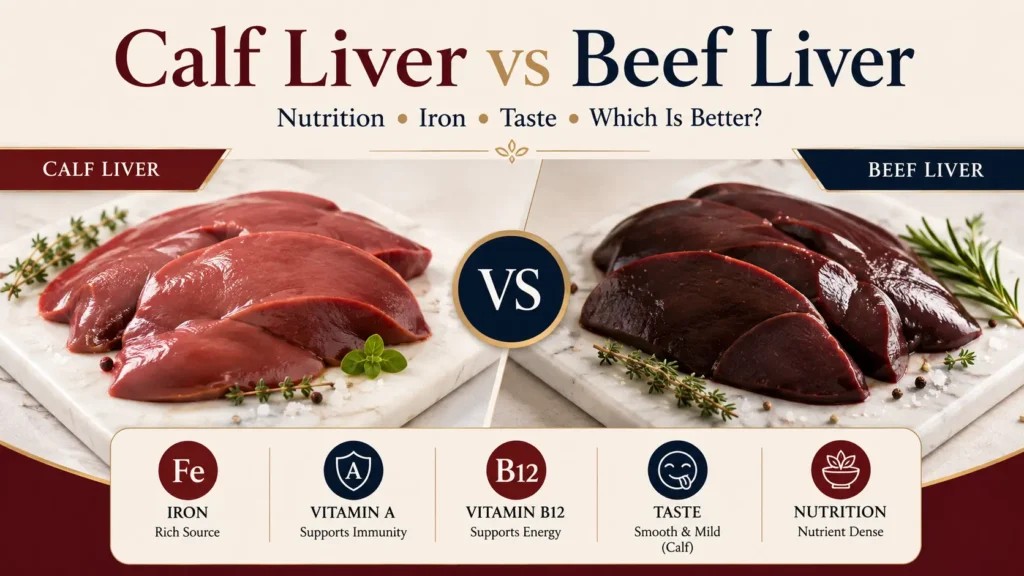
When comparing Calf Liver vs Beef Liver, the main differences are not simply “young liver versus old liver.” Both are highly nutrient-dense bovine organ meats rich in protein, vitamin A, vitamin B12, iron, copper and other micronutrients, but their taste, texture, nutrient composition, price and commercial availability can differ. Matched USDA raw-liver data show that calf liver is higher in some nutrients, including iron, vitamin A, copper and zinc, while beef liver is higher in others, including folate, selenium, riboflavin and choline. Calf liver is generally preferred for its milder taste and tender texture, while mature beef liver is more widely used for beef liver powder, capsules and commercial organ supplement production.
If you are comparing liver with heart, kidney, spleen and other organs rather than comparing cattle ages, see our guide to the best organ meats and why beef liver stands out.
Calf Liver vs Beef Liver: Quick Answer
Nutrition: Both are exceptionally nutrient-dense. Neither is higher in every nutrient.
Iron: In matched USDA raw records, calf/veal liver provides approximately 6.4 mg of iron per 100 g, compared with 4.9 mg per 100 g for raw beef liver.
Vitamin A: The USDA records used here show substantially more vitamin A in calf liver, although both contain very high amounts of preformed vitamin A.
Vitamin B12: They are almost identical, at approximately 59 to 60 mcg per 100 g.
Taste: Calf liver is typically milder and more delicate. Beef liver usually has a stronger, more mineral liver flavor.
Texture: Calf liver is generally softer and more tender; mature beef liver is typically firmer.
Weight loss: Neither directly causes weight loss. Their calorie and protein contents are very similar.
Best overall: Choose calf liver primarily for taste and tenderness. Choose beef liver for its broad availability, value, and suitability for commercial supplement manufacturing. Nutritionally, the better choice depends on the particular nutrient you are comparing.
Calf Liver vs Beef Liver at a Glance
| Comparison | Calf Liver | Beef Liver |
|---|---|---|
| Source | Younger cattle | Older/mature cattle |
| Common alternative name | Veal liver, calves’ liver | Bovine liver, cow liver |
| Flavor | Generally milder | Stronger, more mineral |
| Texture | More tender and delicate | Firmer and denser |
| Calories, raw per 100 g | 140 kcal | 135 kcal |
| Protein | 19.93 g | 20.36 g |
| Iron | 6.4 mg | 4.9 mg |
| Vitamin A | 11,707 mcg RAE | 4,968 mcg RAE |
| Vitamin B12 | 59.85 mcg | 59.3 mcg |
| Copper | 11.865 mg | 9.755 mg |
| Folate | 125 mcg DFE | 290 mcg DFE |
| Zinc | 12.02 mg | 4.0 mg |
| Choline | 310 mg | 333.3 mg |
| Retail positioning | Often specialty/premium | More broadly available |
| Supplement use | Less common | Very common |
| Bulk powder availability | More limited | Better suited to commercial scale |
Data basis: USDA FoodData Central/SR Legacy entries for raw veal liver and raw beef liver, normalized to 100 g.
What Is Calf Liver?
Calf liver is bovine liver collected from younger cattle. It is commonly referred to as veal liver or calves’ liver, although legal definitions and age classifications can vary between countries and production systems.
USDA describes veal as meat from a calf or young beef animal. In its U.S. consumer guidance, special-fed veal calves are commonly marketed at approximately 16 to 18 weeks of age. This should not be interpreted as a universal international definition of every product sold as “calf liver.”
Compared with mature beef liver, calf liver is generally:
- lighter in color
- softer in texture
- milder in flavor
- less intensely mineral tasting
- sold as a more specialized culinary product
The difference is therefore relevant not only nutritionally but also sensorially.
Is Calf Liver the Same as Veal Liver?
In ordinary food terminology, calf liver and veal liver usually refer to the same general category: liver from young cattle.
However, “veal,” “calf,” and “young beef” can have different regulatory or commercial definitions depending on the country. When purchasing a commercial ingredient, the species, animal source, country of origin, and raw-material documentation are more reliable identifiers than the marketing name alone.
What Is Beef Liver?
Beef liver generally refers to liver obtained from cattle marketed as beef rather than veal. It is an edible offal or variety meat and one of the most nutrient-dense parts of the animal.
Beef liver is notable for its concentrations of:
- vitamin A
- vitamin B12
- riboflavin
- folate
- iron
- copper
- zinc
- selenium
- choline
- high-quality protein
Modern analytical research on U.S. beef offal confirms that liver and other edible organs provide substantial quantities of essential vitamins, minerals, amino acids and other nutrients.
Beef liver is also considerably more established as a supplement ingredient. It can be processed into bovine liver powder, desiccated liver, freeze-dried liver capsules, tablets and multi-organ formulations.
How We Compared Calf Liver and Beef Liver Nutrition
This methodology matters because many online comparisons mix different datasets.
A raw calf liver value cannot fairly be compared with fried beef liver, and a cooked-liver value should not be copied onto freeze-dried liver powder.
For this article, the principal comparison uses:
Raw veal/calf liver vs raw beef liver
100 g vs 100 g
USDA FoodData Central / SR Legacy data
USDA FoodData Central is managed by the U.S. Department of Agriculture’s Agricultural Research Service and serves as a major U.S. food-composition database.
An Important Limitation
The numbers below represent representative food composition records. They do not constitute a controlled experiment in which animal age was the only variable.
Nutrient composition may also vary with:
- breed
- diet
- production system
- animal health
- geography
- tissue sampling
- analytical method
- moisture
- storage
- cooking
- processing
Therefore, if the USDA record shows more zinc in calf liver than beef liver, for example, we can accurately say that the USDA calf-liver entry contains more zinc. We should not automatically conclude that youth alone caused the difference.
This distinction is important for scientifically responsible comparisons of nutrition and for commercial formulation.
Calf Liver vs Beef Liver Nutrition Facts per 100 g
The following table uses matched raw USDA liver data.
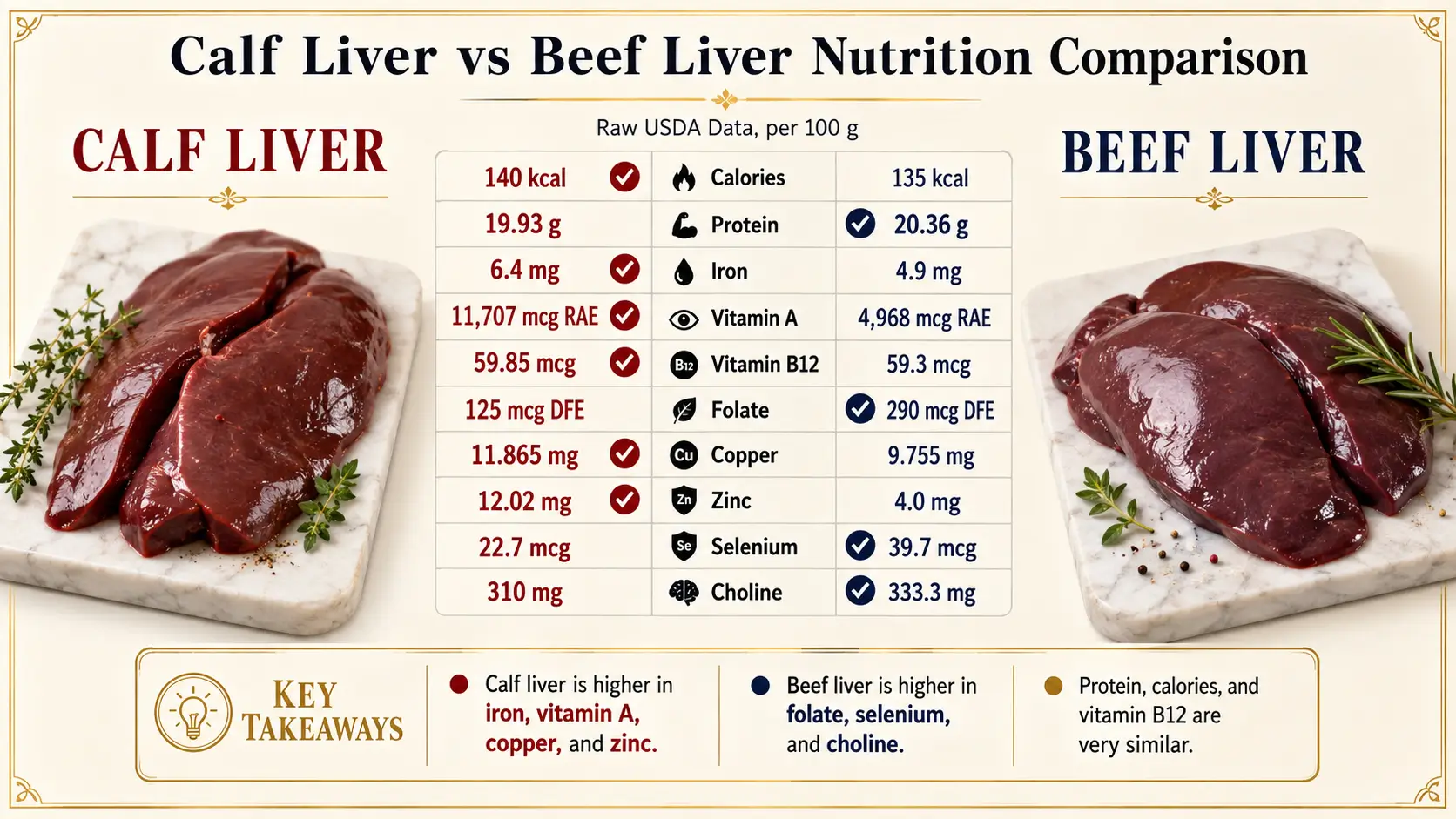
| Nutrient | Raw Calf/Veal Liver | Raw Beef Liver | Higher in USDA Records |
|---|---|---|---|
| Calories | 140 kcal | 135 kcal | Similar |
| Protein | 19.93 g | 20.36 g | Beef liver, slightly |
| Total fat | 4.85 g | 3.63 g | Calf liver |
| Saturated fat | 1.56 g | 1.23 g | Calf liver |
| Carbohydrate | 2.91 g | 3.89 g | Beef liver |
| Cholesterol | 334 mg | 275 mg | Calf liver |
| Vitamin A | 11,707 mcg RAE | 4,968 mcg RAE | Calf liver |
| Vitamin B12 | 59.85 mcg | 59.3 mcg | Essentially equal |
| Riboflavin, B2 | 2.44 mg | 2.755 mg | Beef liver |
| Niacin, B3 | 10.55 mg | 13.175 mg | Beef liver |
| Vitamin B6 | 0.957 mg | 1.083 mg | Beef liver |
| Folate | 125 mcg DFE | 290 mcg DFE | Beef liver |
| Vitamin C | 0.7 mg | 1.3 mg | Beef liver |
| Iron | 6.4 mg | 4.9 mg | Calf liver |
| Copper | 11.865 mg | 9.755 mg | Calf liver |
| Zinc | 12.02 mg | 4.0 mg | Calf liver |
| Selenium | 22.7 mcg | ~39.7 mcg | Beef liver |
| Phosphorus | 379 mg | 387 mg | Similar |
| Potassium | 308 mg | 313 mg | Similar |
| Magnesium | 20 mg | 18 mg | Similar |
| Choline | 310 mg | 333.3 mg | Beef liver |
USDA data show an important pattern: the two foods are broadly similar in macronutrients but can differ substantially in individual micronutrients.
That is why saying simply that “calf liver is more nutritious” or “beef liver is more nutritious” is misleading.
Which Is More Nutritious: Calf Liver or Beef Liver?
There is no universal nutritional winner.
Based on the matched USDA records:
Calf liver is higher in:
- vitamin A
- iron
- copper
- zinc
Beef liver is higher in:
- folate
- selenium
- riboflavin
- niacin
- vitamin B6
- choline
They are very similar in:
- calories
- protein
- phosphorus
- potassium
- magnesium
- vitamin B12
Both remain highly nutrient-dense organ meats. Reviews of edible offal similarly describe liver as an important source of protein and highly concentrated micronutrients, while emphasizing that composition varies by animal species, tissue and production factors.
For consumers deciding between the two, taste, price and availability may therefore be more practically important than small differences in many nutrients.
Calf Liver vs Beef Liver Iron
Which Has More Iron?
In the matched USDA raw data used for this article:
- Calf liver: 6.4 mg iron per 100 g
- Beef liver: 4.9 mg iron per 100 g
That makes the calf-liver entry approximately 31% higher in iron by weight.
However, both are meaningful dietary sources of iron.
Is Liver Iron Heme Iron?
Animal foods contain both heme and nonheme iron. Heme iron is associated with hemoglobin and myoglobin in animal tissue and is generally absorbed more efficiently than nonheme iron. NIH identifies meat and seafood as major dietary sources of heme iron, while research on iron absorption also demonstrates the higher bioavailability of the heme form.
It would therefore be inaccurate to describe every milligram of iron in liver as heme iron, but liver provides iron in an animal-food matrix that includes heme iron.
If you are researching concentrated iron ingredients rather than whole liver, see our guides to types of iron supplements and heme iron polypeptide powder.
Calf Liver or Beef Liver for Iron Deficiency?
Calf liver contains more iron in the USDA records used here, but food alone should not be presented as a treatment for iron-deficiency anemia.
Iron deficiency can result from inadequate intake, blood loss, impaired absorption, pregnancy and other causes. Diagnosis and treatment depend on the underlying reason and may require medically directed iron supplementation. NIH provides detailed guidance on iron requirements, deficiency and supplementation.
For readers comparing supplemental iron forms, our heme iron polypeptide vs ferrous sulfate guide examines two very different iron ingredient categories.
Calf Liver vs Beef Liver Vitamin A
Vitamin A is one of the largest differences in the USDA comparison.
Per 100 g raw:
Calf liver: 11,707 mcg RAE
Beef liver: 4,968 mcg RAE
Both are extremely concentrated sources of preformed vitamin A, including retinol and retinyl esters.
Vitamin A is important for normal vision, immune function, cell differentiation and reproduction, but more is not automatically better.
NIH sets the tolerable upper intake level for preformed vitamin A at 3,000 mcg RAE per day for adults. The UL is intended as a chronic daily intake benchmark, not a declaration that eating one serving above that value immediately causes toxicity. Nevertheless, the very high concentration found in liver is a good reason to consider serving size and frequency.
What About Pregnancy?
High intakes of preformed vitamin A are of particular concern during pregnancy because excessive amounts can cause birth defects. People who are pregnant or planning pregnancy should consider total preformed vitamin A intake from foods and supplements and seek appropriate professional advice when needed.
This is also why manufacturers of liver-based dietary supplements should know the actual vitamin A content of the finished ingredient rather than assuming a generic database value.
Vitamin B12: Almost a Tie
Vitamin B12 is one area where the two USDA records are remarkably similar:
Calf liver: 59.85 mcg/100 g
Beef liver: 59.3 mcg/100 g
The practical difference is negligible.
Both are extremely rich sources of cobalamin, a nutrient required for neurological function, DNA synthesis and normal red blood cell formation.
So if your main question is:
Is calf liver better than beef liver for B12?
the answer is not meaningfully according to these data.
Folate and B Vitamins
Beef liver performs particularly well for several B vitamins in the USDA comparison.
Per 100 g raw, the USDA records show:
- Folate: 290 mcg DFE in beef vs 125 mcg in calf liver
- Riboflavin: 2.755 mg vs 2.44 mg
- Niacin: 13.175 mg vs 10.55 mg
- Vitamin B6: 1.083 mg vs 0.957 mg
The folate difference is especially notable, with the adult beef-liver entry containing more than twice the amount found in the calf-liver entry.
This is a good example of why a single “calf liver is more nutritious” conclusion does not accurately describe the data.
Copper, Zinc and Selenium
Both liver types are concentrated mineral sources, but their profiles differ.
Copper
Calf liver: 11.865 mg/100 g
Beef liver: 9.755 mg/100 g
Both contain very large amounts.
Zinc
Calf liver: 12.02 mg/100 g
Beef liver: 4.0 mg/100 g
The USDA calf-liver entry is substantially higher.
Selenium
Calf liver: approximately 22.7 mcg/100 g
Beef liver: approximately 39.7 mcg/100 g
Here, beef liver leads.
Again, these are representative food-composition values rather than universal specifications for every animal or every commercial liver product.
Calf Liver vs Beef Liver Taste
Taste is one of the biggest practical differences between the two.
What Does Calf Liver Taste Like?
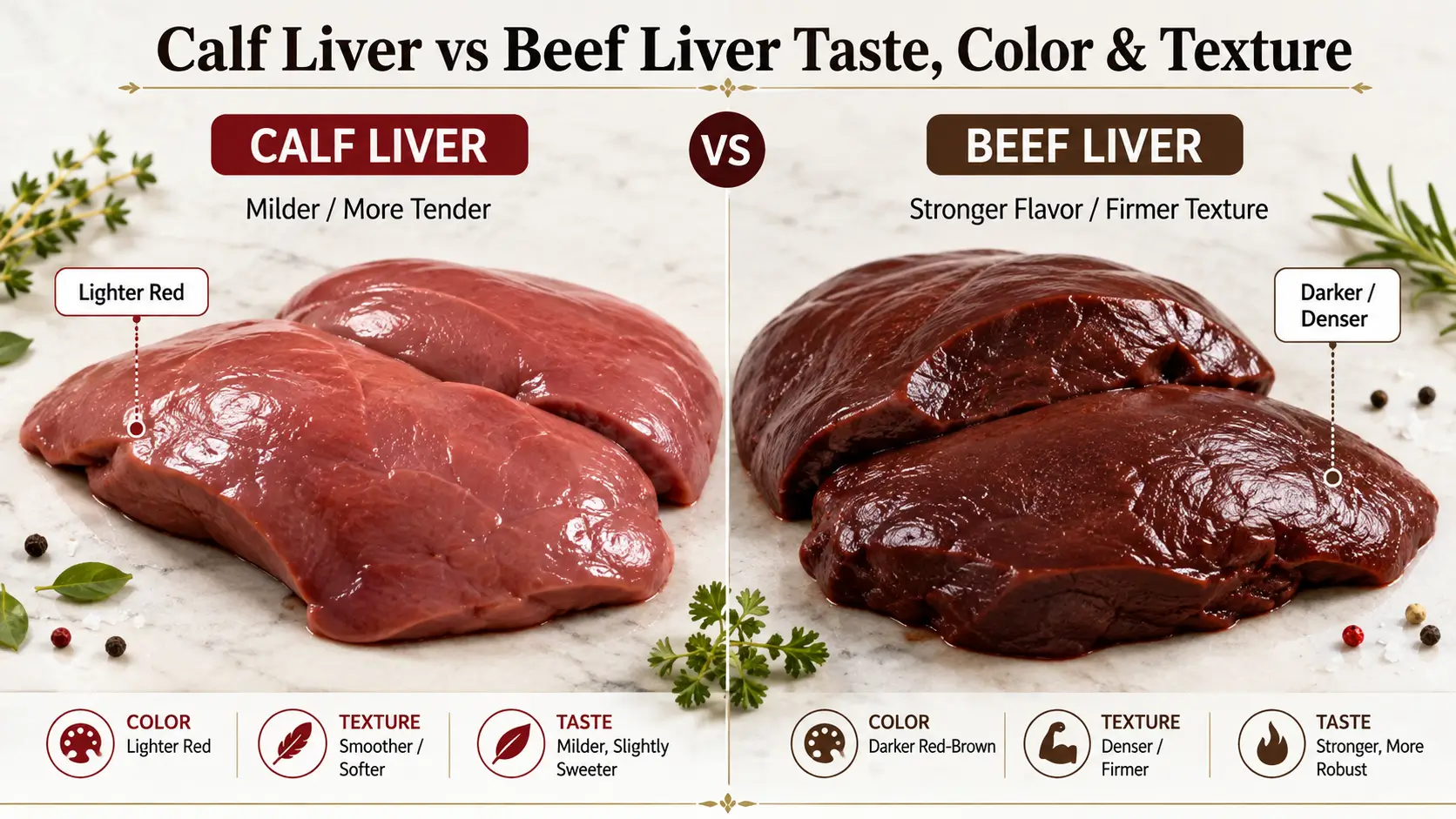
Calf liver is commonly described as:
- milder
- less intensely mineral
- more delicate
- softer
- easier for people new to liver to eat
Because the tissue comes from younger cattle, calf liver is also commonly valued for tenderness.
What Does Beef Liver Taste Like?
Mature beef liver generally has:
- a stronger liver flavor
- a more pronounced mineral character
- a denser texture
- a firmer bite
Taste is subjective, however, and freshness and cooking technique can have a large influence. Overcooking either liver can make it firmer and intensify flavors that some people find unpleasant.
So, in terms of taste, calf liver usually has the advantage for people who prefer a milder eating experience.
Calf Liver vs Beef Liver Texture and Appearance
Calf liver is generally lighter in color and more tender, while liver from mature cattle tends to be darker and firmer.
That distinction parallels broader differences seen between veal and mature beef tissues, although the exact appearance of liver also depends on freshness, animal diet, handling and storage. USDA distinguishes veal from mature beef based on the source animal and production category.
For culinary use:
Calf liver is often chosen when tenderness and delicate texture are priorities.
Beef liver is often chosen when affordability, stronger flavor and availability matter more.
For powder manufacturing, those sensory differences become less important than raw-material identity, composition, microbiological quality and processing specifications.
Calf Liver vs Beef Liver for Weight Loss
Neither calf liver nor beef liver is a “fat-burning” food, and neither has been shown to cause weight loss simply because it is liver.
Their calorie and protein values are almost identical:
| Per 100 g Raw | Calf Liver | Beef Liver |
|---|---|---|
| Calories | 140 | 135 |
| Protein | 19.93 g | 20.36 g |
| Fat | 4.85 g | 3.63 g |
From a calorie perspective, there is only a 5 kcal difference per 100 g in the USDA records.
Protein-rich foods can contribute to satiety and help preserve lean mass during appropriately designed weight-loss diets, but total energy intake and the overall dietary pattern remain much more important than choosing calf liver instead of beef liver.
Research reviewing higher-protein weight-loss diets supports effects on satiety, energy expenditure and preservation of lean tissue, but those findings should not be converted into a claim that liver itself causes weight loss.
Which Is Better for Weight Loss?
For practical purposes: a tie.
Beef liver contains slightly fewer calories and slightly more protein in this dataset, but the differences are too small to make either liver meaningfully superior for weight management.
Calf Liver vs Beef Liver for Protein and Muscle Building
Both liver types supply approximately 20 g of protein per 100 g raw.
That makes them useful protein-containing foods, but protein is not what makes liver unique.
Lean beef muscle, eggs, dairy, fish and dedicated protein ingredients may be more practical when the sole objective is obtaining a large amount of dietary protein.
Liver’s real distinction is:
high-quality animal protein combined with unusually concentrated vitamins and minerals.
That combination is why liver belongs in the broader category of nutrient-dense organ meats rather than simply being treated as another protein food.
Calf Liver vs Beef Liver Cholesterol
The USDA raw records show:
Calf liver: 334 mg cholesterol per 100 g
Beef liver: 275 mg cholesterol per 100 g
Calf liver is therefore higher in dietary cholesterol in this comparison.
Dietary cholesterol should not be considered in isolation from saturated fat, total dietary pattern, genetics and individual cardiovascular risk. People who have been advised to limit particular foods for medical reasons should follow individualized healthcare guidance rather than assuming that one liver type is automatically safe or unsafe.
What About Purines and Gout?
Organ meats are generally categorized as purine-rich foods.
Purines are metabolized into uric acid, so frequent intake of organ meats may be relevant for people with gout or hyperuricemia.
The appropriate question here is not whether calf liver is dramatically better than beef liver. Both belong to the organ-meat category, so people who need to restrict high-purine foods should consider serving size and frequency rather than relying on the age of the animal as the deciding factor.
Can You Eat Calf Liver or Beef Liver Every Day?
For most people, the important issue is not that liver is inherently “bad.” It is that liver is unusually concentrated.
The main nutrients to consider are:
- preformed vitamin A
- copper
- iron
- cholesterol
- purines
The USDA vitamin A values for 100 g of both liver types exceed the adult daily UL for preformed vitamin A. That does not mean one serving automatically causes vitamin A toxicity, but it does mean that eating large servings of liver every day can produce very different nutrient exposure from eating ordinary muscle meat.
This point becomes even more important when someone takes:
- liver capsules
- multivitamins
- prenatal supplements
- vitamin A products
- iron supplements
at the same time.
Does Cooking Change Calf Liver and Beef Liver Nutrition?
Yes.
Cooking removes water and can therefore increase the apparent concentration of some nutrients per 100 g, while heat-sensitive nutrients can decline to varying degrees. Fat loss, cooking method and final moisture content can also change the nutritional values.
This is why a fair comparison must specify whether liver is:
raw
fried
braised
boiled
freeze-dried
spray-dried
The raw numbers in this article should not be treated as guaranteed values for cooked liver.
For the same reason, they should not be treated as the specification of a commercial liver powder.
Food Safety: How Should Liver Be Cooked?
Food-safety guidance is another area that should not be omitted from a liver comparison.
USDA FSIS recommends cooking organ and variety meats such as liver, heart, kidney and tongue to an internal temperature of 160°F (71.1°C).
That recommendation applies because raw animal tissues can carry pathogenic microorganisms.
Consumers may encounter culinary recipes that serve liver less thoroughly cooked, but a nutrition comparison should distinguish culinary preference from official food-safety guidance.
Calf Liver vs Beef Liver Price and Availability
There is no universal calf-liver or beef-liver price. Prices vary with:
- country
- retail channel
- cattle supply
- organic or conventional production
- grass-fed claims
- freshness
- cut and trimming
- frozen vs fresh status
Calf liver often enters the market through the more specialized veal category, while mature beef liver is part of a much broader beef supply chain.
This distinction becomes even more important at industrial scale.
A supplement manufacturer does not simply need several kilograms of visually attractive fresh liver. It needs repeatable commercial batches with documented:
- bovine origin
- traceability
- microbiology
- moisture
- heavy metals
- processing conditions
- particle size
- packaging
- regulatory documentation
That is one reason mature bovine liver is much more established in the organ supplement ingredient market.
Is Calf Liver Cleaner or Lower in “Toxins” Than Beef Liver?
A common assumption is:
“The liver stores toxins, so younger calf liver must contain fewer toxins.”
This oversimplifies liver physiology.
The liver is a major metabolic organ involved in processing drugs, metabolic by-products and potentially harmful substances so that they can be transformed and eliminated. It also synthesizes proteins, produces bile, regulates nutrient metabolism and stores vitamins. Calling it simply a “toxin storage organ” is therefore inaccurate.
That does not mean animal tissues can never contain contaminants.
Commercial safety depends on actual factors such as:
- environmental exposure
- feed
- veterinary treatment
- geographic origin
- slaughter controls
- raw-material inspection
- heavy-metal limits
- veterinary drug residue controls
- microbiological testing
Therefore:
Animal age alone is not sufficient evidence that calf liver is “cleaner” than beef liver.
For ingredient buyers, traceability and analytical testing are much more useful than generalized detox claims.
Grass-Fed Calf Liver vs Grass-Fed Beef Liver
“Grass-fed” is primarily a sourcing and production characteristic.
Diet can influence animal tissue composition, but that does not justify assuming that every grass-fed liver contains more of every desirable vitamin or mineral.
For example, a brand should not say:
“Grass-fed liver contains X% more vitamin A”
unless its evidence actually supports that quantitative claim.
For commercial liver powder, the better approach is to separate:
Sourcing claim: grass-fed bovine origin
from:
Nutrient claim: supported by actual laboratory analysis.
Unicorns Biotechnology supplies grass-fed bovine liver powder with batch documentation for supplement and ingredient applications.
Fresh Calf Liver vs Beef Liver Powder
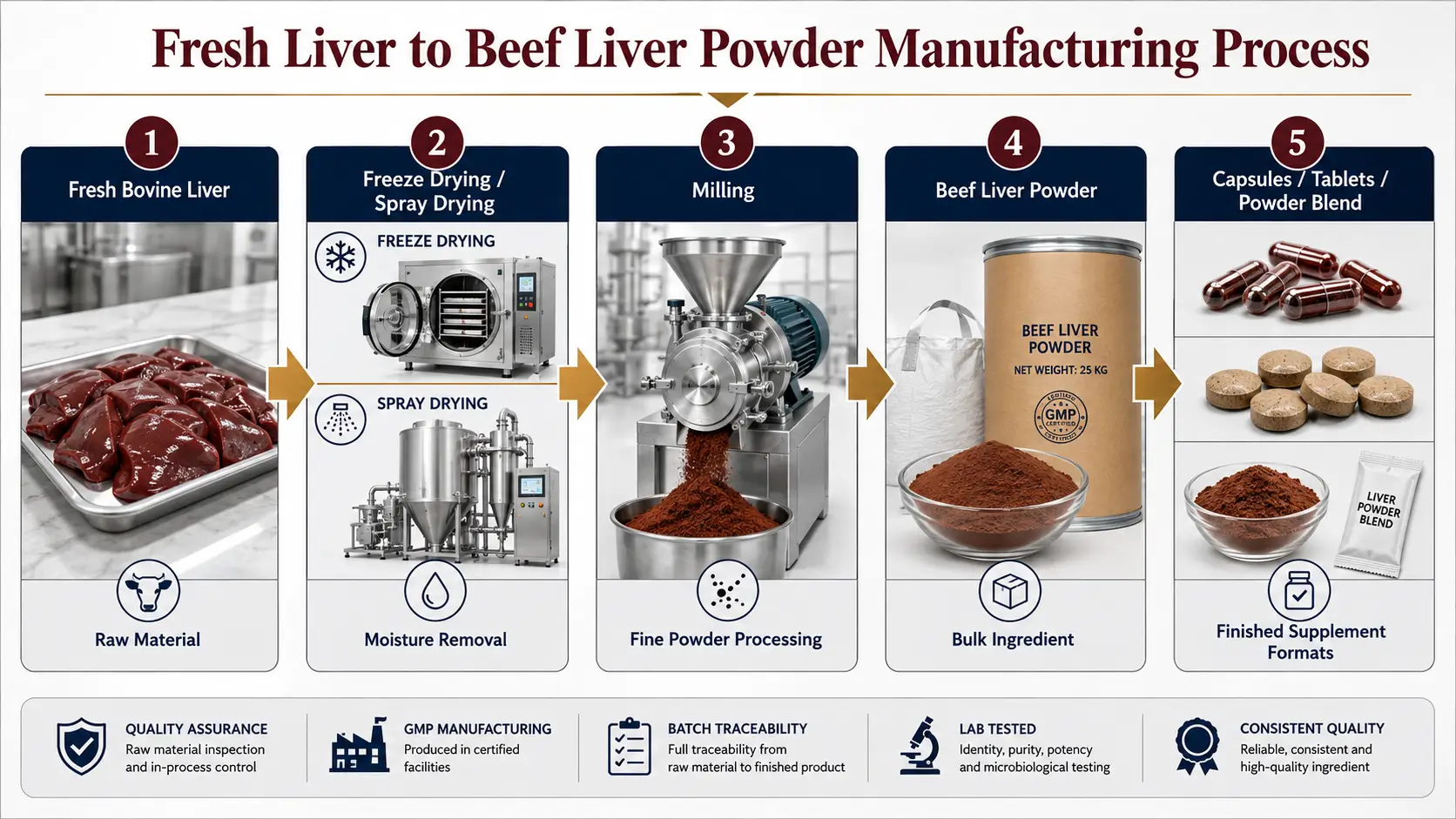
Fresh liver and dried liver powder begin with the same type of tissue, but they are not nutritionally identical on a gram-for-gram basis.
Fresh liver contains substantial water.
During dehydration:
Fresh liver → moisture removal → dried liver → milling → liver powder
As water is removed, solids become more concentrated by weight. Processing can also affect physical characteristics and individual nutrients.
Therefore:
A USDA value such as 4,968 mcg vitamin A per 100 g of raw beef liver cannot simply be copied onto a specification sheet for 100 g of commercial beef liver powder.
Commercial powder needs its own specifications and, when quantitative nutrient claims are required, appropriate testing.
Freeze-Dried Beef Liver
Freeze drying removes water under low-temperature and reduced-pressure conditions and is widely used for premium whole-organ supplements.
Spray-Dried Beef Liver
Spray drying offers efficient powder production and can be suitable for high-volume ingredient applications.
Neither process name alone proves a particular nutrient concentration. The final product should be evaluated using analytical data.
For a detailed manufacturing comparison, read Freeze Drying vs Spray Drying for Animal-Derived Ingredients.
Why Is Beef Liver More Common Than Calf Liver in Supplements?
If calf liver tastes milder and the USDA dataset shows more of several nutrients, why do most organ supplements use beef liver?
The answer is largely commercial.
1. Greater Raw-Material Availability
Commercial supplement manufacturing requires consistent quantities of traceable raw material.
The mature beef supply chain provides much greater access to bovine liver than the narrower calf/veal market.
2. Established Consumer Terminology
Consumers already recognize:
- beef liver capsules
- beef liver supplements
- desiccated beef liver
- freeze-dried beef liver
- grass-fed beef liver
That makes beef liver a clearer finished-product category.
3. Manufacturing Scale
Commercial organ-powder manufacturers require repeatable:
- dehydration
- milling
- sieving
- microbiological control
- packaging
- batch testing
These requirements favor a stable, scalable raw-material supply.
4. Formulation Flexibility
Bovine liver powder can be used in:
- capsules
- tablets
- powder blends
- whole-food multinutrient products
- ancestral nutrition supplements
- multi-organ formulas
It can also be combined with heart, kidney, spleen, pancreas, adrenal, thymus and other bovine glandular powders.
For brands developing finished products rather than buying bulk powder alone, our private label organ supplements guide explains the formulation and manufacturing process.
Calf Liver vs Beef Liver: Which Should You Choose?
There is no need to force every comparison into one winner.
| Your Main Priority | Better Choice | Reason |
|---|---|---|
| Mild flavor | Calf liver | Usually more delicate |
| Tender texture | Calf liver | Softer texture |
| Iron | Calf liver in USDA data | 6.4 vs 4.9 mg/100 g |
| Vitamin A | Calf liver in USDA data | Higher raw USDA value |
| Vitamin B12 | Tie | Approximately 60 mcg/100 g each |
| Folate | Beef liver in USDA data | 290 vs 125 mcg DFE |
| Copper | Calf liver in USDA data | 11.865 vs 9.755 mg |
| Zinc | Calf liver in USDA data | 12.02 vs 4.0 mg |
| Selenium | Beef liver in USDA data | Higher USDA value |
| Weight loss | Essentially tie | Nearly identical calories/protein |
| Protein | Essentially tie | About 20 g/100 g each |
| Lower cholesterol | Beef liver in USDA data | 275 vs 334 mg |
| Culinary beginners | Calf liver | Milder flavor |
| Broad availability | Beef liver | Larger commercial market |
| Bulk supplement manufacturing | Beef liver | Better supply scalability |
| Liver capsules | Beef liver | Established ingredient category |
Nutrition figures are from matched raw USDA records and should not be interpreted as guaranteed values for every individual animal or processed product.
So, Is Calf Liver Better Than Beef Liver?
Calf liver is not universally healthier than beef liver, and beef liver is not universally more nutritious than calf liver.
The most accurate conclusion is:
- Calf liver generally wins for taste and tenderness.
- Calf liver is higher in iron, vitamin A, copper and zinc in the matched USDA raw records used here.
- Beef liver is higher in folate, selenium, riboflavin, niacin, vitamin B6 and choline in those same records.
- Their vitamin B12, protein, calories and several major minerals are remarkably similar.
- Beef liver is generally the more practical raw material for commercial liver powder and organ supplements.
The biggest mistake is treating one USDA number as proof that every calf or mature cow will have exactly the same composition. Food composition is biologically variable, which is why quantitative supplement claims should ultimately be based on testing of the finished ingredient.
For another species comparison, see Pork Liver vs Beef Liver.
Bulk Bovine Liver Powder for Supplement Manufacturing
For dietary supplement brands, contract manufacturers and ingredient distributors, the relevant comparison eventually moves beyond fresh calf liver vs beef liver and becomes:
What bovine liver ingredient can be sourced consistently, processed safely and documented at commercial scale?
Unicorns Biotechnology manufactures bulk Bovine Liver Powder from grass-fed bovine sources for capsules, tablets, powder blends and multi-organ supplements.
Available options include freeze-dried and spray-dried processing according to project requirements, together with specifications, COA and other batch documentation. The company lists an annual manufacturing capability of approximately 600 tons for bovine liver powder.
For formulations incorporating multiple organs, explore the complete range of Bovine Glandular Powders, including liver, heart, kidney, spleen, pancreas, thymus, adrenal and other animal-derived ingredients.
Frequently Asked Questions
Is calf liver healthier than beef liver?
Not universally. USDA raw-food data show calf liver containing more vitamin A, iron, copper and zinc, while beef liver contains more folate, selenium, riboflavin, niacin, vitamin B6 and choline. Both are highly nutrient-dense, and the better choice depends on the nutrient or practical goal being considered.
Is calf liver the same as veal liver?
Usually, yes in everyday food terminology. Both generally refer to liver from young cattle. Exact age and labeling definitions may vary between markets, so commercial buyers should rely on species, age/source and traceability documentation rather than terminology alone.
Which has more iron, calf liver or beef liver?
The matched USDA raw records used in this comparison show 6.4 mg iron per 100 g for calf/veal liver and 4.9 mg for beef liver. In those records, calf liver contains about 31% more iron.
Which has more vitamin A?
The USDA raw calf-liver entry contains substantially more vitamin A: about 11,707 mcg RAE per 100 g, compared with 4,968 mcg RAE in the raw beef-liver entry. Both are extremely concentrated sources of preformed vitamin A.
Which has more vitamin B12?
They are essentially tied. Raw calf liver contains about 59.85 mcg B12 per 100 g, while raw beef liver contains about 59.3 mcg.
Does calf liver taste better than beef liver?
Taste is subjective, but calf liver is commonly preferred by people who want a milder flavor and softer texture. Mature beef liver usually has a stronger mineral taste and firmer texture.
Is calf liver better for weight loss?
Not meaningfully. The USDA records show 140 kcal and 19.93 g protein per 100 g of calf liver versus 135 kcal and 20.36 g protein in beef liver. The differences are too small to make either one an important weight-loss advantage.
Is calf liver more expensive than beef liver?
It often occupies a more specialized veal market, while mature beef liver is more broadly available. Actual prices vary considerably by country, retailer, cattle source, grass-fed status, freshness and supply conditions.
Can you eat liver every day?
Large daily servings deserve caution because liver is exceptionally high in preformed vitamin A and copper. NIH sets the adult UL for preformed vitamin A at 3,000 mcg RAE/day. Serving size, frequency and other dietary or supplemental sources should therefore be considered together.
Is calf liver lower in toxins than beef liver?
Animal age alone does not establish that calf liver is “cleaner.” The liver metabolizes and helps eliminate many substances rather than simply functioning as a permanent toxin-storage organ. Ingredient safety is better evaluated through source traceability, veterinary controls and appropriate contaminant testing.
How should calf liver or beef liver be cooked safely?
USDA FSIS recommends cooking organ and variety meats, including liver, to an internal temperature of 160°F (71.1°C).
Does cooking change liver nutrition?
Yes. Cooking changes water content and can alter heat-sensitive nutrients, so raw and cooked values should not be treated as interchangeable. Comparisons should always specify preparation state.
Is beef liver powder as nutritious as fresh liver?
It originates from liver, but it should not be assumed to have the same nutrient values per gram. Drying removes water and can change nutrient concentration, while the particular manufacturing process can affect the finished ingredient. Commercial liver-powder claims should be based on its actual specification or analysis.
Why are beef liver supplements more common than calf liver supplements?
Mature bovine liver is generally better suited to commercial-scale supply, and “beef liver supplement” is already a well-established consumer category. Beef liver can also be efficiently converted into freeze-dried or spray-dried powder for capsules, tablets and multi-organ formulations.
References
Peer-Reviewed References
Fuerniss, H. F., Gifford, C. L., Mortensen, E. G., Belk, K. E., Engle, T. E., & Woerner, D. R. (2024). Nutrient analysis of raw United States beef offal items. Nutrients, 16(18), 3104. https://doi.org/10.3390/nu16183104
Latoch, A., Stasiak, D. M., & Siczek, P. (2024). Edible offal as a valuable source of nutrients in the diet: A review. Nutrients, 16(11), 1609. https://doi.org/10.3390/nu16111609
Piskin, E., Cianciosi, D., Gulec, S., Tomas, M., & Capanoglu, E. (2022). Iron absorption: Factors, limitations, and improvement methods. ACS Omega, 7(24), 20441–20456. https://doi.org/10.1021/acsomega.2c01833
Moon, J., & Koh, G. (2020). Clinical evidence and mechanisms of high-protein diet-induced weight loss. Journal of Obesity & Metabolic Syndrome, 29(3), 166–173. https://doi.org/10.7570/jomes20028
Primary Data and Government Sources
U.S. Department of Agriculture, Agricultural Research Service. (n.d.). FoodData Central: Beef, variety meats and by-products, liver, raw. USDA FoodData Central.
U.S. Department of Agriculture, Agricultural Research Service. (n.d.). FoodData Central: Veal, variety meats and by-products, liver, raw. USDA FoodData Central.
National Institutes of Health, Office of Dietary Supplements. (n.d.). Vitamin A and carotenoids: Fact sheet for health professionals.
National Institutes of Health, Office of Dietary Supplements. (n.d.). Iron: Fact sheet for health professionals.
U.S. Department of Agriculture, Food Safety and Inspection Service. (n.d.). Beef from farm to table.
U.S. Department of Agriculture, Food Safety and Inspection Service. (n.d.). Veal from farm to table.